What Clearwater Homeowners Should Do First
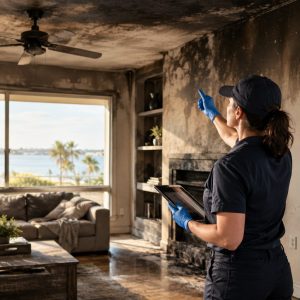
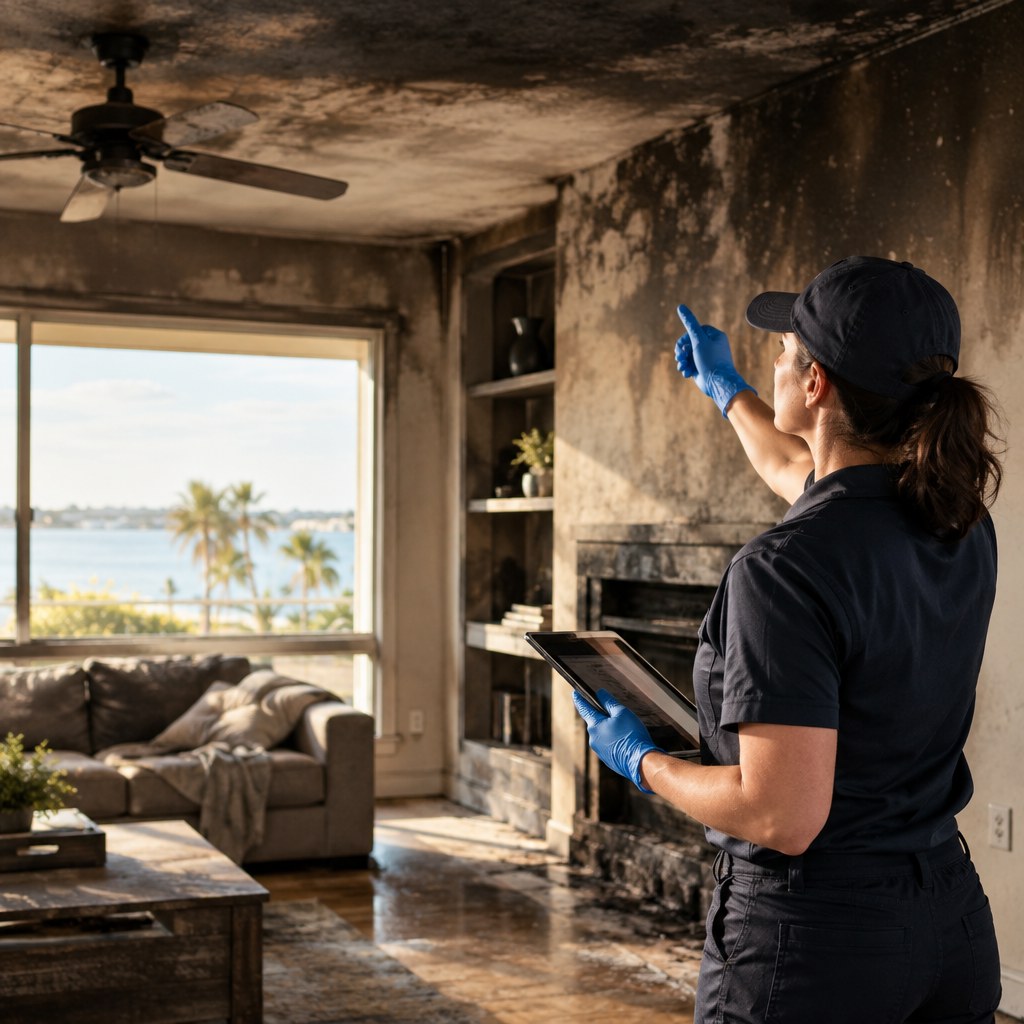
After a fire, prioritize people over property: leave the building, call emergency services, and return only when officials say it is safe. Smoke and soot can irritate lungs, hide corrosive residue, and contaminate furnishings even when flames affected only one room. Avoid touching blackened surfaces, running the HVAC system, or using household cleaners. Photograph conditions, protect yourself, and arrange professional assessment when damage is extensive, oily, wet, or connected to structural or electrical hazards.
Why Soot Cleanup Requires the Right Method
Soot is not ordinary dust. Its chemistry and texture vary with what burned: wood and paper may leave dry particles, while plastics, cooking oils, and low-oxygen fires can produce sticky films. Clearwater’s humidity can compound odor and moisture problems, especially after firefighting water enters walls, flooring, or insulation.
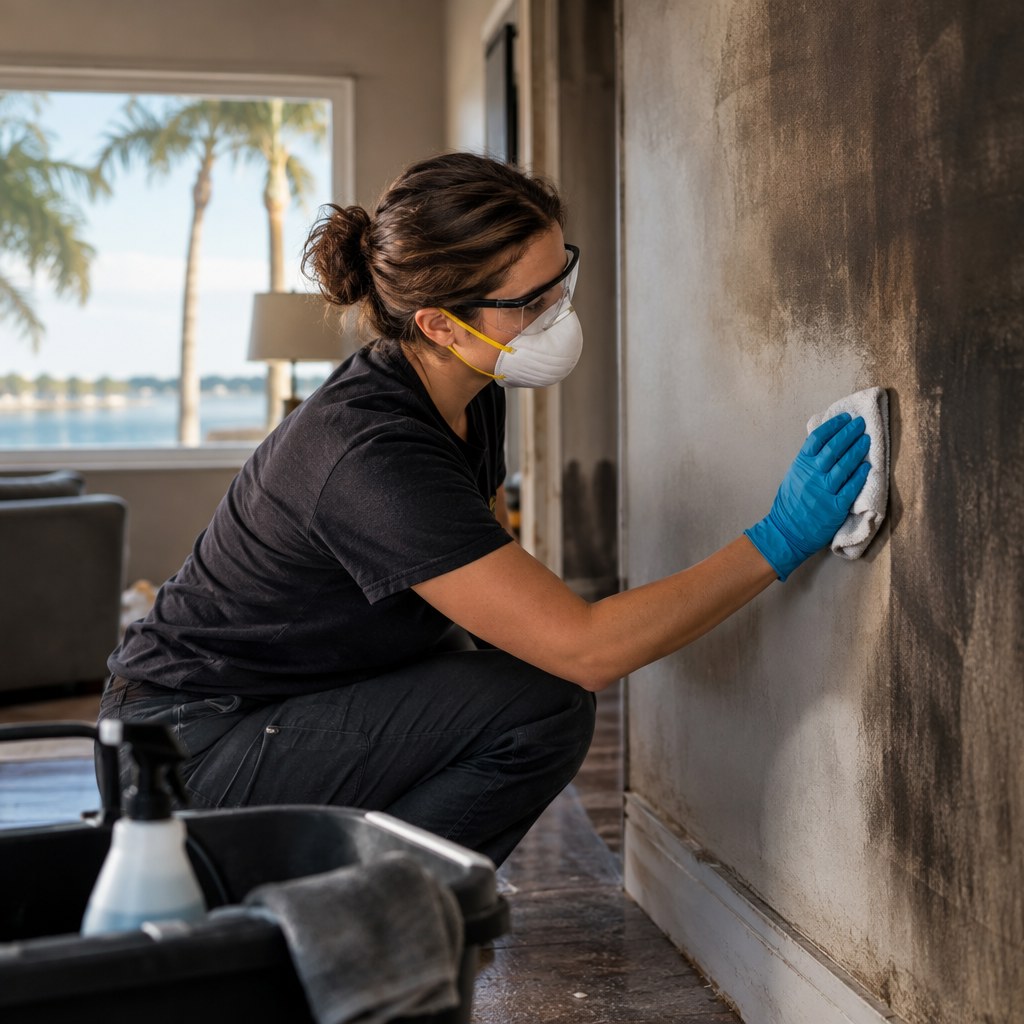
Dry soot may sometimes be lifted from a small, nonporous area with a dry-cleaning sponge, using light, straight passes. Stop if residue smears. Do not scrub, soak drywall, mix chemicals, or apply bleach as an all-purpose fix. Protein residue can be nearly invisible yet smell strong, and oily soot usually needs specialized degreasers and controlled techniques.
A Practical Homeowner Soot Cleanup Checklist
For limited residue after the property is cleared, use this cautious sequence:
- Turn off HVAC equipment so particles do not circulate. Replace filters only after the system is evaluated if smoke entered ducts.
- Open windows only when authorities approve and outdoor conditions are safe; avoid pushing contamination into unaffected rooms.
- Wear gloves, eye protection, long sleeves, and a well-fitting respirator appropriate for particulates. Keep children and pets away.
- Photograph each room before moving items. Capture wide views, close-ups, serial numbers, and damaged contents.
- Separate visibly affected belongings without carrying soot through clean areas. Do not discard items until you have documented them and discussed requirements with your insurer.
Documenting Damage for Insurance Conversations
Create a room-by-room inventory listing each item, brand, approximate age, purchase information if available, and visible condition. Save receipts for temporary lodging, board-up work, cleaning supplies, and other fire-related expenses. Keep damaged materials unless disposal is necessary for safety or your insurer authorizes it.
Write down the date, time, suspected source, firefighting activity, areas reached by smoke, and any steps taken to prevent further damage. Ask the insurer how it wants estimates and inventories submitted. Documentation supports the claim process, but coverage, valuation, and approval decisions remain with the policy and carrier.
When to Call a Smoke Damage Professional
Professional help is appropriate when soot covers multiple rooms, odors persist, HVAC ducts are affected, or porous materials such as drywall, carpet, upholstery, and insulation are contaminated. Restoration teams can identify residue types, establish containment, use HEPA-filtered equipment, clean contents, and address odors at their source rather than masking them.
Leave the property and seek qualified assistance for sagging ceilings, damaged framing, exposed wiring, gas odors, active water intrusion, sewage, or uncertainty about structural stability. Electrical, structural, sewage, and extensive fire damage are not do-it-yourself projects. Also call sooner if an occupant has asthma, chemical sensitivity, or another condition aggravated by smoke.
What Belongings May Be Salvageable
Hard, sealed items are often easier to clean than porous goods. Clothing, rugs, electronics, photographs, and documents require material-specific decisions; ordinary washing or powering on devices can set odors, spread residue, or cause damage. Place questionable items aside, label their original rooms, and let a specialist evaluate them.
Food, medicine, and cosmetics exposed to heat, smoke, or suppression water should not be used unless appropriate guidance confirms safety. Cleanup is complete only when surfaces, hidden cavities, air pathways, moisture, and odors have been addressed—not simply when visible marks disappear. Careful decisions can prevent secondary damage.