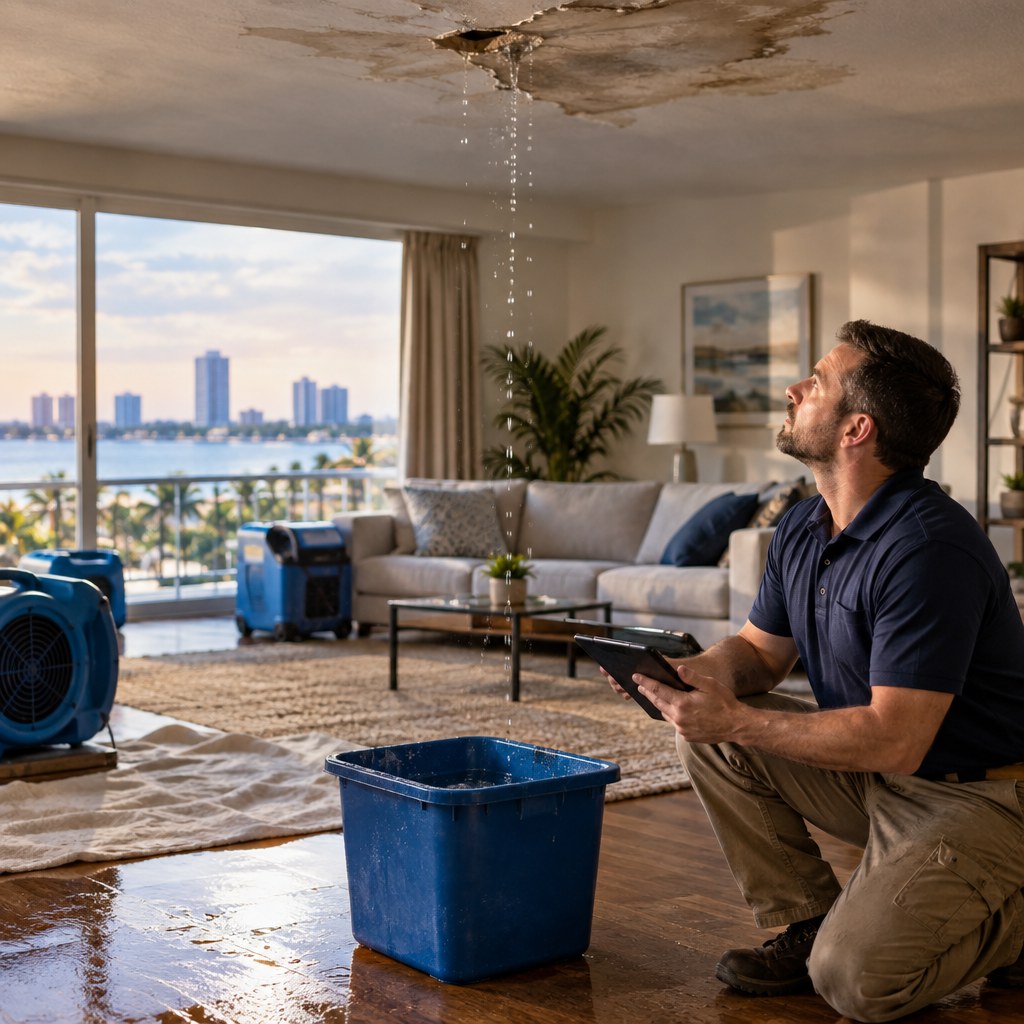
If a roof leak causes water damage in your St. Petersburg home, protect yourself first, stop additional water only if you can do so safely, and document the affected areas. Move dry belongings away, collect dripping water, notify the appropriate professionals, and begin drying promptly to limit damage hidden above ceilings and inside walls.
Immediate Steps After Discovering a Roof Leak
Wind-driven rain and intense storms can force water beneath shingles, flashing, roof vents, or low-slope roofing. Because water may travel along rafters before appearing indoors, the ceiling stain might not be directly below the roof opening.
- Check for immediate hazards. Leave the area if the ceiling is sagging, materials are falling, or you notice cracking or movement. Do not enter an attic during severe weather.
- Avoid electrical contact. Keep away from wet fixtures, outlets, appliances, and wiring. If you cannot reach the electrical panel without crossing water, wait for a qualified professional.
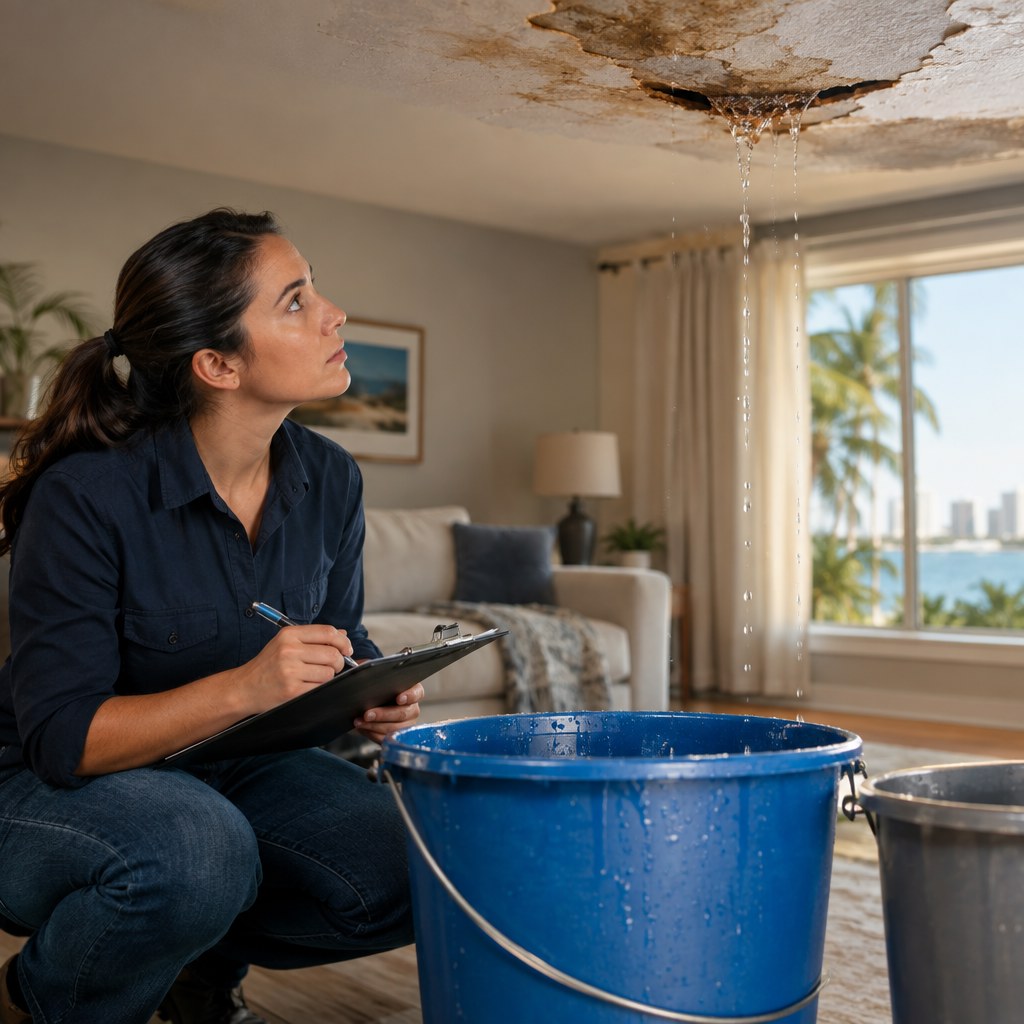
- Contain dripping water. Place containers beneath active drips and use towels around them. Never puncture a bulging ceiling unless a qualified professional has assessed the electrical and structural risks.
- Move unaffected items. Relocate furniture, rugs, electronics, and boxes to a dry room. Avoid handling saturated ceiling material or insulation.
- Arrange roof protection. Contact a roofing professional for safe temporary covering and repairs. Do not climb onto a wet or storm-damaged roof.
Determine What Kind of Water Is Involved
Rain entering through a recently damaged roof may begin as relatively clean water. Once it passes through dirty roofing materials, animal waste, contaminated insulation, or standing attic water, however, direct contact becomes less appropriate.
- Potentially clean rainwater: A small, recent leak with no contact with sewage or hazardous materials may allow limited containment while you arrange an inspection.
- Contaminated water: Water mixed with sewage, floodwater, pests, or unknown substances requires professional handling and appropriate protective equipment.
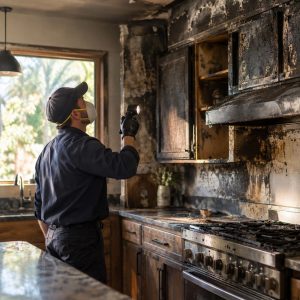
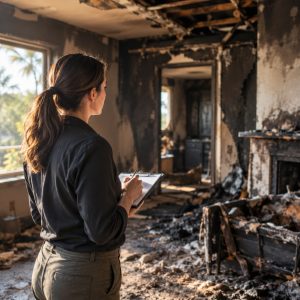
- Fire-related damage: After a fire, water may contain soot, combustion residue, damaged electrical components, or chemicals. Do not treat it as an ordinary roof leak.
Children and pets should remain outside the affected area. If the water has an unusual color or odor, or if you cannot identify its source and path, avoid contact and request professional evaluation.
Document Damage Before Cleanup
When conditions are safe, take wide photographs of each affected room and close-ups of ceiling stains, peeling paint, damaged belongings, and visible roof entry points from ground level. Record a short video showing active dripping or pooled water.
Write down when you discovered the leak, recent weather conditions, actions taken, and the names of contractors contacted. Keep damaged items until your insurer explains whether disposal is acceptable, and save invoices and receipts. Review your policy and ask your insurance representative about reporting requirements, covered work, and documentation; coverage varies by policy and cause.
When Professional Water-Damage Restoration Is Needed
Call a restoration professional when water has spread across multiple rooms, entered wall or ceiling cavities, soaked insulation, affected flooring, or remained unnoticed. Professional assessment is also appropriate when materials continue feeling damp, stains expand, or musty odors develop after surface drying.
Seek specialized help immediately for electrical exposure, sewage, structural movement, extensive saturation, or fire-related contamination. Restoration work may include moisture mapping, controlled removal of unsalvageable materials, water extraction, drying, dehumidification, cleaning, and monitoring. Roof repair and interior restoration should be coordinated so new water does not undo the drying work.
Can You Use Fans After a Roof Leak?
Fans may help with a small, confirmed clean-water leak after electrical hazards are ruled out. Do not use them where contamination is suspected because airflow can spread particles. Household fans also cannot confirm that enclosed framing or insulation has dried.
Get Help With Roof-Leak Water Damage
If water has entered your St. Petersburg property, Big Wave Restoration can help you evaluate the affected areas and plan the appropriate next steps.