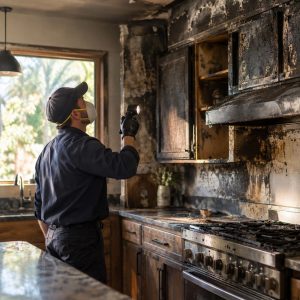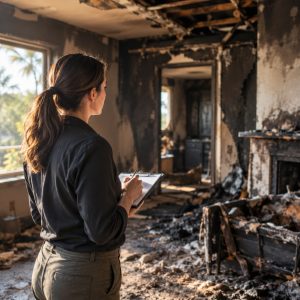
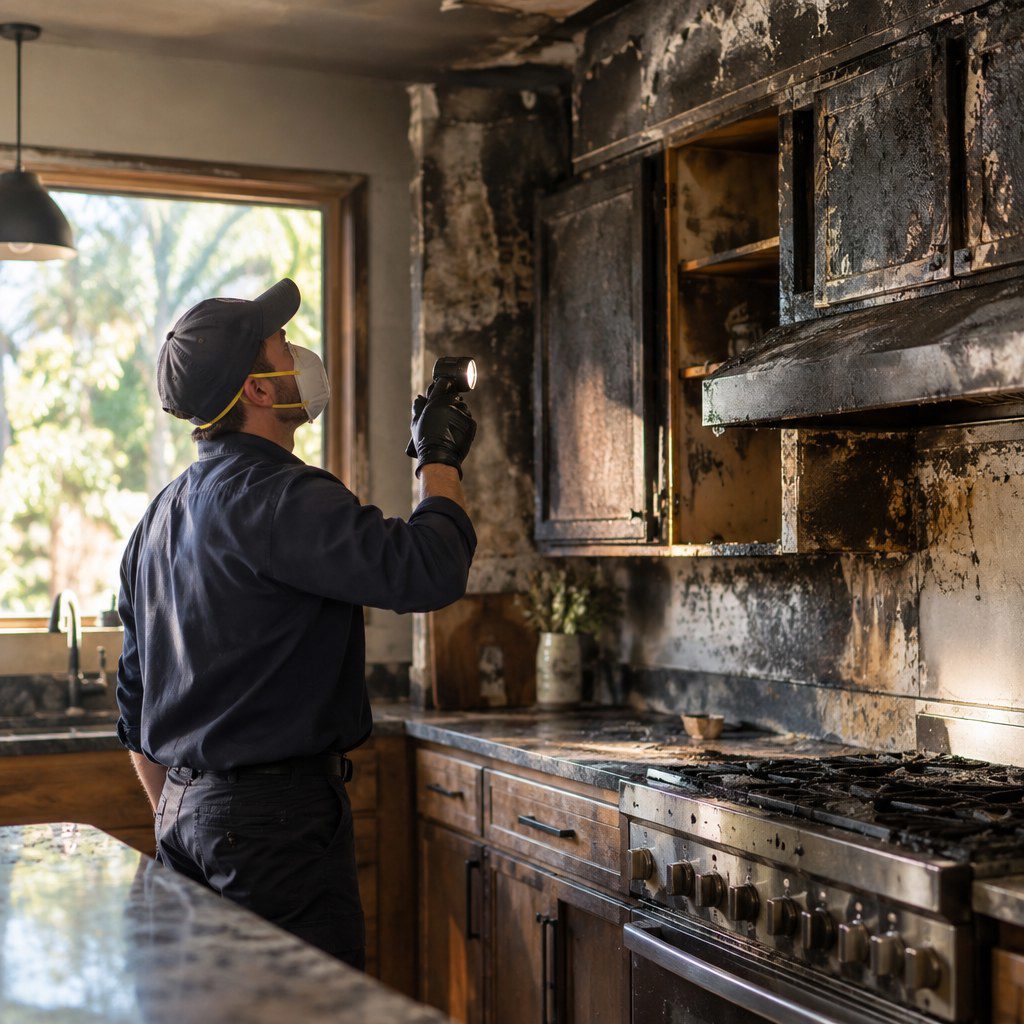
A kitchen fire in Brandon can leave damage far beyond the burned pan, appliance, or cabinet. Smoke travels through rooms and HVAC pathways, soot clings to porous finishes, and firefighting water can collect beneath flooring or behind cabinets. After everyone is safe, avoid disturbing residues and arrange a professional assessment for widespread, electrical, structural, or moisture-related damage.
What to Do Immediately After a Kitchen Fire
Do not reenter until fire officials say the property is safe. Once access is permitted, limit movement through affected areas so soot is not tracked into clean rooms.
- Turn off electricity or gas only if authorities direct you to do so.
- Do not operate appliances, ceiling fans, or the HVAC system until they have been inspected.
- Avoid touching walls, cabinets, and upholstery because skin oils can embed soot more deeply.
- Discard exposed food, medicine, and cosmetics when heat, smoke, or suppression materials may have affected them.
How Smoke, Soot, and Water Affect Your Home
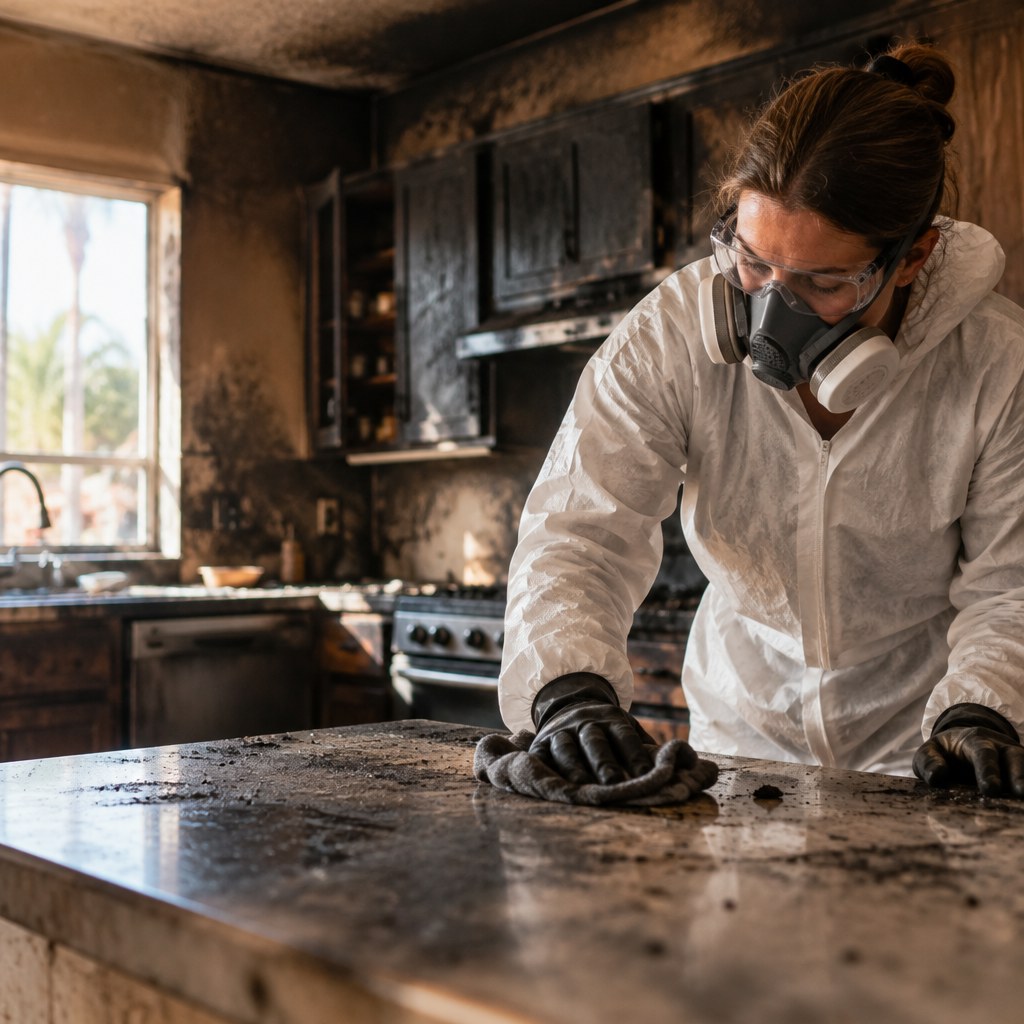
These damage types require different cleaning and drying methods. General household cleaners may smear oily soot, set stains, or react with damaged surfaces. Painting over smoke residue can also trap odor instead of solving its source.
Smoke and Odor Migration
Warm smoke can enter wall cavities, attic spaces, adjoining rooms, and return-air pathways. Odor may persist in insulation, unfinished wood, fabrics, and cabinet interiors even when the kitchen looks clean.
Soot and Fire Residue
Soot may be dry and powdery or greasy, depending on what burned. Plastics, cooking oils, and synthetic materials can produce residues that require surface-specific testing and controlled removal rather than aggressive scrubbing.
Suppression Water and Extinguisher Material
Water used during firefighting is not equivalent to a simple clean-water plumbing leak because it can mix with ash, burned materials, and debris. Extinguisher powder can also enter appliance openings and mechanical components.
Where Hidden Moisture Collects
Water commonly runs beneath toe kicks, cabinets, floating floors, and baseboards. It may also soak drywall from the back or enter subfloor seams. Brandon’s warm, humid conditions can make unattended damp materials harder to dry, while closed cabinetry limits airflow.
- Watch for swelling, buckling, soft drywall, loose flooring, or separating cabinet finishes.
- Notice musty odors or condensation that remains after visible water is removed.
- Ask for moisture checks around sinks, appliance connections, wall cavities, and the kitchen perimeter.
A surface that feels dry may still contain moisture underneath. Restoration professionals can use moisture meters and targeted inspection methods to define affected areas before removing materials unnecessarily.
Document Damage Before Cleanup
If conditions are safe, create a clear record before items are moved or discarded. Follow your insurance carrier’s instructions and keep damaged property unless disposal is required for safety.
- Photograph wide room views and close-ups of burned, stained, or wet materials.
- Record affected appliances, cabinet contents, food, flooring, walls, and nearby rooms.
- Save receipts for emergency purchases, temporary lodging, and authorized protective work.
- Write down when the fire occurred and what suppression methods were used.
When Professional Restoration Is Necessary
Call professionals when soot extends beyond a small, washable surface; odors remain after ventilation; water has reached cabinets or flooring; or the fire affected wiring, gas lines, framing, or the HVAC system. Restoration may involve containment, residue removal, odor treatment, controlled demolition, structural drying, and verification that affected materials have reached appropriate moisture conditions.
Get Help With Kitchen Fire Damage in Brandon
Big Wave Restoration can evaluate visible damage, smoke residue, and concealed moisture so you understand the next appropriate steps for your Tampa Bay home.