If you find moisture behind a wall in your Carrollwood home, stop the water source if you can do so safely, avoid disturbing suspected mold, and begin documenting the damage. Hidden moisture can spread into drywall, insulation, framing, and nearby rooms, so professional inspection is appropriate when the affected area is extensive, contaminated, or difficult to access.
Immediate Steps After Discovering Wall Moisture
A plumbing leak, roof intrusion, air-conditioning condensation, or storm-driven rain may be responsible. Because Carrollwood’s humid climate can slow natural drying, act promptly without making the problem worse.
- Protect yourself. Keep children, pets, and anyone with respiratory sensitivities away from the area. Do not touch visible growth with bare hands.
- Stop the source. Shut off the relevant water valve for a clean-water plumbing leak. Contact a plumber or roofer when the source is unclear or unsafe to reach.
- Check electrical hazards. Do not operate switches, outlets, appliances, or fans near wet materials. Have an electrician evaluate affected wiring or electrical components.
- Avoid spreading particles. Do not sand, scrape, brush, or aim a household fan at suspected mold. These actions can distribute spores and contaminated dust.
- Document conditions. Photograph staining, bubbling paint, damaged baseboards, visible growth, and the suspected source before moving items. Record when you noticed the problem and any repairs performed.
Determine What Kind of Water Is Involved
The response depends on both the amount of moisture and its source. A recent supply-line leak involves different risks than sewage, floodwater, or water that passed through fire debris.
Clean-Water Leaks
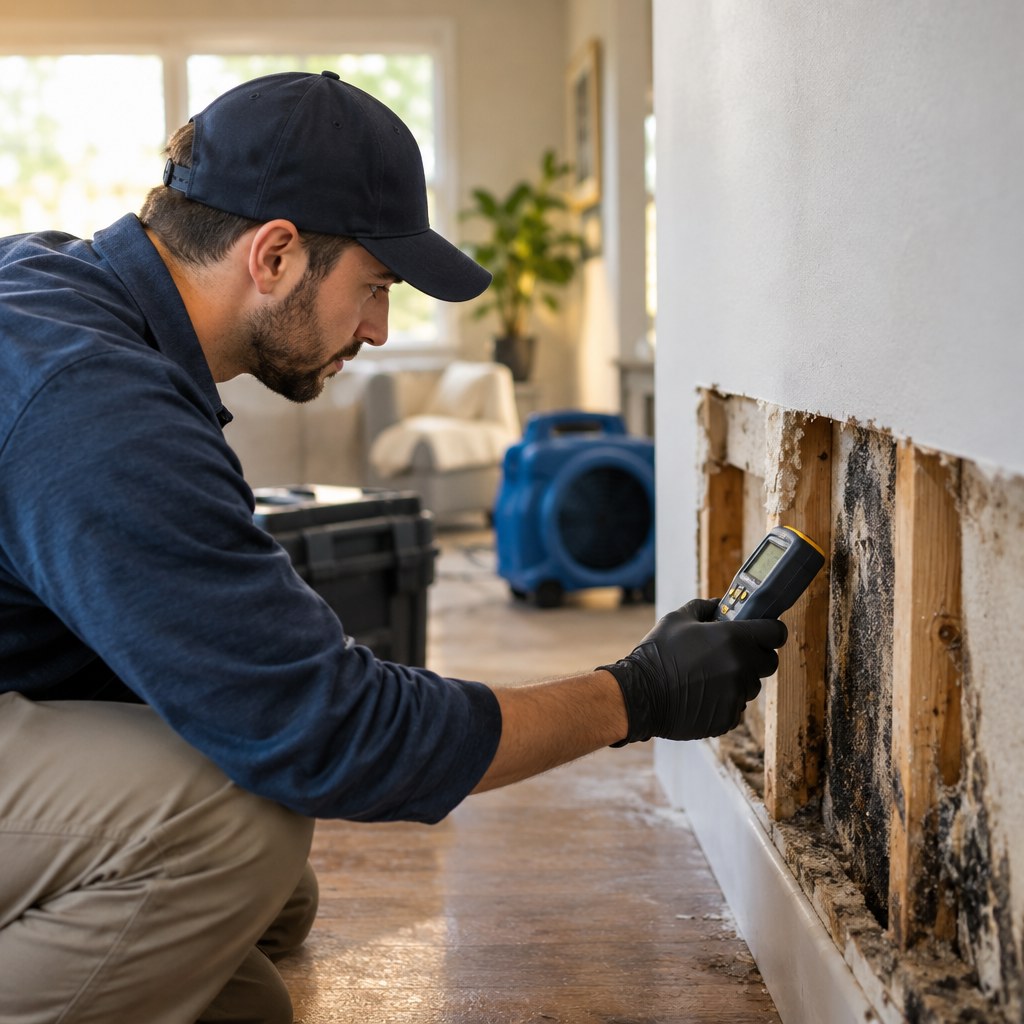
A small, quickly discovered leak from a clean supply pipe may require removing wet drywall, drying the cavity, and checking framing and insulation. Even clean water can become a mold problem when it remains trapped or contacts dirty building materials.
Contaminated or Fire-Related Water
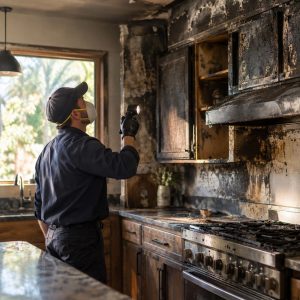
Do not handle wall materials affected by sewage, groundwater, storm flooding, or firefighting runoff. These conditions may involve bacteria, chemicals, soot, and sharp debris. Professional containment, protective equipment, material removal, and sanitation are safer than do-it-yourself cleanup.
What Professional Mold Remediation Includes
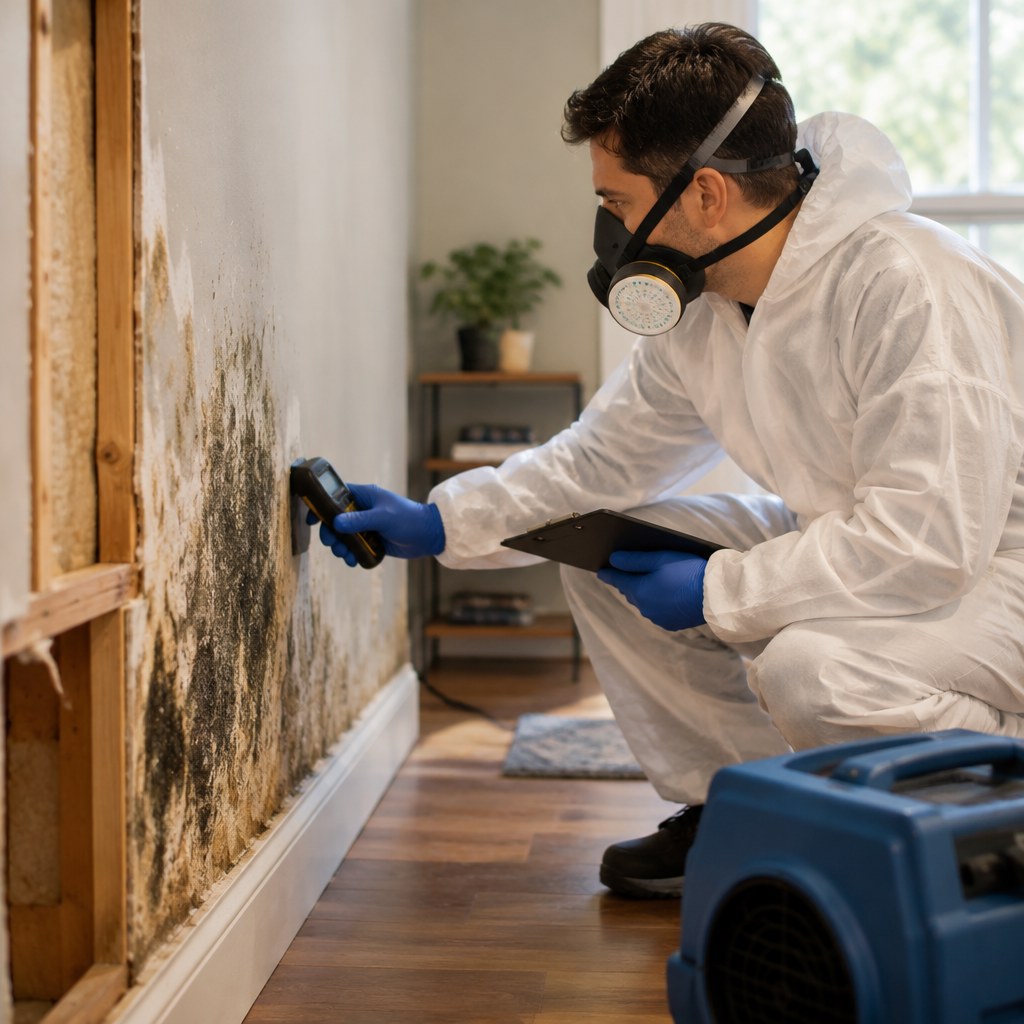
Simply painting over staining or spraying the visible surface does not address moisture inside the wall. A restoration professional can trace the source, measure moisture in adjacent materials, and define the actual affected area.
- Inspection: Checking drywall, baseboards, insulation, framing, flooring edges, and nearby rooms for concealed moisture.
- Containment: Isolating the work area to limit dust and mold movement during demolition and cleaning.
- Selective removal: Taking out materials that cannot be cleaned or dried effectively while preserving unaffected components when practical.
- Drying and cleaning: Using controlled air movement, dehumidification, and suitable cleaning methods, followed by moisture verification before reconstruction.
The leak must be corrected before the wall is closed. Otherwise, new drywall can conceal the same unresolved condition.
When You Should Call for Help
Request professional mold remediation when growth extends beyond a small surface, moisture has reached multiple rooms, the wall cavity has remained wet, or odors persist without visible damage. You should also call when insulation is saturated or the source cannot be confirmed.
Seek specialized help immediately for sewage, electrical exposure, structural movement, HVAC contamination, or fire-related damage. If you plan to file an insurance claim, preserve photographs, receipts, damaged-material samples when safe, and notes from plumbers or other contractors. Ask your insurer what documentation and mitigation steps your policy requires.
Address Hidden Moisture Before Repairs Begin
Big Wave Restoration can evaluate moisture behind your Carrollwood walls and explain appropriate containment, drying, removal, and restoration steps.