
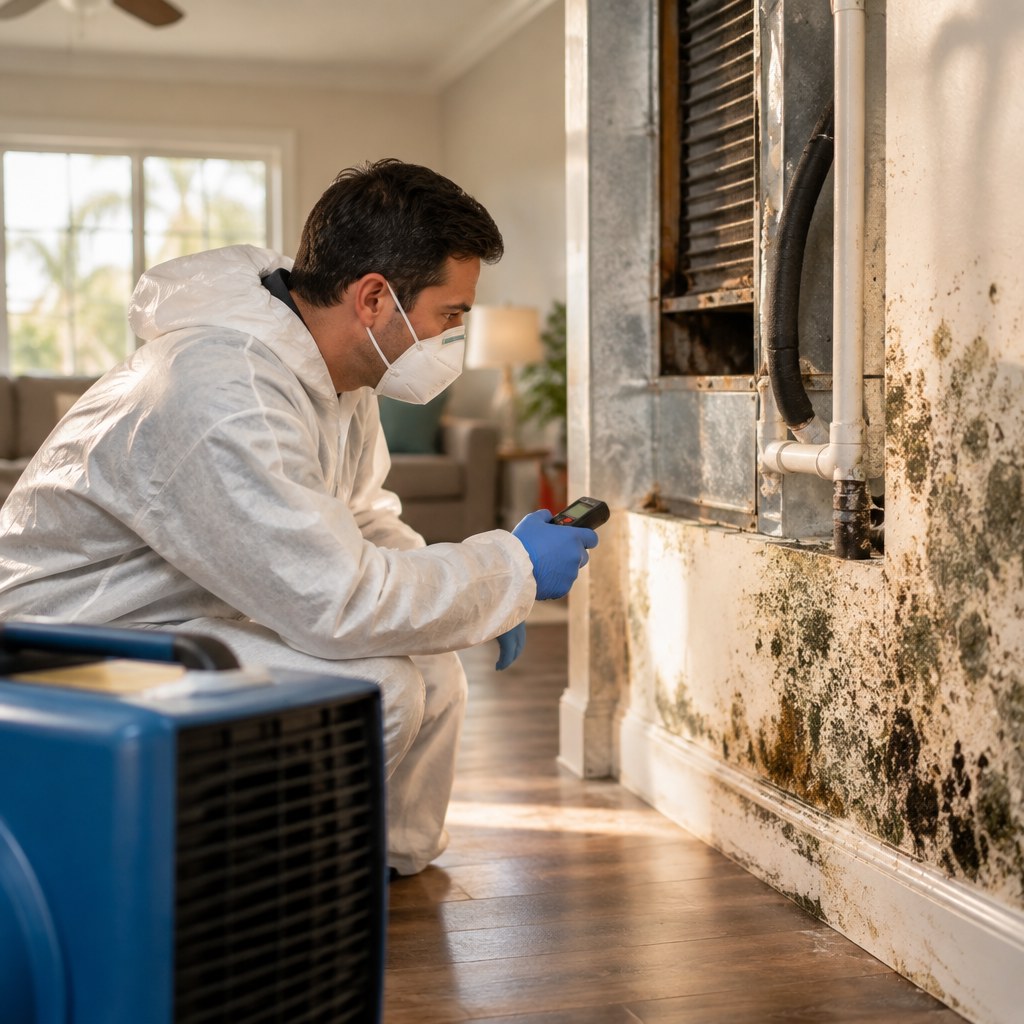
After AC condensation damage, stop the moisture source, avoid disturbing visible mold, and dry the affected area promptly. Mold remediation in Land O’ Lakes should address both the growth and the HVAC or drainage problem that caused it; cleaning the surface alone can allow damage to return.
Immediate Steps After Discovering Condensation Damage
Air conditioners remove substantial moisture from Florida’s humid air. A clogged condensate drain, cracked pan, frozen coil, disconnected line, or poorly insulated duct can release water into ceilings, walls, closets, and flooring.
- Turn off the affected AC system if it is actively leaking or spreading damp air. Do not open electrical panels or touch wet equipment.
- Limit access to rooms with visible growth, heavy odors, or damaged drywall. Keep children and pets away.
- Remove standing clean water only when you can do so safely. Do not use a household vacuum.
- Move dry belongings away from the wet area without carrying moldy materials through the home.
- Call an HVAC professional to diagnose and repair the condensation source before restarting the system.
💡 Safety note: Leave cleanup to professionals when water is near energized wiring, structural materials are sagging, sewage is involved, or contamination follows a fire.
What Professional Mold Remediation Includes
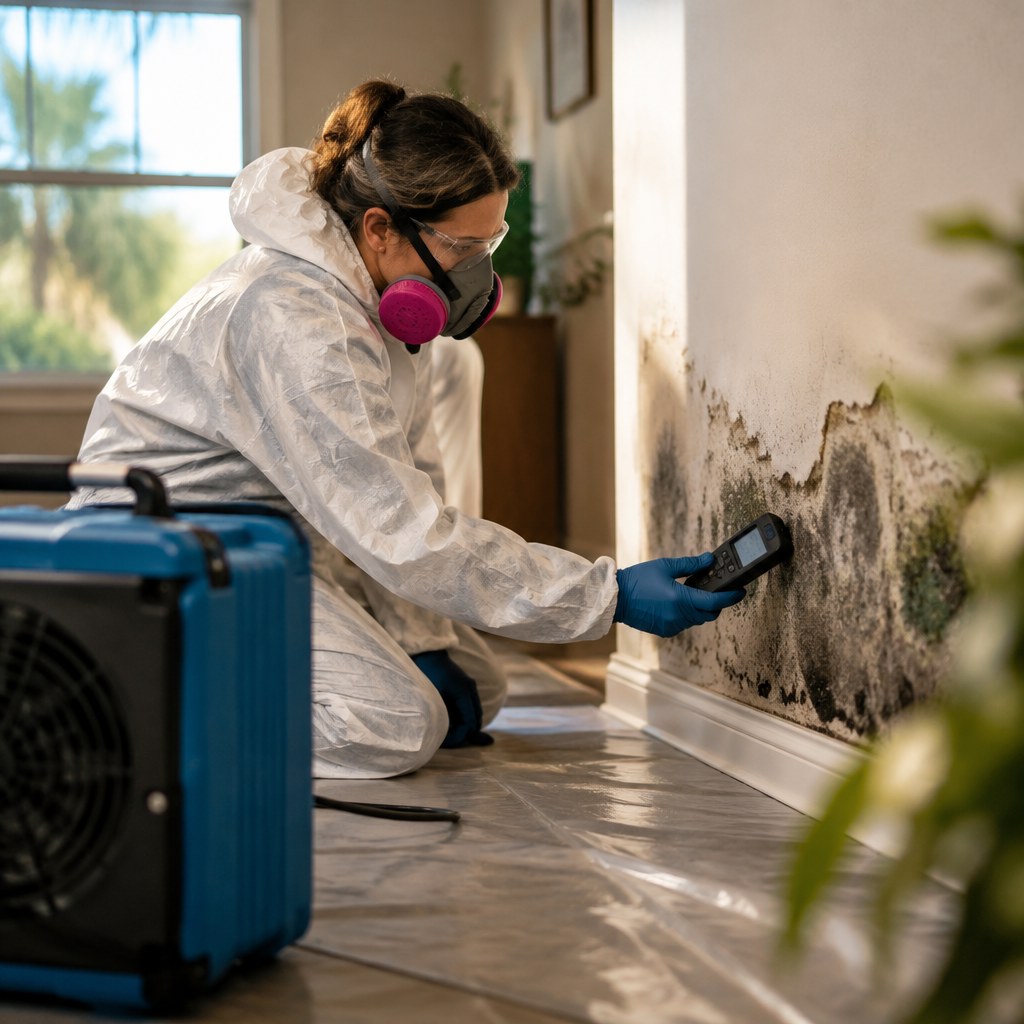
A remediation provider first identifies the affected materials and moisture boundaries. Because condensation may travel behind drywall or beneath flooring, the visible stain does not always show the full extent of the problem.
- Inspection and moisture mapping: Technicians assess accessible HVAC components, building materials, and adjoining rooms for dampness or suspected growth.
- Containment: Barriers and controlled airflow help keep dust and spores from reaching unaffected spaces during removal.
- Material removal: Porous items that cannot be reliably cleaned, such as deteriorated drywall or insulation, may require careful disposal.
- Cleaning: Remaining surfaces are cleaned using methods appropriate for the material and level of contamination.
- Drying and verification: Dehumidification and air movement continue until materials reach suitable moisture conditions. The area is then checked before repairs begin.
If growth is inside ductwork or the air handler, avoid running the system until qualified professionals evaluate it. Operating contaminated equipment can distribute particles to other rooms.
Document the Damage Before Cleanup
Take wide and close-up photos of staining, visible growth, wet materials, the drain pan, condensate line, and any belongings affected. Record when you noticed the problem, when the AC was shut down, and what temporary measures you took.
Keep HVAC invoices, remediation estimates, drying records, and receipts. Notify your insurer promptly and ask what documentation, inspections, or approvals your policy requires. Coverage varies by policy and cause, so avoid assuming that mold or condensation damage is covered.
Clean Water Can Become a Larger Problem
Fresh condensate generally begins as relatively clean water, but it can collect dirt and microbial contamination after contacting building cavities or remaining in place. Water involving sewage, chemical residue, or firefighting runoff requires different protective measures and should not be handled as a routine AC leak.
Prevent Repeat AC Condensation Damage
- Schedule routine HVAC inspections and condensate-line maintenance.
- Watch for ceiling discoloration, musty odors, drain-pan overflow, or unusual indoor humidity.
- Keep return vents clear and replace filters according to equipment guidance.
- Have damaged duct insulation, drain pans, and lines repaired rather than relying on temporary patches.
Call a remediation professional when mold covers multiple materials, returns after cleaning, appears inside HVAC equipment, or is hidden behind walls. Professional help is also appropriate when occupants have health concerns or you cannot safely isolate and dry the area.
Address AC Moisture and Mold at the Source
Big Wave Restoration can assess condensation-related damage in Land O’ Lakes and explain the appropriate remediation and drying steps.