After the Carrollwood fire department leaves, keep everyone out until officials confirm that entry is allowed, then contact your insurer and a qualified fire damage restoration company. Photograph visible damage from a safe location, avoid touching soot or standing water, and do not restore electricity, gas, or appliances yourself.
Confirm the Property Is Safe to Enter
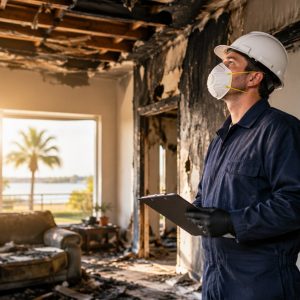
Permission to approach the property does not necessarily mean every room is safe. Fire can weaken roofs, ceilings, stairs, and wall framing, while damaged wiring or gas lines may create hazards that are not obvious.
- Follow all instructions on the fire department’s posted notice or incident paperwork.
- Ask whether any rooms, attached garages, or outdoor areas remain restricted.
- Keep children, pets, and unnecessary visitors away from the property.
- Do not turn utilities back on until the appropriate utility provider or licensed professional approves it.
- Leave immediately if you notice shifting materials, sparks, a gas odor, or worsening breathing irritation.
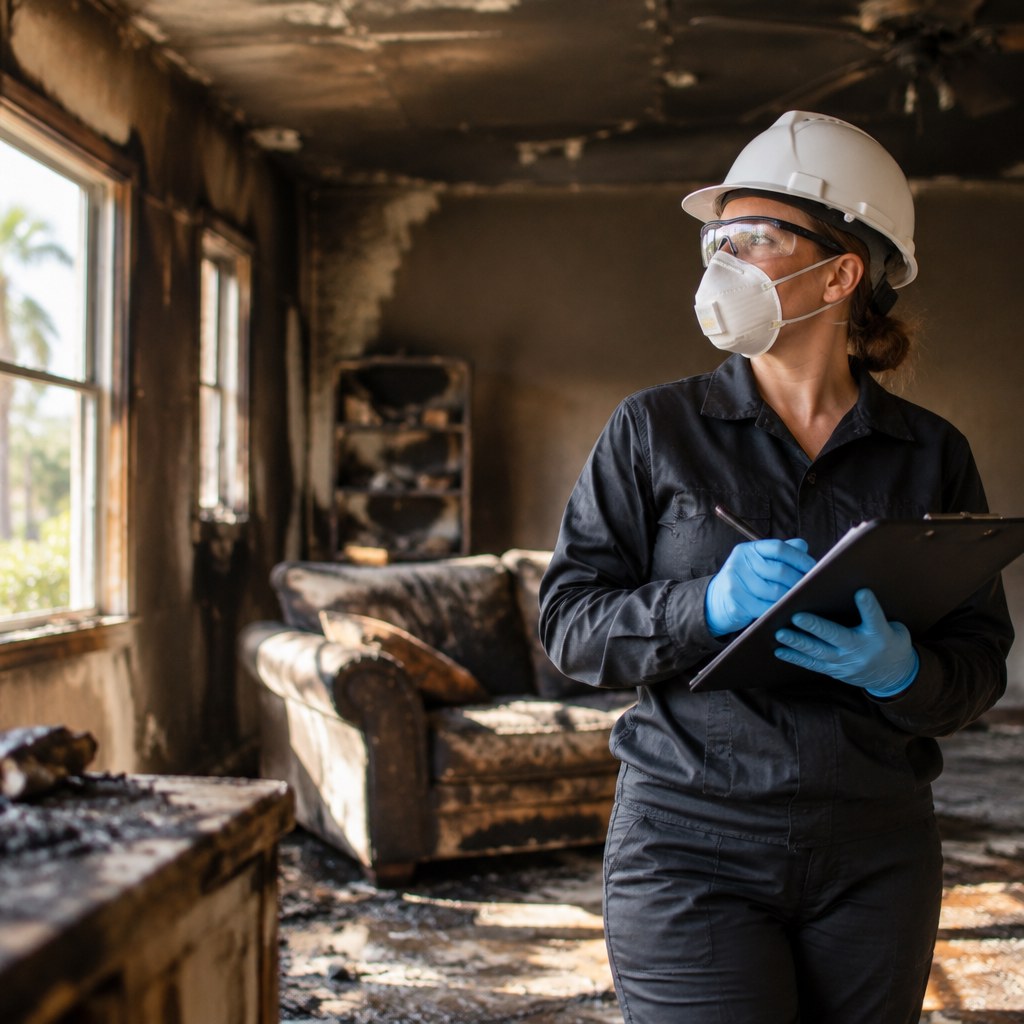
Document Damage Before Moving Anything
Call your insurance carrier promptly and ask what documentation, temporary protection, and contractor approvals are required. Coverage and procedures vary, so keep notes of each conversation rather than assuming a particular service will be reimbursed.
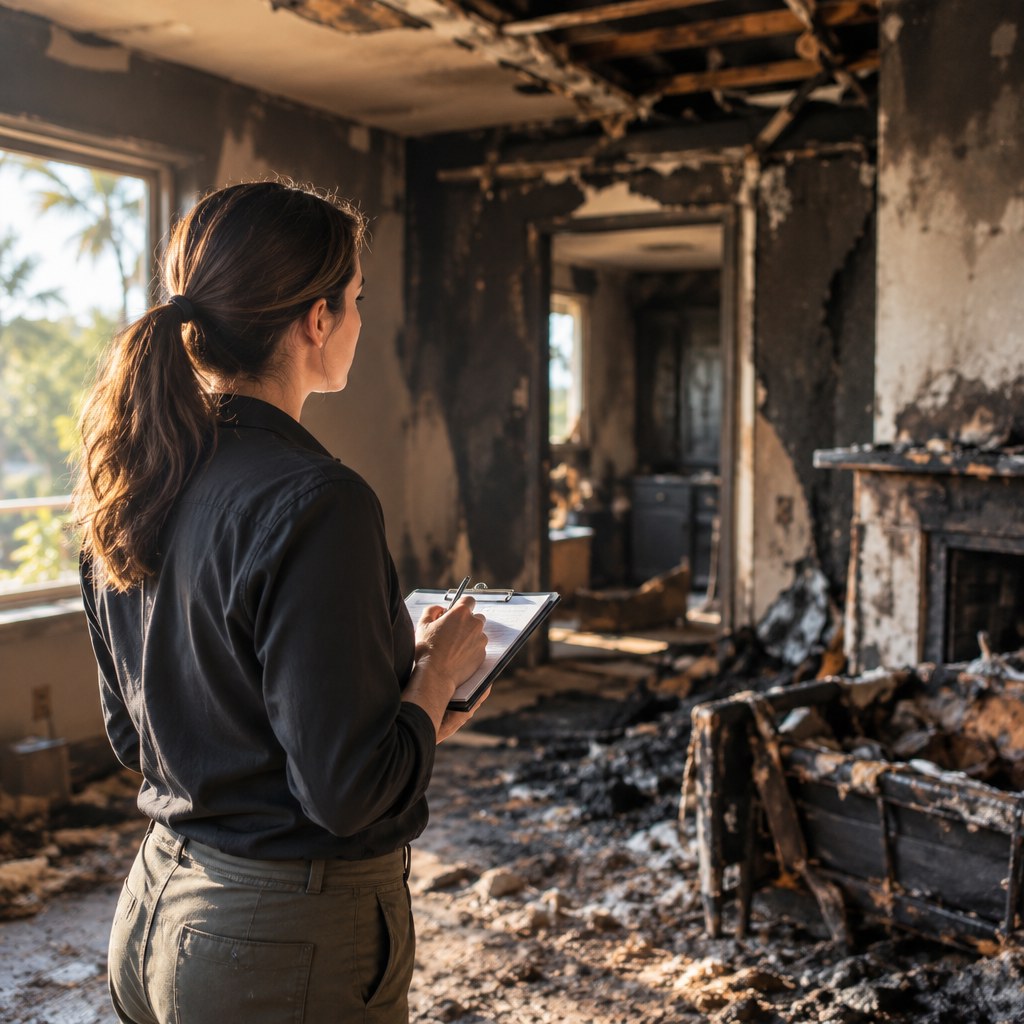
- Photograph rooms from entrances before taking close-up images.
- Record fire, smoke, soot, water, and structural damage separately.
- Make a list of damaged belongings without discarding them unless officials require removal.
- Save receipts for emergency lodging, board-up work, supplies, and other fire-related expenses.
- Keep copies of the incident report, claim number, and restoration estimates.
If you must retrieve medicine, identification, or essential documents, ask whether an escorted entry is available. Do not cross damaged floors or disturb debris to reach an item.
Limit Secondary Damage Without Taking Risks
Open windows, remove wet materials, or cover openings only when professionals confirm those actions are safe. Improper ventilation can spread soot into unaffected rooms, while an unsecured tarp can expose you to roof and fall hazards.
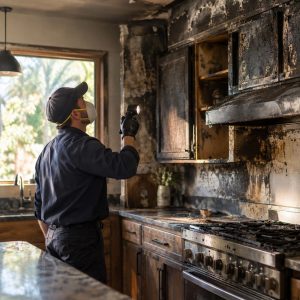
- Do not wash soot-covered walls; water can drive residue deeper into porous finishes.
- Avoid household vacuums, which may redistribute fine soot particles through the air.
- Do not operate smoke-damaged electronics, HVAC equipment, or appliances.
- Leave food, medicine, cosmetics, and absorbent belongings exposed to heat or smoke untouched for evaluation.
- Arrange approved board-up or roof covering when doors, windows, or roofing are open.
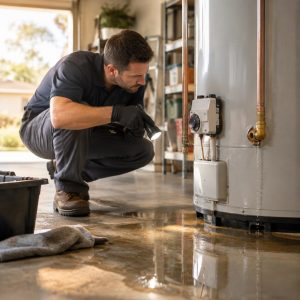
Carrollwood’s heat and humidity can worsen trapped moisture and odors. Firefighting water is also different from a small clean-water plumbing leak: it may mix with soot, chemicals, damaged building materials, or sewage from affected drains. Professional extraction and drying are appropriate when contamination or extensive saturation is possible.
When to Call a Fire Restoration Professional
Professional help is warranted when damage involves structural components, electrical systems, widespread soot, persistent smoke odor, contaminated water, sewage, or multiple wet rooms. A restoration team can identify affected areas that are easy to miss, including wall cavities, insulation, ductwork, and flooring layers.
What the Initial Assessment Should Cover
- Entry hazards and areas requiring stabilization
- Temporary board-up or weather protection
- Water extraction, moisture mapping, and controlled drying
- Soot classification and suitable cleaning methods
- Contents that may be cleaned, stored, or documented as unsalvageable
- Odor treatment after residues and wet materials are addressed
Ask for a written scope that separates emergency mitigation from reconstruction. This helps you understand what must happen immediately and which repairs can wait for insurer review.