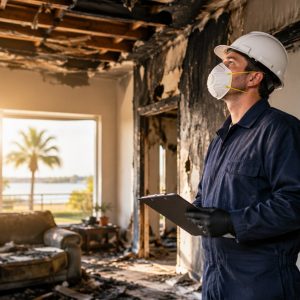
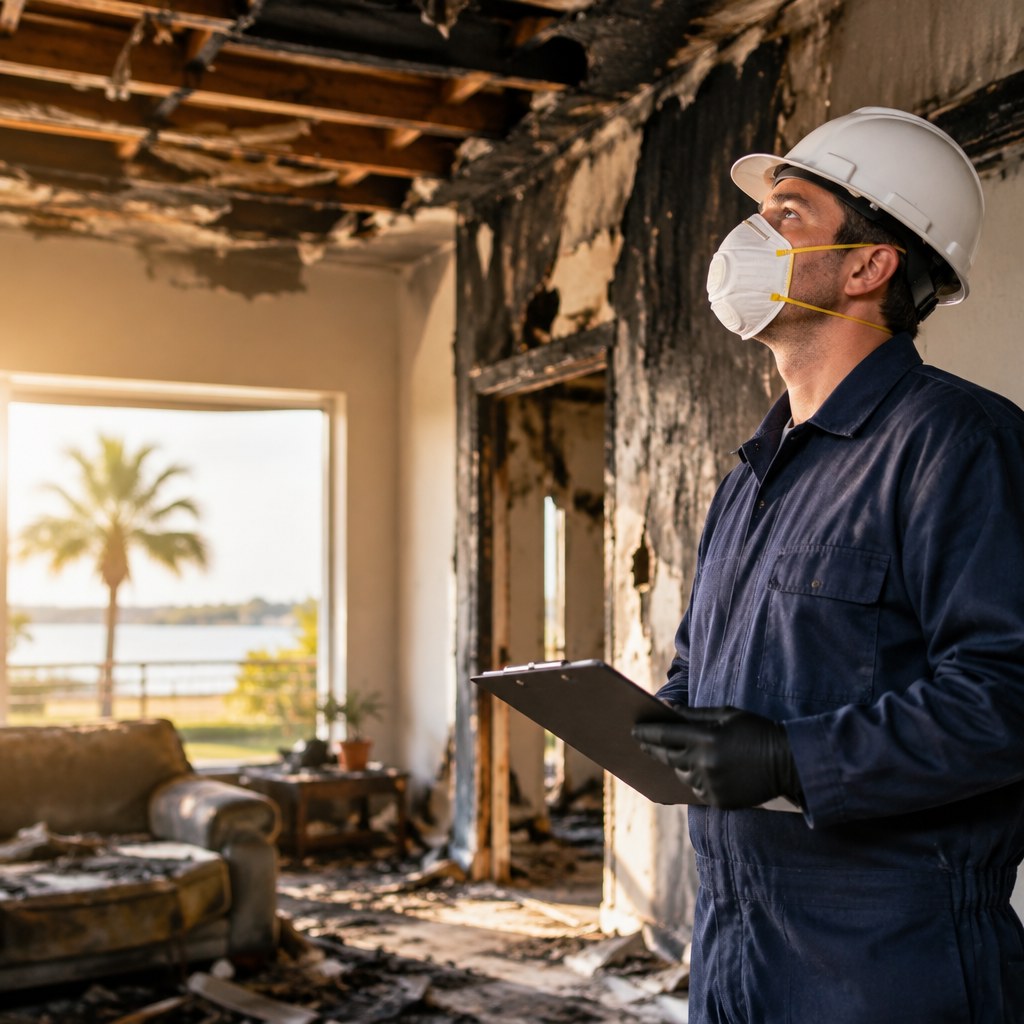
After fire damage in Safety Harbor, prioritize evacuation, official clearance, utility safety, and documentation before cleanup begins. Do not enter a damaged structure or disturb soot until fire officials confirm access is safe and qualified professionals evaluate structural, electrical, and contamination hazards.
What to Do Immediately After a Fire
Even when flames affected only 1 room, smoke, heat, and suppression water may have traveled through walls, ceilings, ducts, and adjoining spaces. Follow these steps before moving belongings or attempting repairs:
- Stay out until the fire department or appropriate local authority permits entry.
- Do not reconnect electricity, gas, appliances, or HVAC equipment. Use licensed professionals when systems may be compromised.
- Keep children and pets away from soot, standing water, unstable materials, and sharp debris.
- Notify your insurance carrier and ask what documentation, emergency work, and contractor approvals your policy requires.
- Arrange temporary protection only when it can be installed safely. Open roofs, broken windows, and damaged doors can expose the property to Tampa Bay rain and humidity.
Document Damage Without Creating More Loss
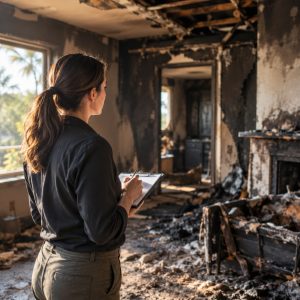
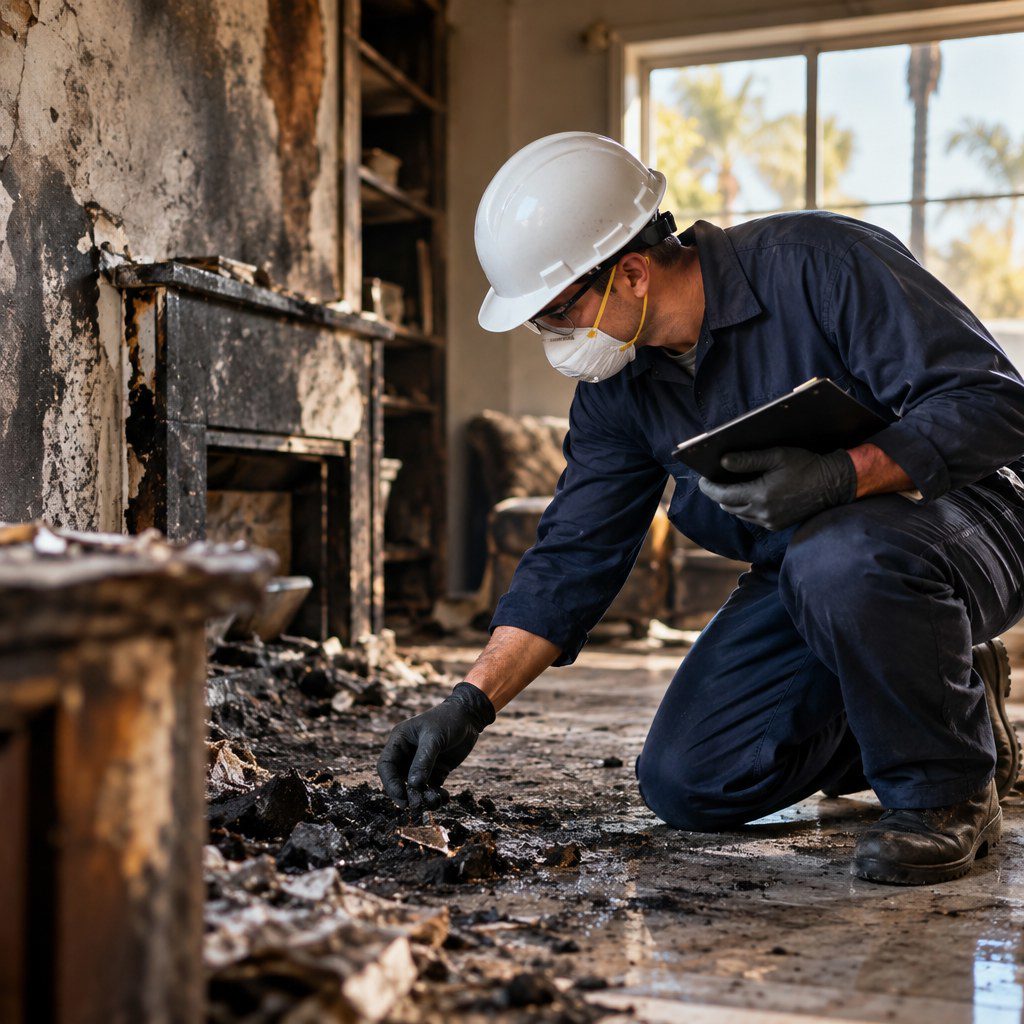
If entry is authorized, photograph each affected room from wide angles before taking close-ups. Capture damaged finishes, furniture, appliances, openings, and visible soot or water lines. Record model and serial numbers when readable, and keep a written inventory of items removed or discarded.
- Save receipts for emergency lodging, supplies, board-up work, and other fire-related expenses.
- Do not throw away damaged property until your insurer explains its inspection requirements, unless an item presents an immediate safety or sanitation hazard.
- Keep copies of estimates, work authorizations, reports, photographs, and communication with contractors or adjusters.
- Avoid wiping walls or testing household cleaners on soot. Incorrect cleaning can smear residue, set staining, or damage finishes.
How Professional Fire Restoration Is Planned
A restoration plan should separate urgent stabilization from cleaning and reconstruction. The first assessment typically considers structural stability, utility hazards, roof or window openings, smoke migration, wet materials, and contents that may be cleaned.
Water and Contamination Require Different Decisions
A small, recent clean-water plumbing leak may allow limited drying when no electrical or structural hazards exist. Fire scenes are different: suppression water can mix with soot, burned materials, chemicals, or outdoor debris. Sewage backups require additional containment and professional handling. Extensive wet drywall, insulation, flooring, or concealed cavities also call for specialized drying and removal decisions.
Cleaning Must Match the Residue
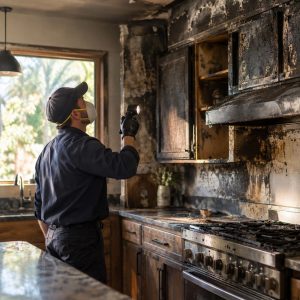
Dry soot, oily smoke residue, and protein-based deposits do not respond to the same methods. Professionals may use controlled debris removal, surface testing, HEPA-filtered equipment, targeted cleaning, odor treatment, and monitored drying. Painting over residue or using fragrances alone does not address the source.
When You Should Call a Restoration Company
Request professional help when fire damage involves structural components, wiring, an electrical panel, gas service, widespread smoke, contaminated water, sewage, extensive moisture, or persistent odor. You should also seek an assessment when smoke entered HVAC equipment or traveled beyond the visibly burned area.
For a Safety Harbor property, ask for a written scope that identifies emergency measures, materials proposed for removal, cleaning methods, drying needs, contents handling, and reconstruction boundaries. Confirm who coordinates specialized trades and how changes to the scope will be documented before work proceeds.