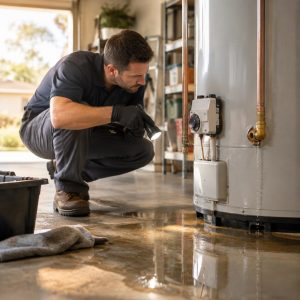
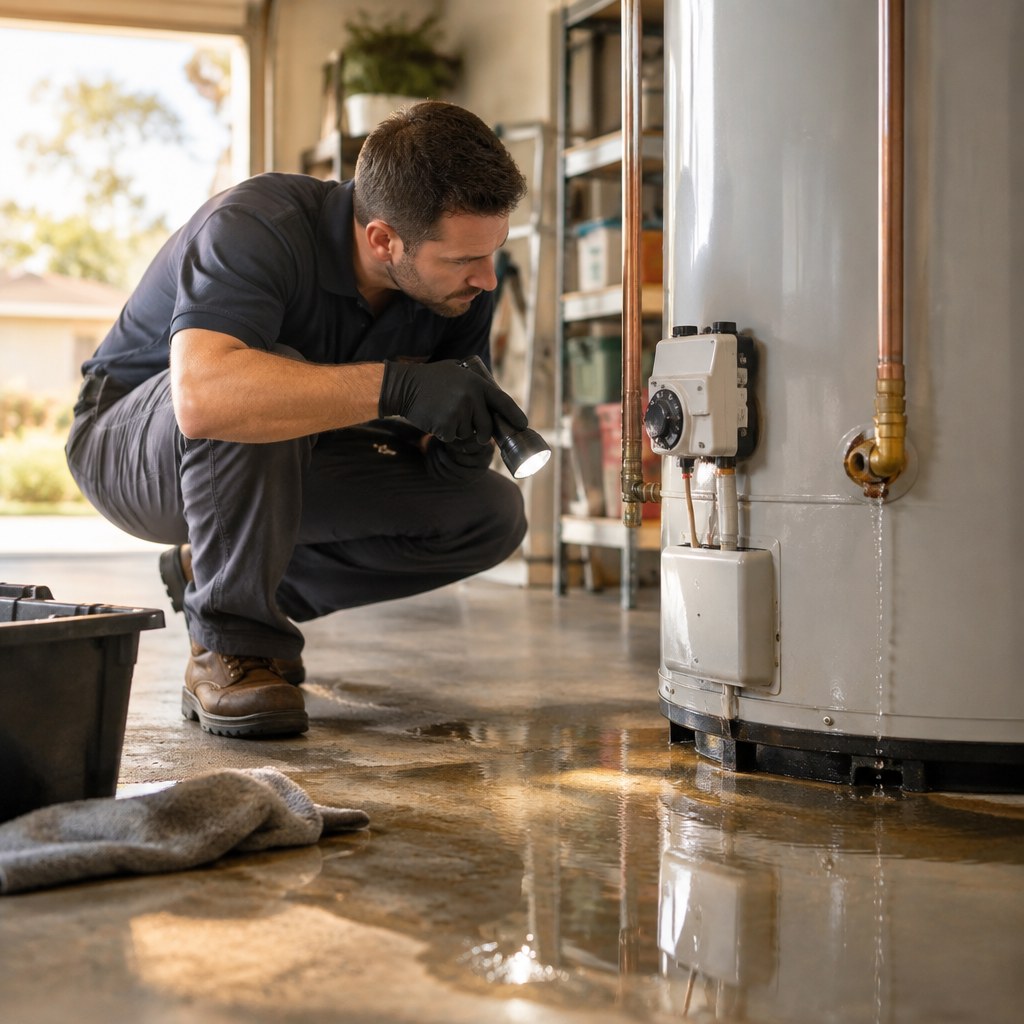
If your water heater is leaking, shut off its water supply, stop the energy source only when you can do so safely, and keep people away from wet electrical areas. Remove standing water only if the leak is clean, limited, and free from electrical, structural, sewage, chemical, or fire hazards.
Immediate Steps for a Leaking Water Heater
A failed tank or connection can release water into garages, closets, walls, and adjoining rooms. Follow these steps to limit water damage in your Palm Harbor home:
- Stay clear of electrical hazards. Do not walk through standing water to reach a breaker panel or appliance. Call an electrician or emergency professional if outlets, wiring, or energized equipment may be wet.
- Stop the water. Close the cold-water shutoff valve above the heater. If it is stuck, inaccessible, or does not stop the flow, use the home’s main water shutoff.
- Turn off the energy source safely. For an electric heater, switch off its breaker only from a dry location. For a gas unit, follow its manufacturer instructions. If you smell gas, leave immediately and contact the gas utility or emergency services.
- Protect nearby belongings. Move dry items away from the affected area without entering unsafe water. Place foil or plastic beneath furniture legs if minor moisture has reached an occupied room.
Find the Leak and Check How Far Water Traveled
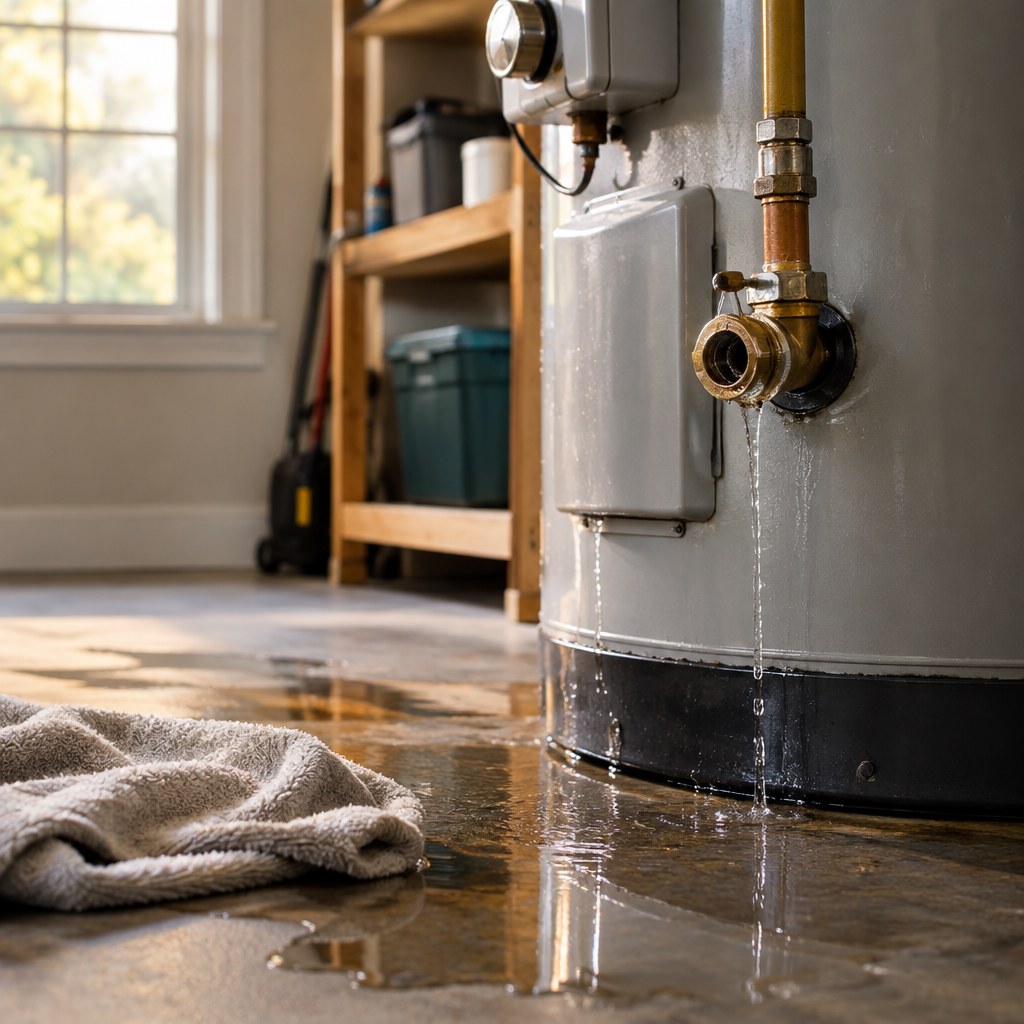
Water may come from a loose supply connection, temperature-and-pressure relief valve, drain valve, condensation, or a corroded tank. A plumbing professional should inspect persistent dripping, pressure-related discharge, rust, or water emerging from the tank body. A ruptured tank generally requires replacement rather than a surface repair.
Check beyond the visible puddle. Look for damp baseboards, swollen flooring, bubbling paint, soft drywall, musty odors, and moisture inside nearby cabinets or closets. Water can pass beneath flooring or through wall cavities, especially when the heater sits in a compact interior space.
Water directly from a supply line or tank may begin as clean water. Treat it as contaminated if it mixes with sewage, chemicals, pests, or dirty outdoor water. Scorch marks, smoke, melted wiring, or unusual heat also require fire and electrical professionals rather than ordinary cleanup.
Document Damage and Decide When to Call
Before moving damaged materials, take wide and close photographs of the heater, suspected source, standing water, affected rooms, flooring, walls, and belongings. Record when you discovered the leak and what you shut off. Keep damaged parts and receipts when practical, and ask your insurer what documentation it requires before disposal.
You may wipe up a small, recent clean-water spill on a nonporous surface if the area is electrically safe. Use towels, ventilation, and a dehumidifier, but do not direct fans across contaminated water or suspected mold.
Contact a water damage professional when water has entered drywall, insulation, cabinets, flooring layers, or multiple rooms; when the affected area is extensive; or when drying progress is uncertain. Professional moisture assessment can identify concealed wet materials and guide extraction, controlled drying, cleaning, and removal decisions. Structural sagging, ceiling water, sewage, gas odors, or wet electrical components require specialized help immediately.
Frequently Asked Questions
Can I keep using a leaking water heater?
No. Continued operation may worsen the leak or create electrical, gas, pressure, and scalding hazards. Shut it down safely and arrange an inspection.
Will the area dry naturally in Palm Harbor?
Visible surfaces may feel dry while moisture remains underneath. Tampa Bay humidity can slow evaporation, so enclosed walls, flooring, and cabinets should be checked rather than judged by touch alone.
Is mold guaranteed after a leak?
No, but delayed drying increases the opportunity for microbial growth. Address the source promptly and verify that affected materials are drying effectively.