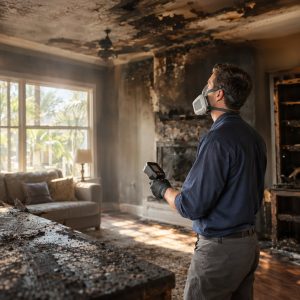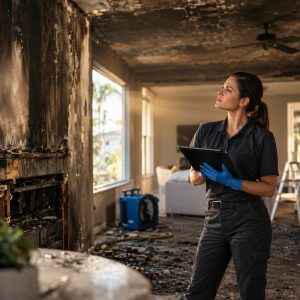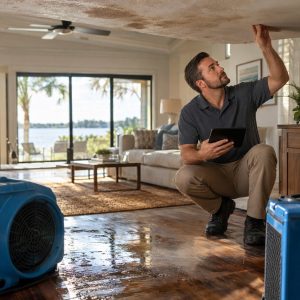
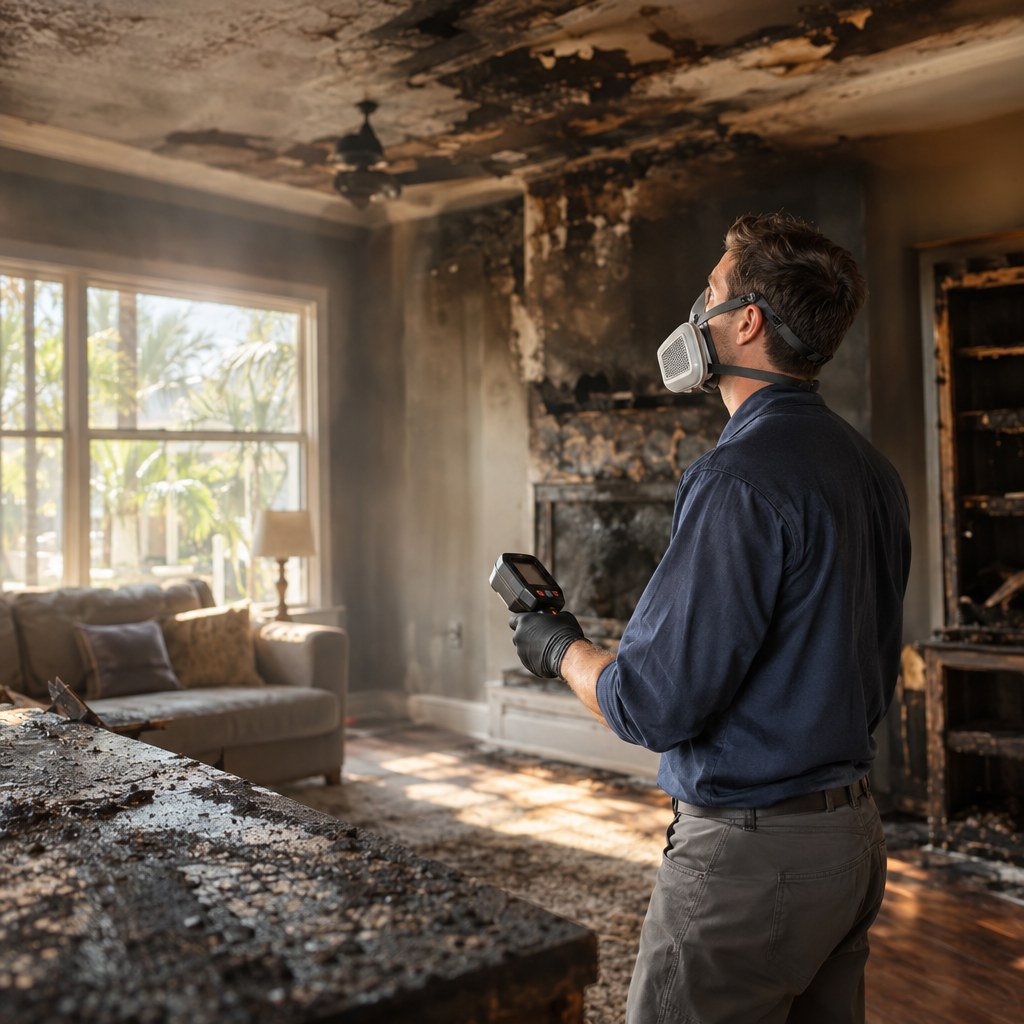
Smoke odor can return after surface cleaning because fire residue does not remain only on visible walls and furniture. Soot and odor-causing compounds can enter porous materials, wall cavities, insulation, ductwork, and HVAC components, then become noticeable again when indoor humidity rises or the air-conditioning system circulates air.
Protect Your Home Before Investigating the Odor
Confirm that fire officials have cleared the property before entering. Even after a small fire, hidden electrical damage, weakened materials, sharp debris, and contaminated firefighting water may make the area unsafe.
- Leave immediately if you notice sagging ceilings, exposed wiring, active heat, or new smoke.
- Do not energize damaged appliances or circuits; use a licensed electrician when electrical components were exposed.
- Keep the HVAC system off if smoke entered vents or the return-air pathway.
- Avoid sweeping or scrubbing dry soot, which can spread fine particles and embed them more deeply.
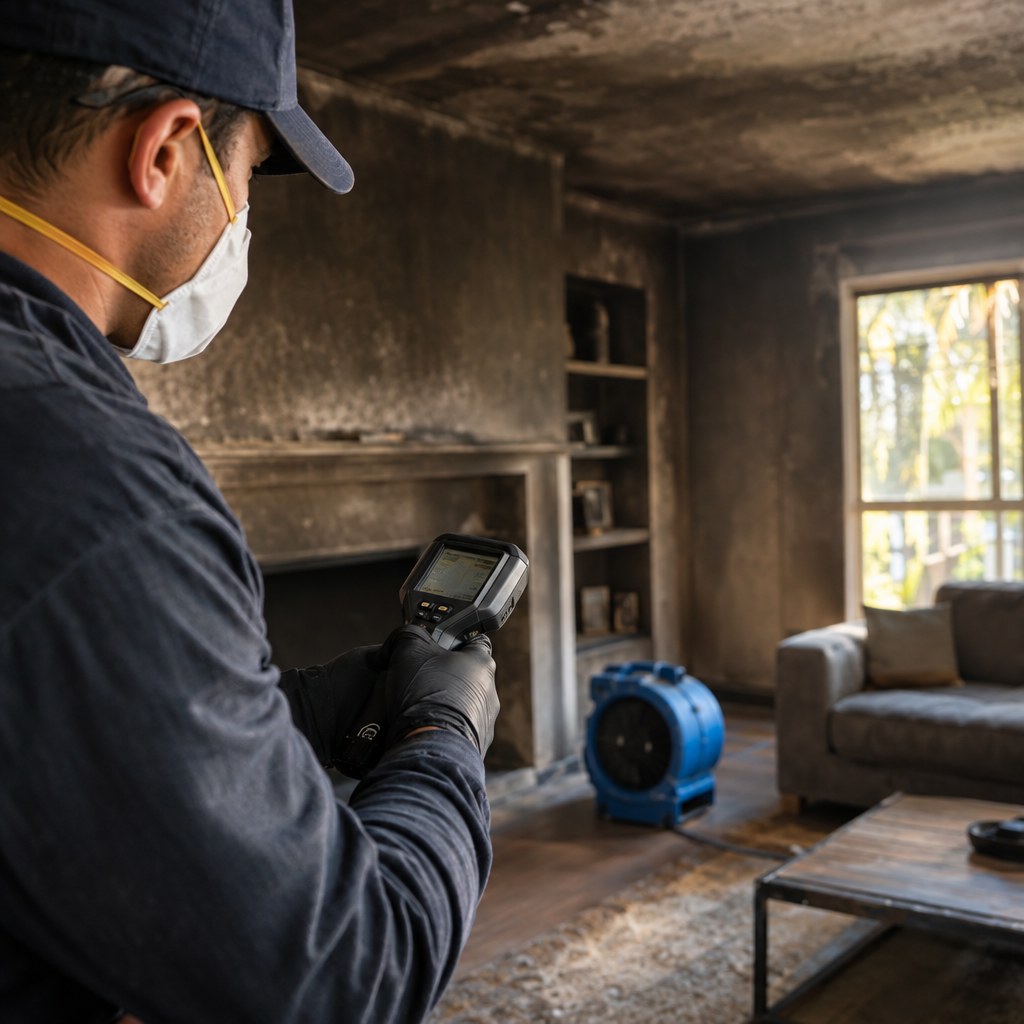
Why a Clean Room Can Still Smell Smoky
Surface wiping removes only residue that the cleaning product and method can reach. Smoke travels with heated air, moves through small openings, and settles far beyond the visibly burned area. In Westchase homes kept closed for air conditioning, contaminated air may also move through returns, supply vents, and shared chases.
Common hidden odor reservoirs
- Drywall paper, unfinished wood, cabinets, subfloors, and insulation
- Carpet padding, upholstered furniture, mattresses, curtains, and clothing
- Attics, wall voids, recessed fixtures, and spaces behind baseboards
- Air handlers, filters, ducts, coils, and return-air cavities
- Protein or grease residue from a kitchen fire, which can be difficult to see
Odor may seem resolved while the home is ventilated, then return after doors close, the temperature changes, or indoor humidity increases. Fragrances can temporarily cover the smell but do not remove its source.
What Effective Smoke-Odor Restoration Involves
Fire restoration should match the cleaning process to the material and residue. Aggressive washing can stain certain surfaces, while using the wrong product may smear oily soot rather than remove it.
- Inspect the migration path: Trace smoke from the fire area into adjacent rooms, cavities, contents, and mechanical systems.
- Remove loose contamination: Appropriate vacuuming and dry-cleaning methods may be used before wet cleaning to limit smearing.
- Clean or remove affected materials: Some porous items can be treated, while heavily contaminated insulation, padding, or damaged finishes may require removal.
- Address remaining odor: Professional deodorization is performed after source removal and cleaning—not as a substitute for them.
Do not use ozone equipment in an occupied home. Specialized deodorization methods require controlled conditions, suitable materials, and safety procedures.
Document the Damage and Know When to Call
Before discarding or cleaning items, photograph each affected room, visible soot, damaged contents, vents, and water intrusion. Create an itemized inventory, save receipts, and note when the odor appears—for example, when the AC starts or after a humid afternoon.
Contact a fire damage professional when odor affects several rooms, returns repeatedly, entered the HVAC system, or accompanies structural, electrical, or extensive water damage. You should also consult your insurer about documentation requirements and policy terms before making major disposal decisions.
Big Wave Restoration can evaluate visible and hidden fire residue, identify likely odor sources, and explain appropriate cleaning and deodorization steps for your Westchase property.