
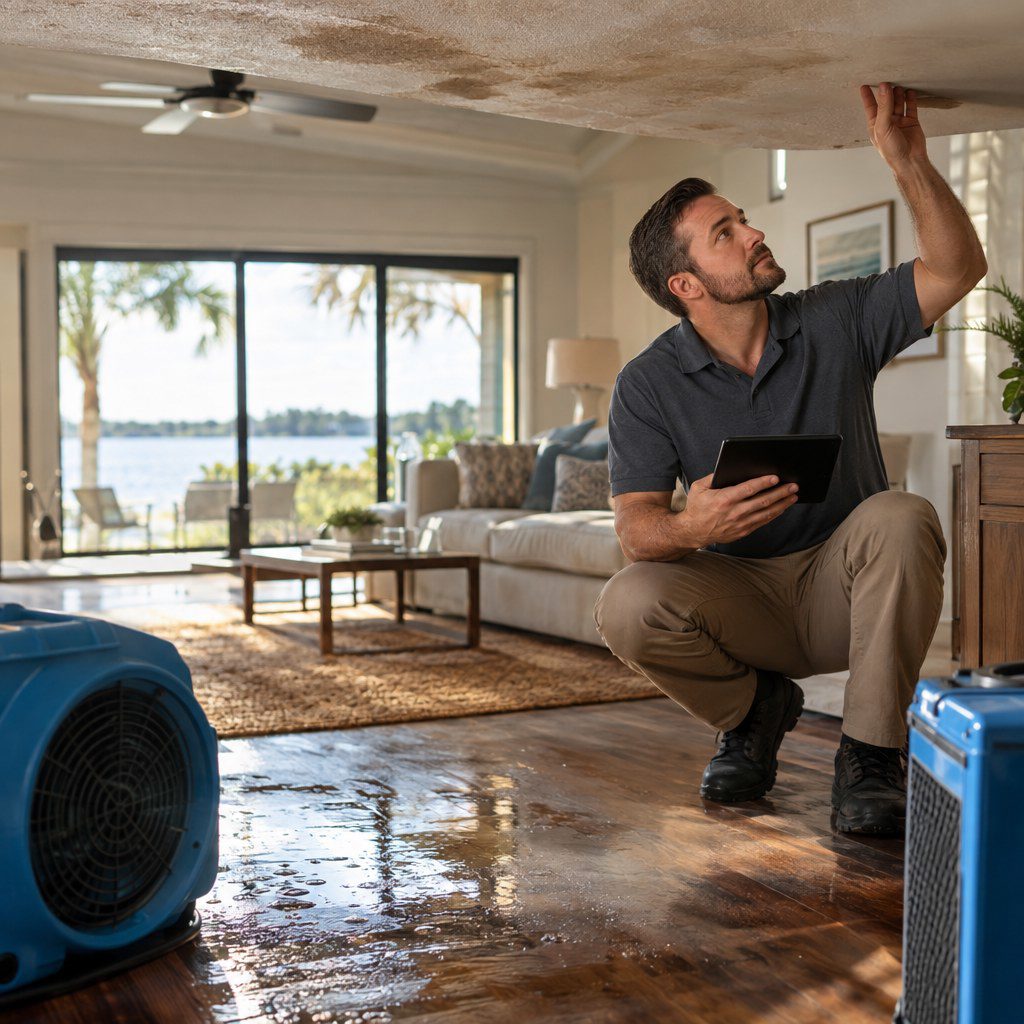
If you discover a vacation-home leak in Land O’ Lakes, first confirm the property is safe to enter, stop the water only if you can do so safely, and document visible damage before moving items. Check beyond the obvious puddle: moisture can spread into drywall, cabinets, flooring, insulation, and nearby rooms. If the home has been closed for days, open doors cautiously and watch for active dripping or ceiling movement before stepping inside.
Make the Property Safe First
A leak may involve electrical, structural, or contamination hazards. If water is near outlets, appliances, an electrical panel, or sagging ceilings, stay out of the affected area. Do not handle breakers while standing in water; contact qualified help instead. Plan a dry route to the shutoff first, and leave immediately if you hear cracking or see water moving near wiring.
- Shut off the home’s main water supply if the source is a plumbing failure and the valve is safely accessible.
- Do not walk beneath bulging drywall or ceilings, which may release water or collapse.
- Avoid using household vacuums, extension cords, or fans in wet areas.
- Keep children and pets away until hazards have been evaluated.
Check Where Water May Have Traveled
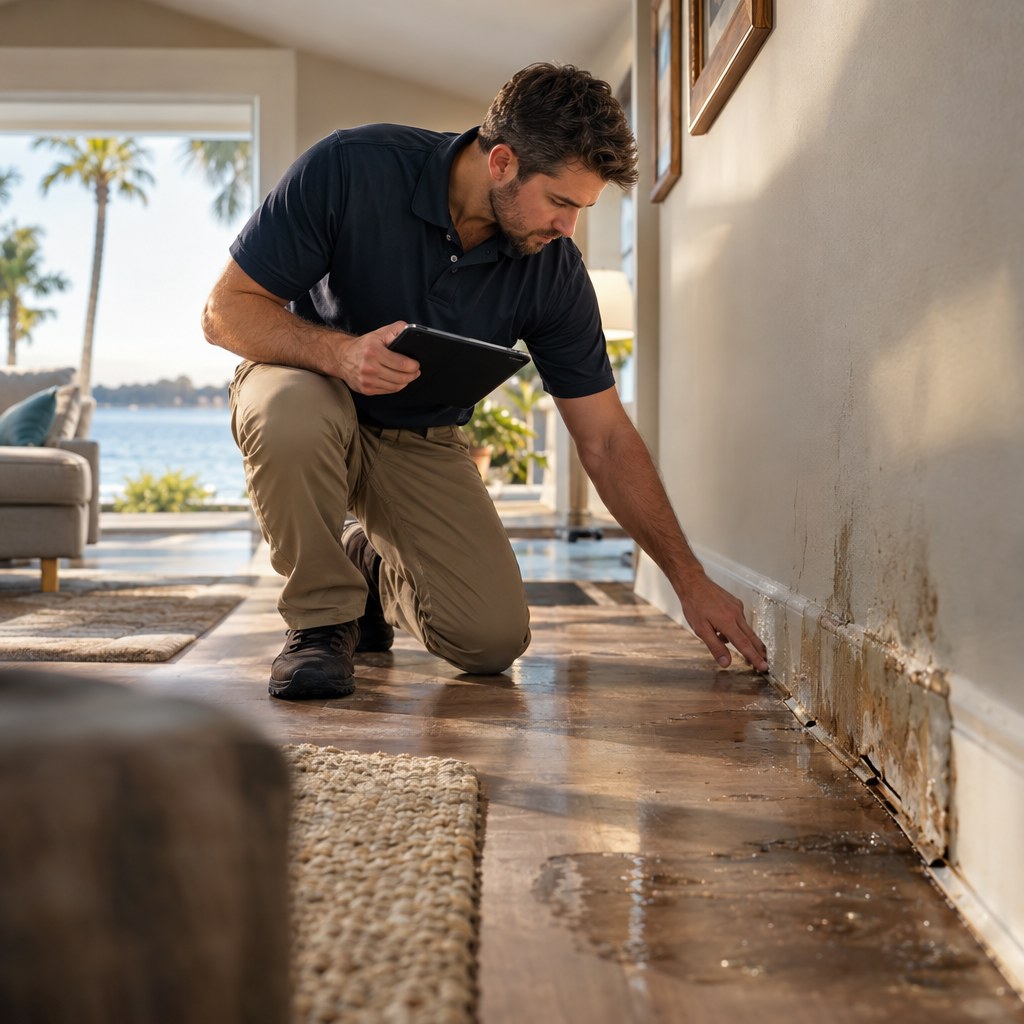
Vacation-home leaks can remain unnoticed, so the wet area may extend beyond the failed pipe, appliance, or HVAC component. Follow the water’s likely path from the source, including rooms below or on the opposite side of a wall. For example, a refrigerator line leak can run beneath cabinets and appear at a distant baseboard. Work outward from the source, comparing suspect materials with dry areas and marking wet boundaries with removable tape.
- Ceilings and walls: Look for staining, bubbling paint, softened drywall, separated seams, and sagging surfaces.
- Floors: Check for lifted planks, loose tile, swollen baseboards, damp carpet padding, or moisture emerging at seams.
- Cabinetry: Inspect toe kicks, sink bases, cabinet backs, and adjoining walls for swelling or discoloration.
- HVAC areas: Examine the air handler, condensate drain, drain pan, nearby closets, and supply vents.
- Hidden spaces: Check closets, attached garage walls, utility rooms, and furnishings resting against affected surfaces.
Land O’ Lakes homes can remain warm and humid while unoccupied. Closing the house without controlled drying may trap moisture, while aggressive air movement can spread contamination if sewage or mold-like growth is present.
Document Damage Before Cleanup
Take wide photographs of every affected room, then capture close views of the source and damaged materials. Record the date you discovered the leak, when you last knew the home was dry, actions taken to stop the water, and any plumber or property-manager findings. Photograph the same area from consistent angles before extraction or removal begins, making later changes easier to compare.
Preserve Useful Details
- Photograph model and serial labels on leaking appliances when accessible.
- Keep damaged items available for review unless they create a safety hazard.
- Save invoices, inspection notes, and a list of discarded belongings.
- Contact your insurer for policy-specific reporting and documentation requirements; coverage varies.
Know When Professional Drying Is Needed
A small, immediately discovered clean-water spill may be manageable after the source is repaired and materials are dried completely. Call a restoration professional when water entered wall cavities, soaked carpet padding, affected multiple rooms, remained undiscovered, or produced persistent odors or visible growth. If safe surfaces remain soft, warped, or damp after ventilation, surface drying may be insufficient and hidden materials should be assessed.
Professional help is especially important for sewage, stormwater, electrical exposure, unstable materials, or fire-related water damage. Moisture assessment can identify affected areas that appearance alone may miss and guide removal, drying, and monitoring decisions.