A musty room after water damage usually means moisture remains in drywall, flooring, insulation, or another porous material, and microbial growth may be developing. Stop the water source, avoid disturbing suspected mold, and arrange professional assessment when odors persist, materials stay damp, or contamination may be hidden.
What to Do Immediately
Begin with safety rather than cleaning. If water has reached outlets, wiring, appliances, or an electrical panel, stay out of the affected area and contact a qualified electrician. Leave immediately if ceilings are sagging, floors feel unstable, or structural movement is visible.
- Shut off the water source if you can do so safely.
- Keep children, pets, and anyone with respiratory sensitivities away.
- Do not aim fans at visible mold; moving air can spread spores.
- Avoid peeling wallpaper, opening walls, or pulling up contaminated flooring.
- Use air conditioning or a dehumidifier only if the equipment is clean and electrical conditions are safe.
Identify the Water Source and Hazard Level
A supply-line leak involving clean water presents different risks from a sewage backup, toilet overflow, stormwater intrusion, or water containing chemicals. Even initially clean water can become more hazardous after prolonged contact with building materials and contaminants.
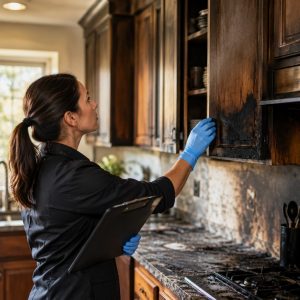
Do not handle sewage, floodwater, or visibly contaminated materials yourself. Professional help is also appropriate after fire suppression because the affected space may contain soot, damaged wiring, unstable materials, and contaminated runoff in addition to moisture.
Look Beyond the Visible Stain
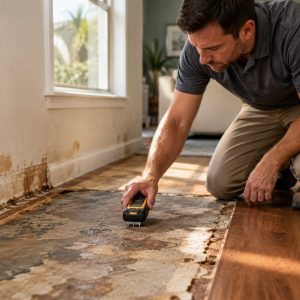
A dry-looking surface does not confirm that the wall cavity or subfloor is dry. Watch for swollen baseboards, bubbling paint, soft drywall, warped flooring, condensation, recurring discoloration, or an odor that becomes stronger when the HVAC system runs. A musty smell near one vent may indicate damp duct insulation or moisture around the air handler rather than mold inside the room itself.
Document the Damage Before Cleanup
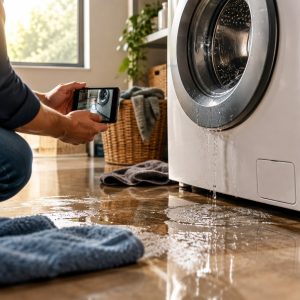
When conditions are safe, create a record before moving belongings or removing materials. Documentation can help your restoration team understand the sequence of events and may support discussions with your insurer. Coverage depends on your policy and the cause of loss, so confirm requirements directly with your insurance representative.
- Photograph wide views and close-ups of stains, damaged finishes, and the suspected source.
- Record when you discovered the water and when the source was stopped.
- List affected furniture, flooring, electronics, and personal property.
- Save plumbing invoices, drying records, and communication about the loss.
- Note whether the odor changes after rain, air-conditioning cycles, or plumbing use.
What Professional Mold Remediation Involves
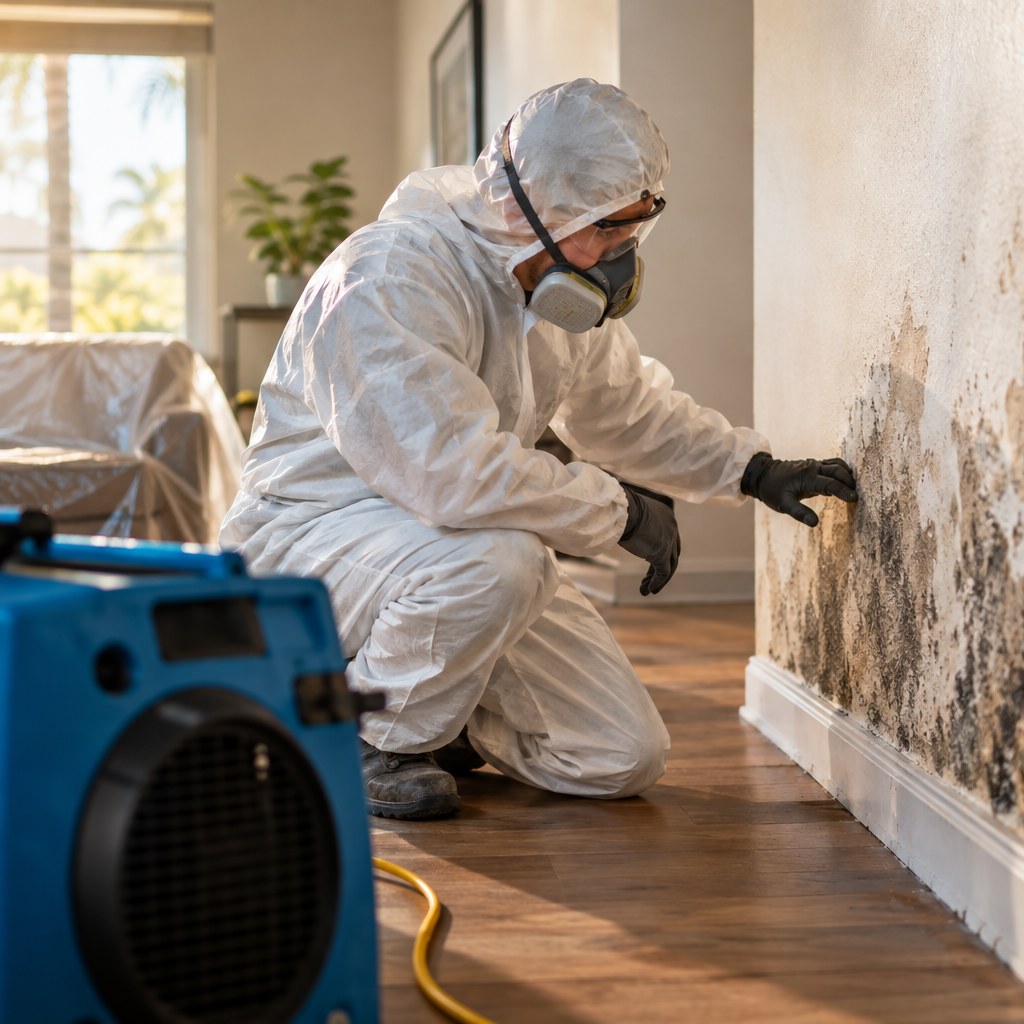
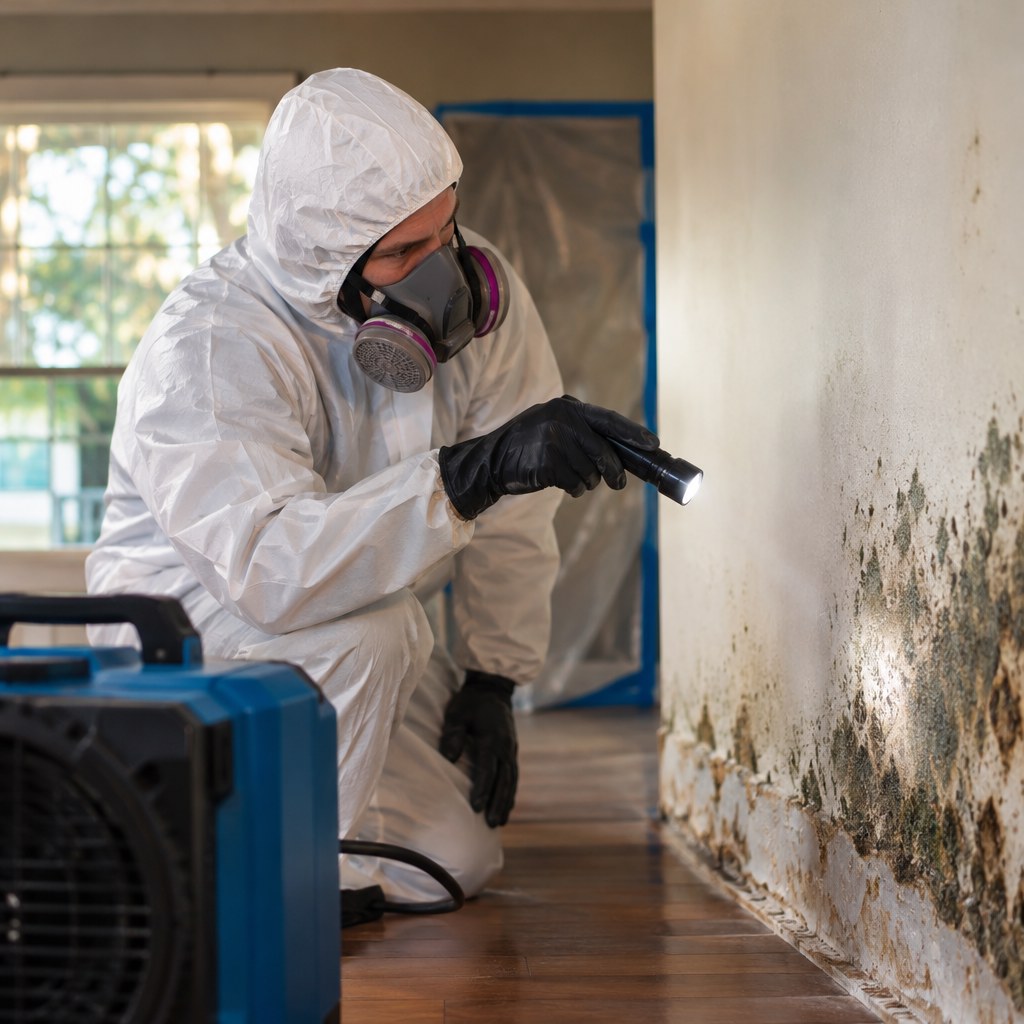
A remediation plan should address moisture first. Depending on the conditions, technicians may inspect concealed areas, measure moisture, isolate the work zone, filter airborne particles, remove materials that cannot be safely restored, clean remaining surfaces, and dry the structure. Simply painting over a stain or spraying fragrance does not correct the source.
Call a professional when growth covers more than a small, isolated surface, contamination is inside walls or HVAC components, odors return after cleaning, or you cannot verify that materials are dry. You should also seek help for sewage, electrical hazards, structural damage, repeated leaks, or symptoms that worsen in the room.
Can You Clean a Small Spot Yourself?
A minor spot caused by brief clean-water exposure may be manageable if the source is fixed, the material is nonporous, and no hidden damage exists. Porous drywall, carpet padding, insulation, and ceiling tile can retain contamination; scrubbing the surface may not solve the underlying problem.
Address the Musty Odor at Its Source
Big Wave Restoration can help you evaluate water damage and plan appropriate mold remediation in Riverview. Prompt assessment limits further disruption and helps clarify what can be cleaned, dried, or removed.
Learn about our mold remediation services and water damage restoration services.