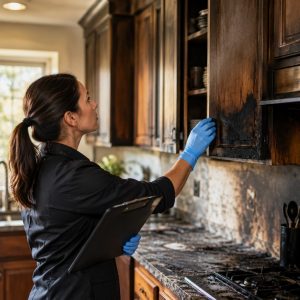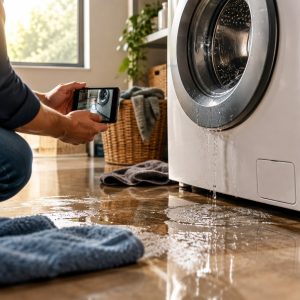
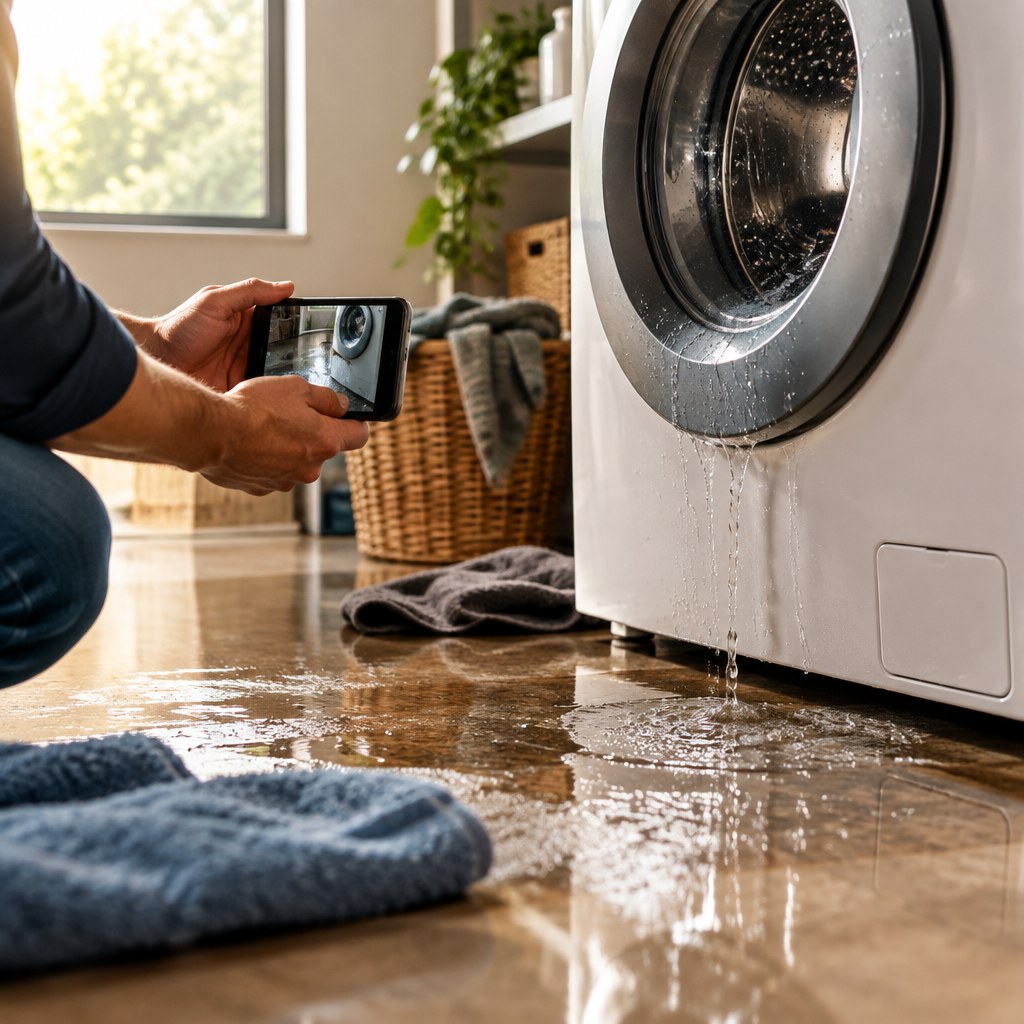
A washing machine overflow in Valrico should be documented before cleanup changes the scene, provided it is safe to enter. Stop the water, avoid electrical hazards, photograph the source and every affected surface, then record what you do to limit further damage.
Make the Laundry Area Safe First
If the washer is still filling, close its supply valves. If you cannot reach them safely, use the home’s main water shutoff. Do not stand in water while touching the appliance, an outlet, a breaker panel, or an extension cord.
- Keep children and pets away from wet rooms.
- Do not operate the washer again to identify the leak.
- Leave the area and call qualified help if you notice sparking, heat, smoke, a burning odor, sagging materials, or water near energized equipment.
- Move dry belongings only when doing so will not spread water or expose you to hazards.
How to Document a Washing Machine Overflow
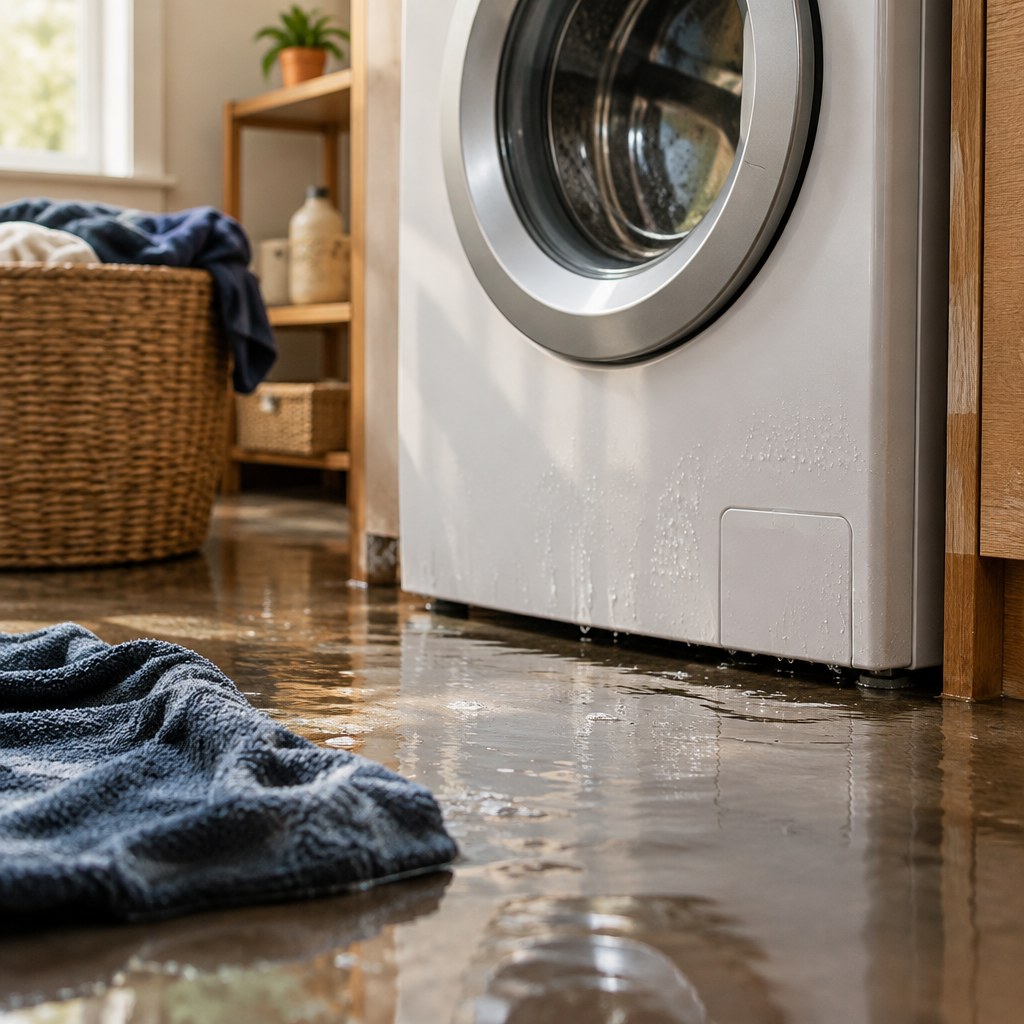
Begin with wide photos showing the entire laundry room and the water’s path. Then capture close views of the supply hoses, drain hose, wall connections, washer controls, standing water, and visible damage. Take a short video while slowly narrating what you see without speculating about the cause.
Create a Written Incident Log
- Note when you discovered the overflow and when the washer was last used.
- Record when you shut off water or electricity and who performed each action.
- List affected rooms, flooring, baseboards, drywall, cabinets, furniture, and stored items.
- Photograph model and serial labels without moving an unsafe appliance.
- Save receipts for emergency services, equipment rental, temporary storage, and damaged property.
Do not discard a failed hose, damaged item, or flooring sample until you have photographed it and asked your insurer whether an inspection is required. Keep original files and back them up rather than relying only on edited or compressed copies.
Trace Water Beyond the Visible Puddle
In Valrico homes, water may travel beneath floating floors, along grout joints, into wall cavities, or toward an adjoining garage or hallway. Photograph thresholds and lower walls even when they look dry. Check the room below if the laundry area is upstairs, but do not press on a bulging ceiling.
For example, if water stops at a baseboard, mark the visible boundary with removable painter’s tape and photograph it. A restoration professional can use moisture-detection equipment to evaluate whether dampness extends farther. Florida’s warm, humid conditions make prompt, controlled drying especially important.
Cleanup, Insurance, and Professional Help
After documenting the scene, you may blot a small, clean-water spill with towels and increase safe ventilation. Avoid using an ordinary household vacuum on water. Do not remove attached flooring, open walls, or apply bleach simply to hide staining; those actions can complicate assessment and may not address concealed moisture.
Contact your insurance carrier or agent promptly to ask about reporting requirements, covered work, documentation, deductibles, and approval procedures. Coverage depends on your policy and the cause of loss, so no restoration company can guarantee payment.
Call a water-damage professional when water has entered walls or flooring, reached multiple rooms, remained unnoticed, or affected electrical or structural materials. Professional assistance is also appropriate for contaminated water, odors, visible microbial growth, or any uncertain safety condition.
Get Help With Water Damage in Valrico
Big Wave Restoration can assess affected materials, explain drying needs, and help you organize useful damage documentation. Call to discuss the washing machine overflow and the areas it reached.