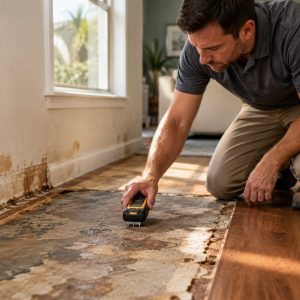
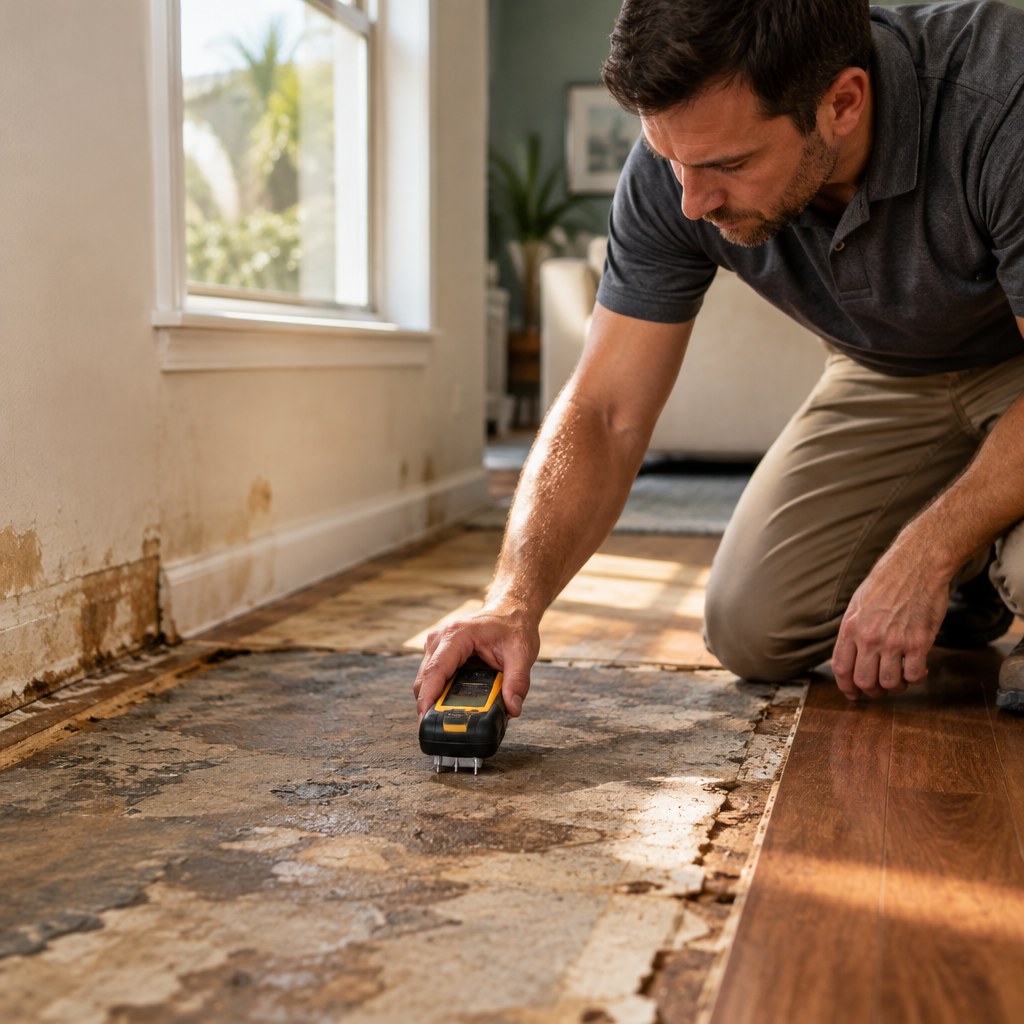
Moisture readings matter before you replace water-damaged flooring because a surface can look dry while the subfloor, concrete slab, underlayment, or wall edges remain wet. Installing new flooring too soon can trap moisture, damage adhesives and finishes, encourage microbial growth, and force you to replace the material again.
What Moisture Testing Reveals
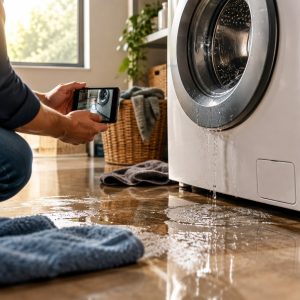
After a plumbing leak, appliance overflow, roof intrusion, or wind-driven rain in Carrollwood, water can migrate beyond the visible stain. It may travel beneath vinyl planks, soak engineered wood, collect under tile, or spread through seams in a wood subfloor. Air movement may dry the exposed surface first, creating a misleading impression that the assembly is ready.
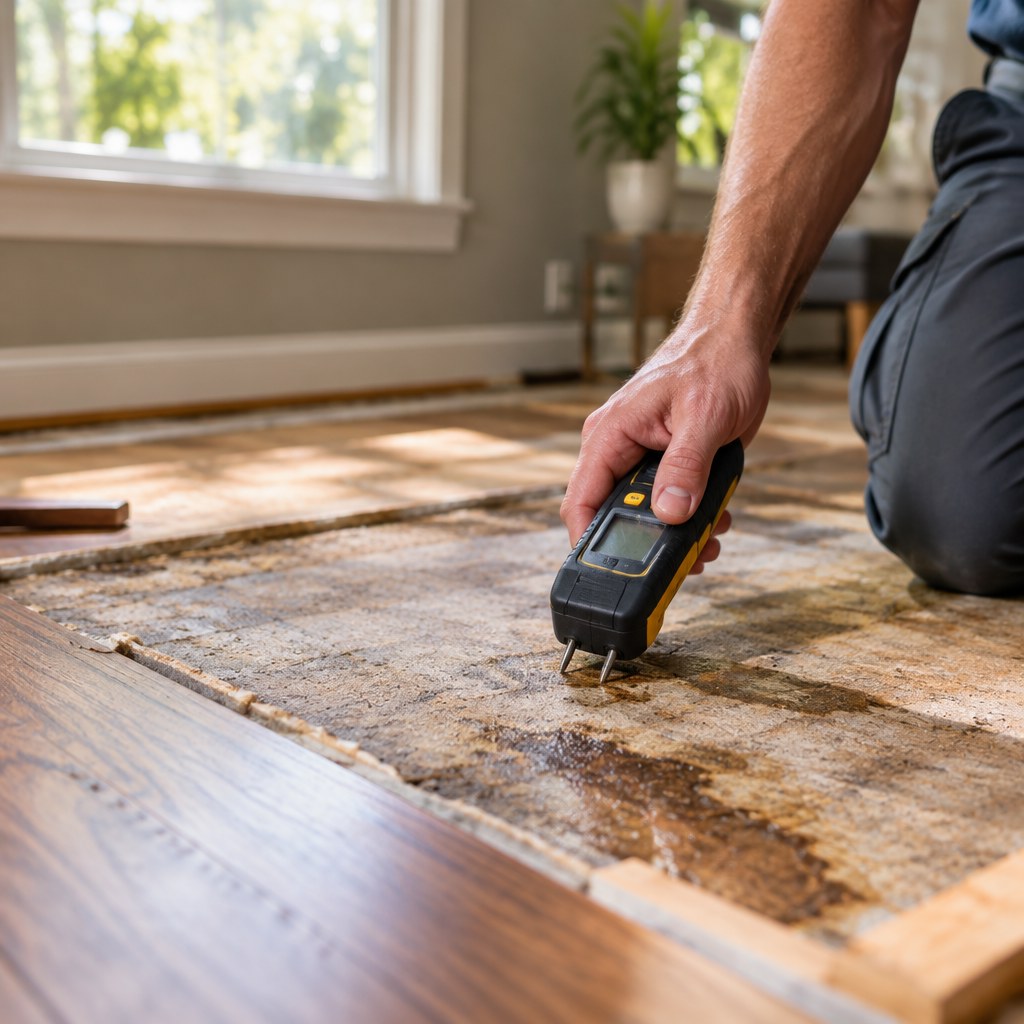
Restoration professionals use meters and, when appropriate, probes to compare affected materials with dry areas of similar construction. Because readings vary by material and instrument, a number should not be interpreted in isolation. The drying target may also need to align with the flooring manufacturer’s installation requirements.
What to Do Before Removing Flooring
Protect yourself first, then preserve useful information for the restoration and insurance process.
- Stop the water source if you can do so safely.
- Avoid standing water near outlets, appliances, wiring, or an energized electrical panel. Contact qualified help rather than entering the area.
- Photograph the source, water path, damaged flooring, baseboards, and affected belongings before cleanup.
- Record when you discovered the loss and any steps taken to limit further damage.
- Keep damaged materials until your insurer provides guidance, unless they create an immediate safety or sanitation concern.
Why the Flooring Type Changes the Decision
Laminate and engineered wood may swell or separate after water reaches their cores. Carpet padding can retain moisture after the carpet face feels dry. Luxury vinyl may resist surface water, but moisture can remain beneath planks and affect adhesive or the substrate. Tile itself may be sound while water persists in grout, mortar, or the assembly below.
Concrete slabs require special attention because moisture readings for concrete are not equivalent to readings for wood. For example, if a leak spreads beneath floating flooring over a slab, removing a few visibly damaged boards does not establish that the remaining installation area is ready. The flooring installer should confirm that substrate conditions meet the product’s requirements.
When Professional Help Is Important
A small, promptly contained clean-water leak may be manageable if affected materials are accessible and dry completely. Call a restoration professional when water has entered multiple rooms, moved beneath cabinets or walls, soaked structural materials, or remained unnoticed.
Sewage, drain backups, floodwater, and other contaminated sources require different handling than clean supply-line water. Keep people and pets away from affected areas. You should also seek professional help for electrical hazards, sagging materials, suspected structural damage, or water damage associated with a fire, where soot and firefighting water can create overlapping hazards.
Questions to Ask Before Installation
- Were the subfloor, slab, underlayment, baseboards, and nearby walls checked?
- Were affected readings compared with an appropriate dry reference area?
- Has the water source been repaired and the full migration path evaluated?
- Do current conditions satisfy the replacement flooring and adhesive instructions?
Keep photographs, moisture logs, repair invoices, and product instructions together. This documentation helps you understand what was tested and gives your flooring contractor better information before installation begins.