Soot can spread far beyond a kitchen because fire creates hot, airborne particles that travel through doorways, wall cavities, ventilation ducts, and gaps around fixtures. Even a contained cooking fire in a Seminole home may leave oily residue and smoke odor in bedrooms, closets, or the HVAC system, making surface wiping alone insufficient.
What to Do Immediately After a Kitchen Fire
Do not enter until the fire department or appropriate authority says the property is safe. Once access is permitted, take precautions before touching damaged materials:
- Turn off the HVAC system if you can do so safely. Running it may redistribute particles through supply and return vents.
- Avoid electrical appliances, outlets, and fixtures exposed to heat, soot, or firefighting water.
- Do not test weakened cabinets, ceilings, or flooring. Hidden heat damage can affect structural connections.
- Keep children and pets away from affected rooms.
- Do not eat exposed food, including items in heat-damaged packaging.
💡 Important: Fire residue is different from debris caused by a clean-water leak. It may contain irritating combustion byproducts and should not be dry-swept or dispersed with a household vacuum.
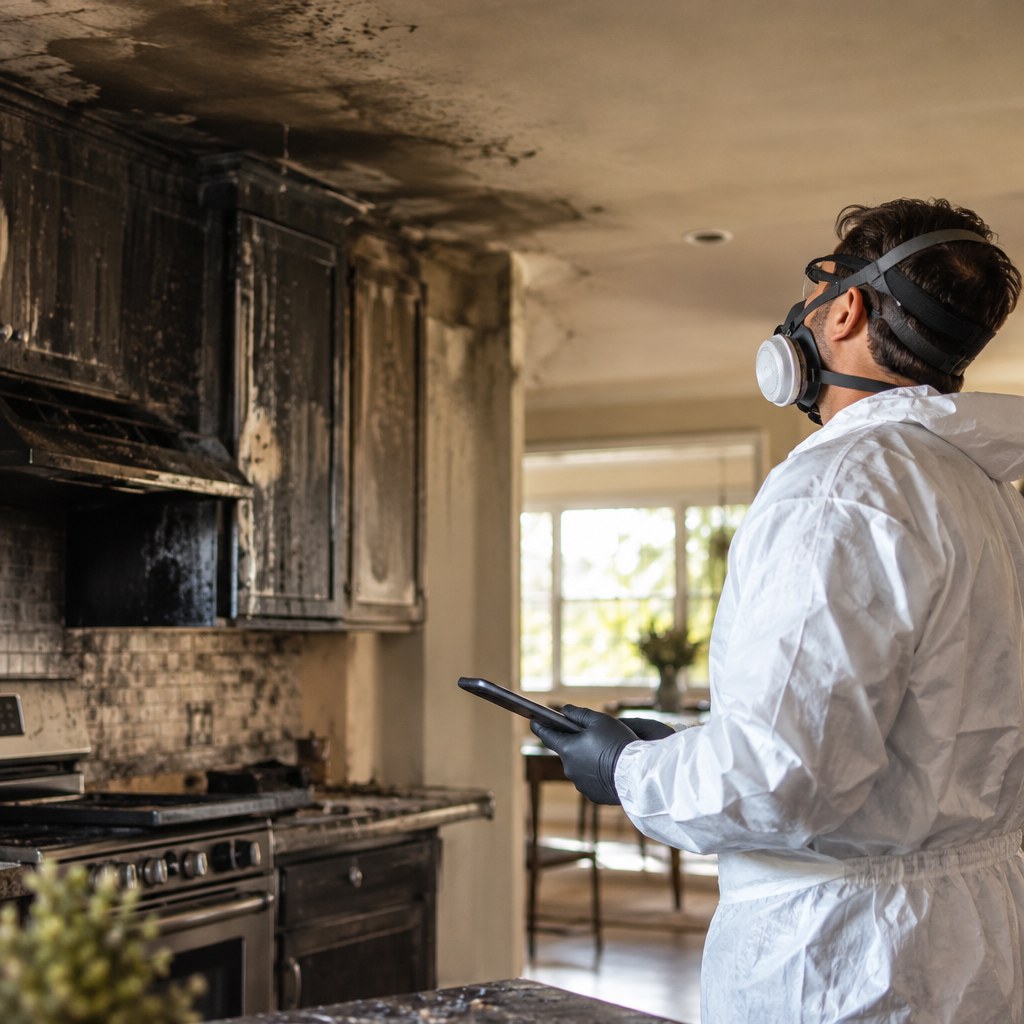
How Soot Moves Through a Seminole Home
Heat makes smoke rise, but household air currents determine where it settles. During a fire, pressure differences can push smoke under doors and into adjoining hallways. Fine particles may enter return vents, while larger, sticky deposits collect on cooler walls, ceilings, glass, and metal.
The type of cooking fire matters. Burning oil can create greasy soot that smears when wiped with water. Melted plastics, wiring, or synthetic materials may produce a different residue requiring material-specific cleaning. A range hood also may not contain smoke, particularly if it recirculates air rather than exhausting outdoors.
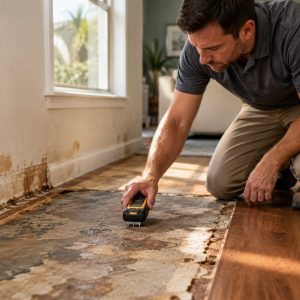
Seminole’s warm, humid climate adds another concern after extinguishing efforts. Moisture from firefighting, open windows, or damaged roofing can combine with soot and odors. Wet drywall, insulation, or cabinetry should be evaluated separately for moisture damage and possible microbial growth.
Places That Need Inspection
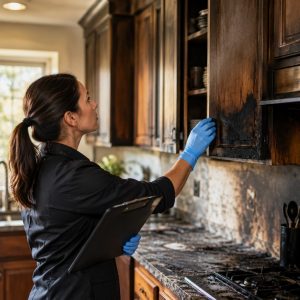
Visible black marks near the stove are only the starting point. Check for discoloration, residue, or persistent odor in areas connected by airflow:
- HVAC registers, return grilles, filters, and nearby ductwork
- Ceilings, crown molding, door tops, and upper cabinet surfaces
- Closets, fabrics, mattresses, curtains, and upholstered furniture
- Electronics, light fixtures, and appliance vents
- Attics or wall cavities reached through penetrations and gaps
For example, if the kitchen door stayed open while the air conditioner operated, soot may appear around distant vents even when the hallway walls look clean.
Document Damage Before Cleanup
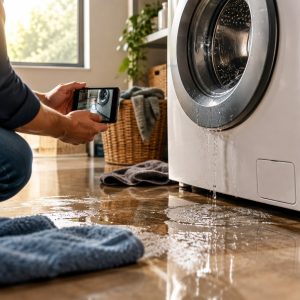
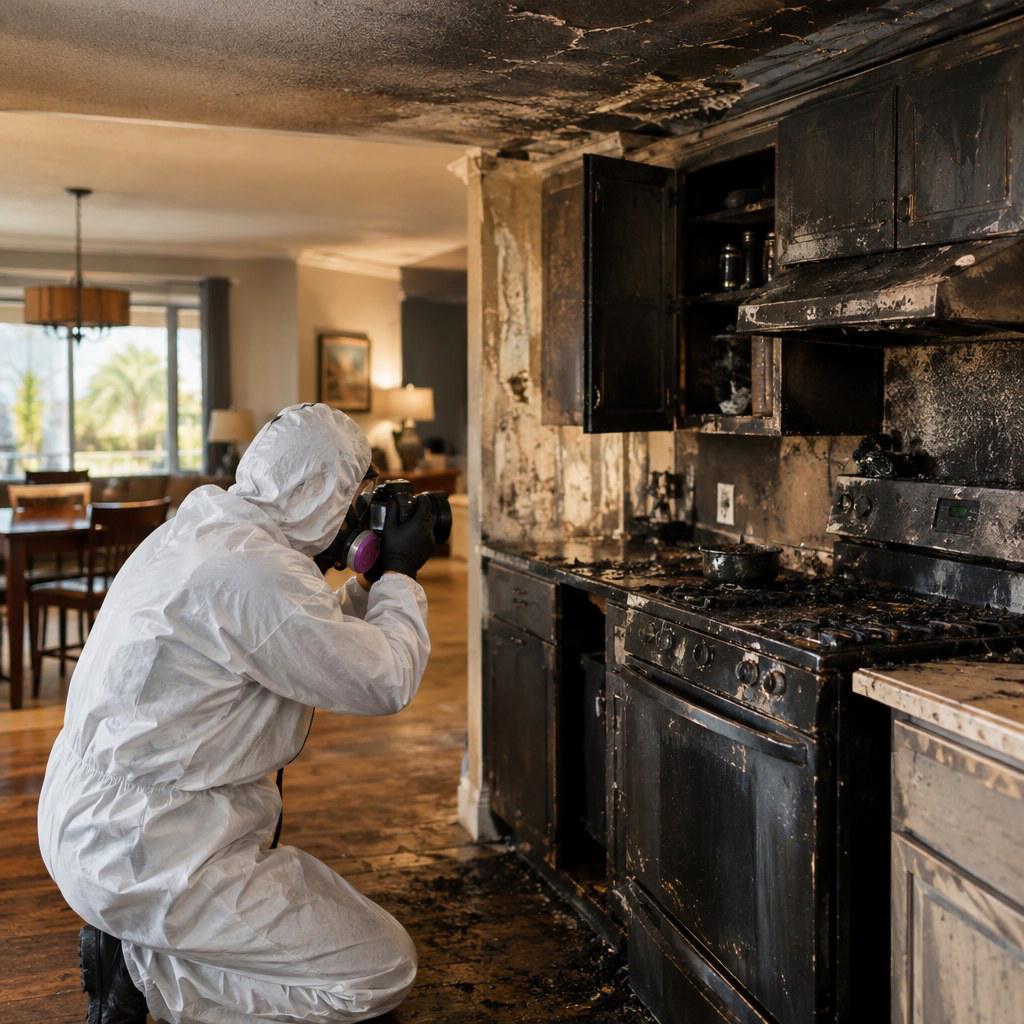
Photograph each affected room from wide and close angles before moving items. Record soot patterns, water damage, damaged appliances, and contents requiring evaluation. Create a written inventory with item descriptions and apparent condition, and save fire department paperwork, contractor estimates, and receipts.
Contact your insurer to confirm documentation requirements and whether damaged items should be retained for inspection. Coverage and claim procedures vary, so avoid assuming that a particular service or replacement will be approved.
When Professional Fire Restoration Is Appropriate
Call a professional when soot extends beyond a small, easily cleaned surface; smoke entered the HVAC system; odors remain; or water affected walls, floors, and cabinets. Electrical exposure, structural damage, contaminated debris, and extensive fire residue also require qualified evaluation.
Professional restoration may include containment, residue testing, HEPA-filtered removal, specialized surface cleaning, odor treatment, and moisture assessment. Cleaning methods should match both the residue and the material; an aggressive cleaner that works on tile may permanently damage painted drywall, wood, stone, or electronics.
Get Help With Fire Damage in Seminole
Big Wave Restoration can assess soot, smoke odor, and related moisture damage and explain practical next steps for your property.