Smoke-affected cabinets and household contents in Lutz should be evaluated by material, heat exposure, soot type, odor penetration, and contact with firefighting water. Some sealed, nonporous items may be professionally cleaned, while charred, warped, electrically damaged, or deeply contaminated materials usually require disposal.
Make the Area Safe Before Inspecting Damage
Do not enter until fire officials say the property is safe. Smoke damage can accompany unstable ceilings, weakened cabinetry, exposed wiring, hot spots, broken glass, and contaminated debris. Turn off affected electrical circuits only if you can reach the panel safely, and do not test smoke-exposed appliances.
Avoid dry sweeping, household vacuuming, or wiping soot with water. These actions can grind fine particles into finishes and fabrics or create permanent smears.
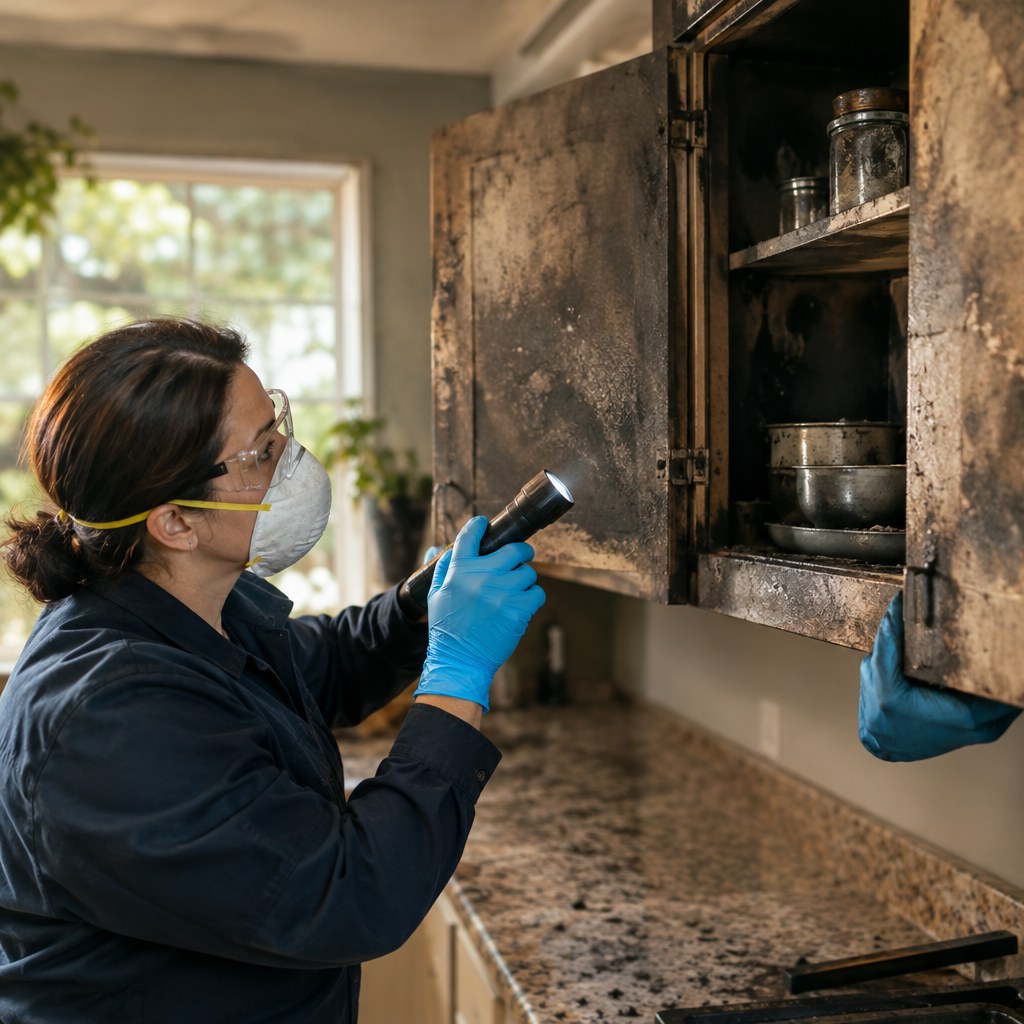
How to Evaluate Smoke-Affected Cabinets
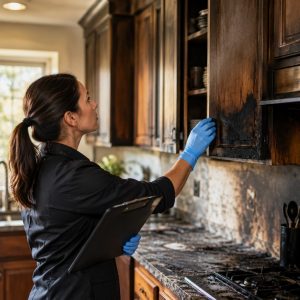
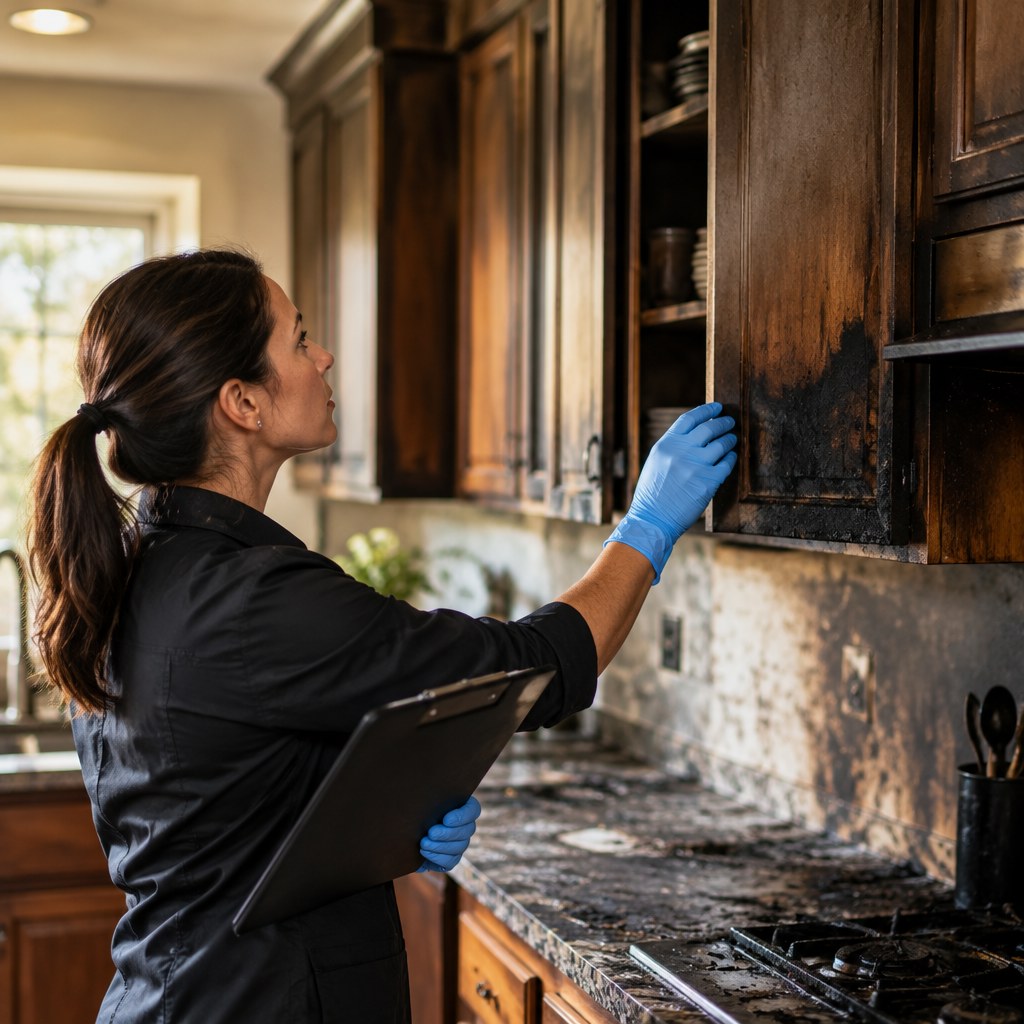
Start with the cabinet box, doors, finish, hardware, and concealed spaces. Smoke often enters drawer cavities, toe kicks, wall gaps, and the unfinished edges of engineered wood.
- Solid wood: May be restorable when structurally sound and only lightly soiled, although unfinished surfaces can absorb odor.
- Plywood: Can sometimes be cleaned and sealed if layers remain bonded and dry.
- Particleboard or MDF: Is more vulnerable to swelling, crumbling, delamination, and persistent odor after smoke or water exposure.
- Laminate and painted finishes: Require testing because aggressive cleaning may discolor, soften, or remove the coating.
Replacement is more likely when cabinets show charring, heat blistering, distorted doors, failed joints, swollen panels, or soot that has penetrated inaccessible cavities. Cabinets near the fire may also conceal damaged wiring or wall materials, so removal should be coordinated with qualified professionals.
Sort Contents by Material and Exposure
Separate belongings into potential cleaning, specialist evaluation, and disposal groups without moving soot through unaffected rooms. Do not consume exposed food, beverages, medicines, or cosmetics when heat, smoke, or suppression water may have compromised them.
Items that may be cleanable
Glass, metal, ceramic, and some sealed hard goods often respond better to professional cleaning than porous materials. Clothing, rugs, artwork, electronics, documents, and sentimental objects need methods suited to their construction; ordinary washing or powering on electronics can worsen damage.
Items that commonly need replacement
Consider disposal for melted plastics, charred goods, heavily soaked absorbent materials, damaged batteries, and low-value porous items with deep soot or persistent odor. Ask your insurer or restoration professional before discarding anything except an immediate safety hazard.
Document the Loss Before Cleanup
- Photograph each room, cabinet elevation, drawer interior, and visible soot pattern.
- Record item descriptions, brands, model numbers, and approximate purchase dates when available.
- Keep damaged contents grouped by room and note whether heat, smoke, soot, or water affected them.
- Save receipts for emergency expenses and request disposal instructions from your insurance representative.
Do not interpret a clean-looking surface as proof that contamination is gone. Odor may remain behind cabinet backs, under counters, or inside wall voids, especially in Lutz homes where indoor humidity can complicate drying after fire suppression.
When Professional Fire Damage Help Is Appropriate
Call professionals when soot covers multiple rooms, odors persist, cabinetry is wet or structurally altered, or the loss involves electrical systems, HVAC components, sewage, hazardous debris, or uncertain structural conditions. A restoration team can document affected areas, choose compatible cleaning tests, manage contents, and identify materials that cannot be safely restored.
Big Wave Restoration can help Lutz property owners evaluate smoke-affected cabinets and contents without assuming every item is either washable or a total loss.