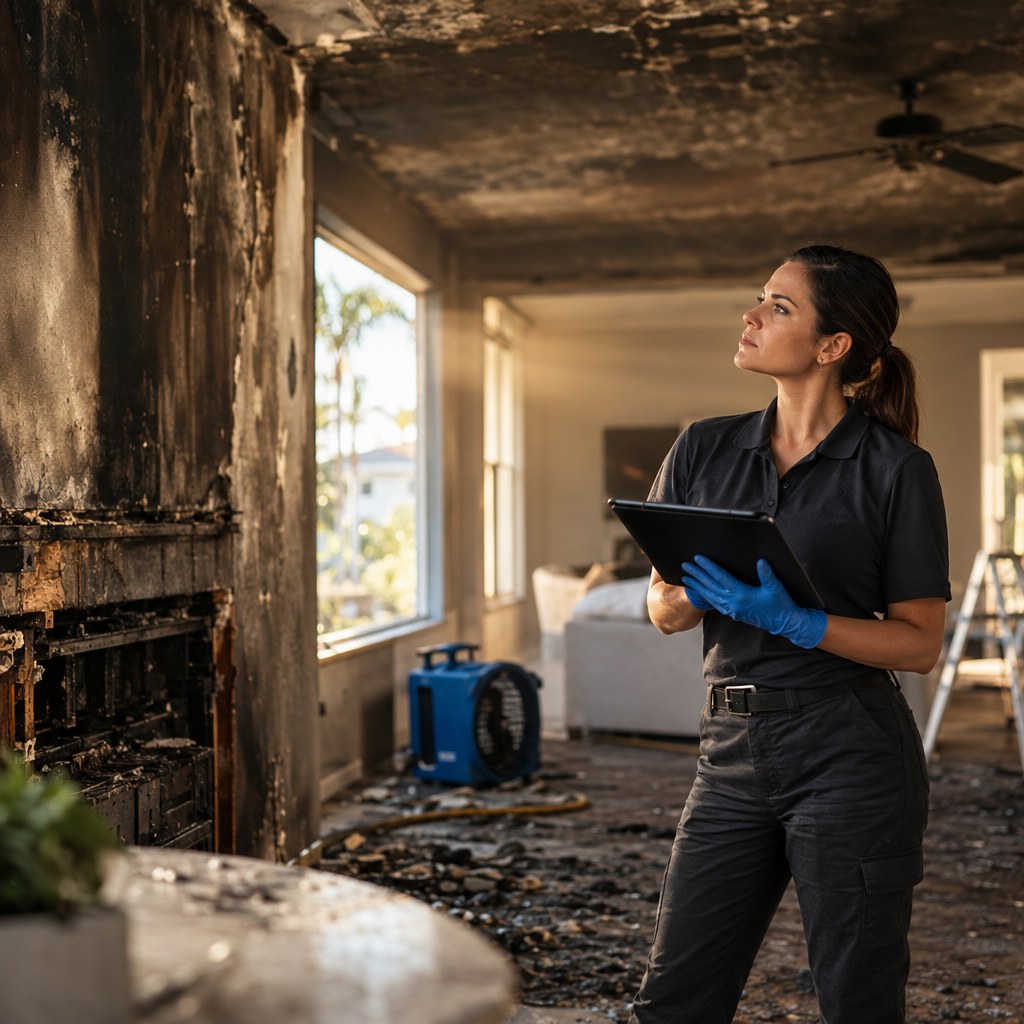
Before smoke cleanup begins, confirm that the property is safe to enter, the damage has been documented, and the restoration plan addresses the specific soot, odor, water, and material hazards present. Ask how the company will test surfaces, protect unaffected rooms, handle belongings, and verify progress before you authorize cleaning.
What Should You Do Before Anyone Cleans?
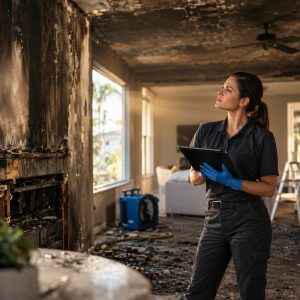
After fire damage in South Tampa, wait until emergency officials release the property. Fire can weaken framing, damage wiring, rupture plumbing, and leave unstable ceilings or broken glass. Even a small fire may spread residue through open doors, wall cavities, or an operating HVAC system.
- Photograph and video each affected room, including ceilings, cabinets, flooring, appliances, and personal property.
- Record visible soot patterns, firefighting water, extinguisher residue, and areas where materials were removed.
- Save damaged items unless they create an immediate safety hazard or your insurer authorizes disposal.
- Contact your insurance representative to ask what documentation, estimates, and inventory details are required.
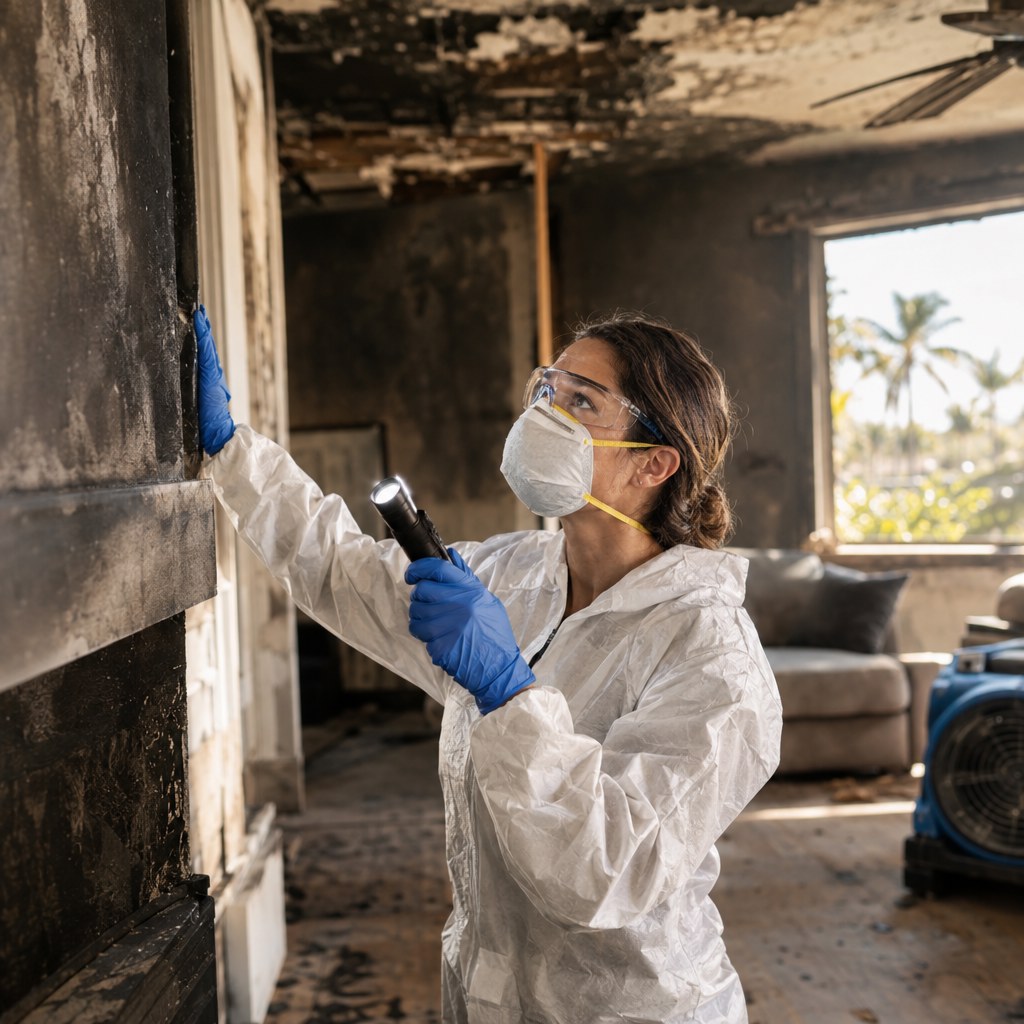
Questions to Ask the Smoke Cleanup Company
A credible scope should reflect what burned and where residue traveled. Wood and paper smoke, burned plastics, cooking fires, and fire-extinguisher discharge can require different products and techniques. Ask these questions before signing the work authorization:
- How will you identify the residue? The team should inspect and test representative surfaces before selecting cleaning agents.
- Will you inspect the HVAC system? Ask whether smoke entered returns, ducts, filters, or mechanical components.
- How will unaffected areas be protected? Discuss containment, air movement, floor protection, and movement of workers and equipment.
- What can be cleaned versus replaced? Request material-specific reasoning for drywall, insulation, upholstery, electronics, and unfinished wood.
- How will odor sources be removed? Cleaning and removal should come before deodorization or specialized odor treatments.
- How will contents be tracked? If belongings leave the home, ask about inventories, photographs, packing, storage, and return procedures.
Does the Plan Address Water and Hidden Hazards?
Fire cleanup is not the same as drying a clean-water plumbing leak. Water used for suppression can mix with soot, burned building materials, chemicals, and debris. It should not automatically be treated as clean water, especially after it moves through contaminated areas.
- Ask how wet drywall, insulation, flooring, cabinets, and wall cavities will be evaluated.
- Request professional review when electrical components, structural materials, sewage, or extensive contamination are involved.
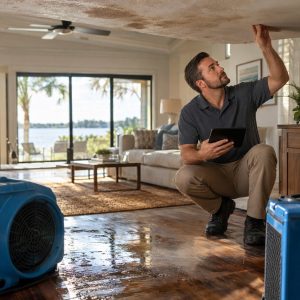
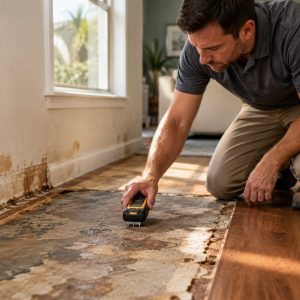
- Ask whether moisture readings will guide drying and removal decisions rather than appearance alone.
- Confirm what ventilation or air-filtration measures will be used during disturbance and cleaning.
South Tampa’s humid conditions can complicate drying when a home remains closed or air conditioning is unavailable. Ask how indoor humidity and moisture will be monitored while smoke restoration proceeds.
How Do You Compare the Scope and Estimate?
Review whether the estimate separates emergency stabilization, demolition, contents handling, surface cleaning, odor treatment, drying, and repairs. Clarify exclusions, change-order procedures, payment expectations, and who communicates with you. Insurance coverage depends on your policy and circumstances, so avoid any company that guarantees claim approval.
When Professional Help Is Especially Important
Call a restoration professional when smoke affects several rooms, soot enters the HVAC system, water saturates concealed materials, or the fire involves wiring, structural components, sewage, fuels, or synthetic materials. Do not enter an area with active electrical, structural, or air-quality hazards.
Your Next Step
Keep your photographs, inventory, insurer notes, and proposed scope together. Big Wave Restoration can assess fire and smoke damage, explain recommended steps, and help you understand what should happen before cleanup begins.