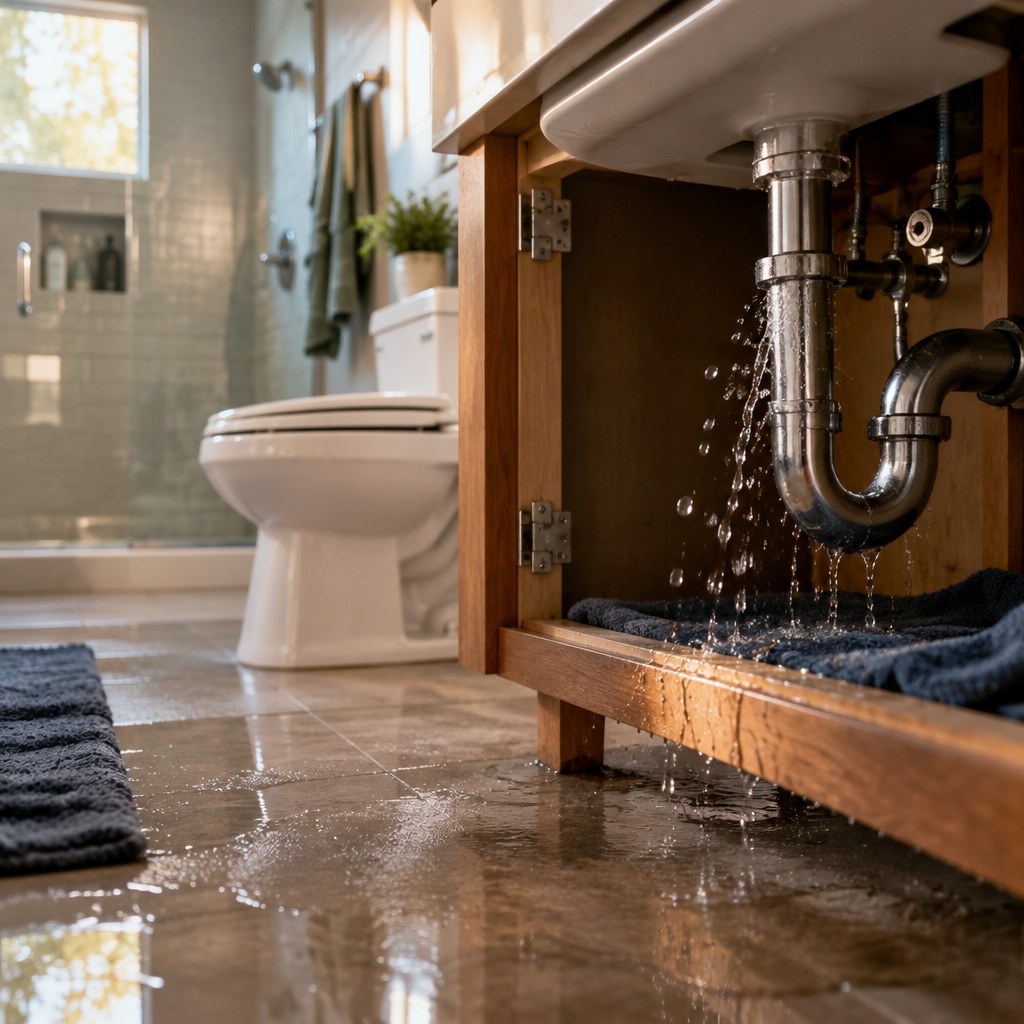
When a bathroom pipe bursts, shut off the water immediately, avoid electrical hazards, and contain the spread only if you can do so safely. Then photograph the damage and arrange professional water extraction when water has entered walls, flooring, cabinets, or rooms below. Fast action is especially important in Lutz, where warm, humid conditions can make thorough drying more difficult.
Immediate Steps After a Bathroom Pipe Bursts
- Stop the water. Close the nearest fixture shutoff valve. If that does not work, use the home’s main water shutoff. Do not force a corroded or damaged valve.
- Check for electrical danger. Keep away from standing water near outlets, light fixtures, appliances, or the electrical panel. If you can reach the breaker panel without crossing wet areas, turn off power to the affected space. Otherwise, contact an electrician or emergency professional.
- Protect nearby belongings. Move towels, toiletries, rugs, and portable furniture to a dry location. Place containers beneath active drips, but do not enter a room with a sagging ceiling.
- Call a plumber. A plumber repairs the failed pipe; a water damage restoration company handles extraction, moisture detection, drying, and damaged materials.
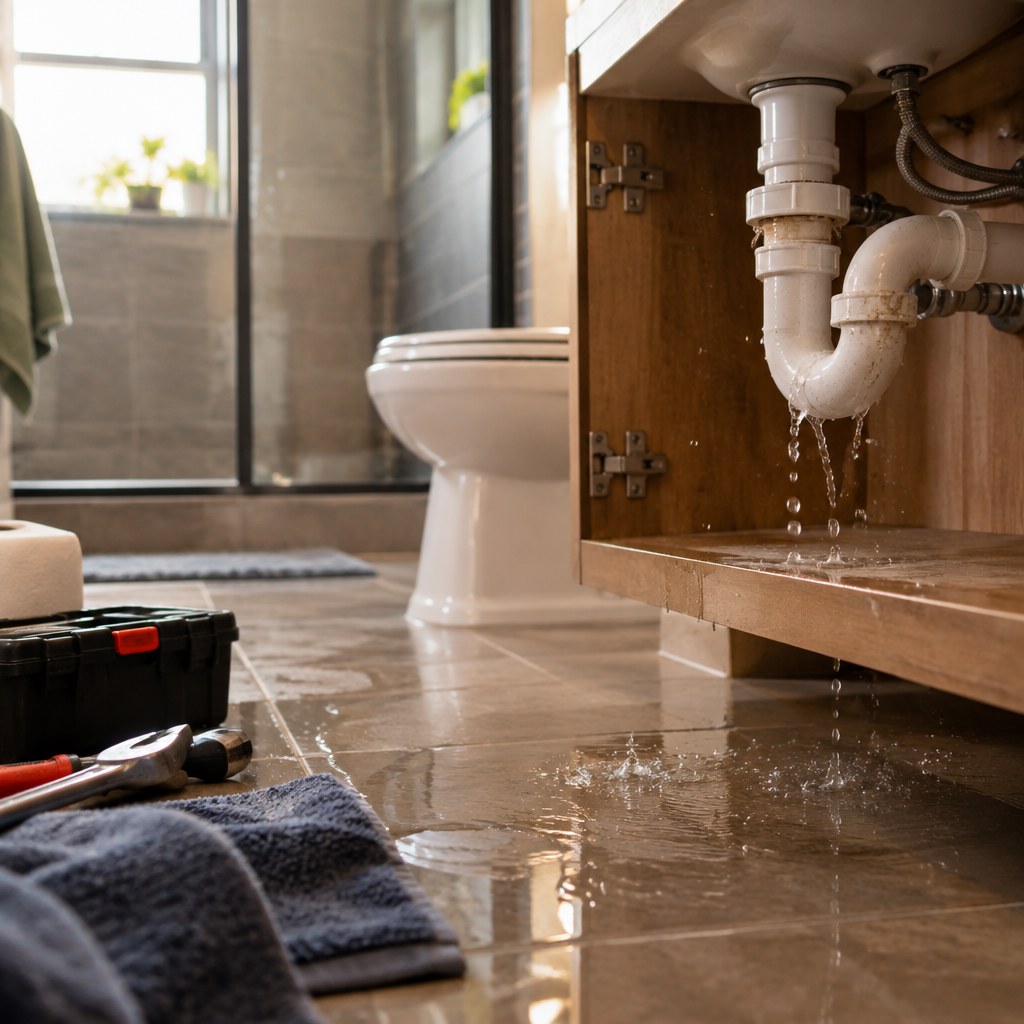
Determine What Kind of Water Is Involved
A supply-line break generally releases initially clean water. However, it can become contaminated after contacting dirty flooring, waste, insulation, or other materials. A leak involving a toilet drain, sewer backup, or wastewater requires professional handling and appropriate protective equipment.
Do not assume clear-looking water is harmless. If the source is uncertain, keep children and pets away. Water affected by sewage, chemicals, or firefighting activity should not be cleaned with household towels or a standard vacuum.
When Professional Drying Is Necessary
A small puddle contained on tile may be manageable after the pipe is repaired. Call a restoration professional if water has reached drywall, baseboards, vanities, laminate, carpet, ceiling cavities, or adjoining rooms. You should also seek help when:
- You cannot identify the full path of the water.
- Flooring feels soft, swollen, loose, or unusually warm or cool.
- Paint bubbles, drywall stains spread, or a musty odor develops.
- The leak continued while the property was unoccupied.
- Electrical, structural, sewage, or extensive damage is possible.
Document the Damage Before Cleanup
Once the area is safe, take wide photographs of the bathroom and close-ups of the failed pipe, wet surfaces, and damaged belongings. Record video showing where water traveled, including hallways and the room below an upstairs bathroom. Keep the broken component if the plumber removes it, unless it presents a safety hazard.
Write down when you discovered the leak, when the water was shut off, and which emergency services you contacted. Save plumbing, extraction, drying, and repair invoices. Contact your insurer promptly to ask about coverage, documentation requirements, and whether approval is needed before discarding materials. Coverage depends on your policy and the cause of the loss.
What Water Restoration Should Include
Effective restoration involves more than removing visible water. Professionals may inspect moisture levels in walls, flooring, cabinetry, and ceiling spaces; extract standing water; remove materials that cannot be safely dried; and position drying equipment according to actual conditions.
In the Tampa Bay area, outdoor humidity can slow natural evaporation. Opening windows or relying only on fans may introduce more moisture, particularly during humid or rainy weather. Avoid applying paint, installing flooring, or closing wall cavities until affected materials are confirmed dry. Covering damp materials can trap moisture and allow deterioration to continue out of sight.
Get Help With Water Damage in Lutz
After the water is stopped and immediate hazards are addressed, contact Big Wave Restoration for help evaluating hidden moisture and planning the next drying steps.