
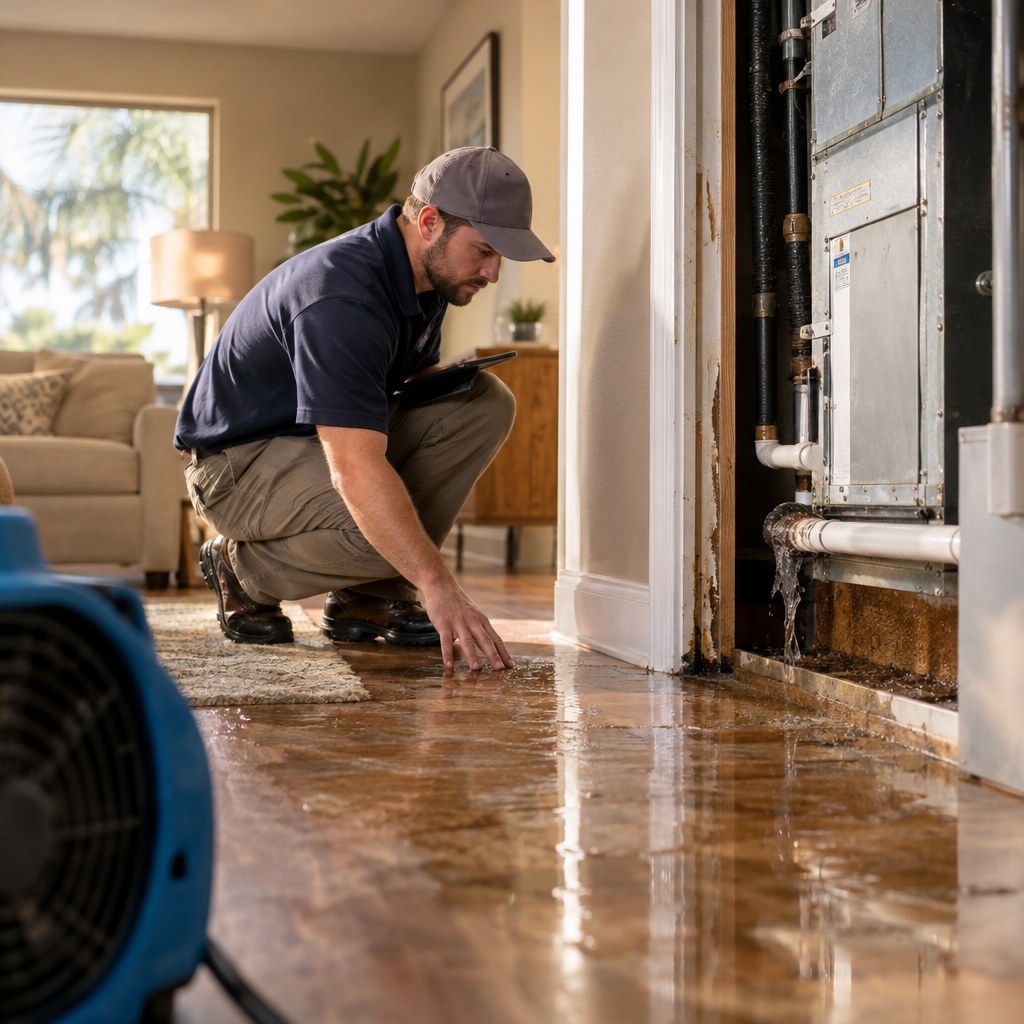
If an AC drain line overflows, turn off the cooling system, stop the water if you can do so safely, and move belongings away from the wet area. Photograph the damage, remove standing water only when electrical hazards are absent, and arrange professional drying when moisture has reached walls, flooring, cabinets, or ceilings.
Immediate Steps After an AC Overflow
A clogged condensate line or overflowing drain pan can release water near an air handler, inside a closet, or through a ceiling. Take these steps in order:
- Shut off the AC. Use the thermostat first. If water is near wiring or electrical equipment, avoid the area and have a qualified professional disconnect power safely.
- Limit the spread. Place containers beneath active drips and move rugs, furniture, boxes, and electronics to a dry location.
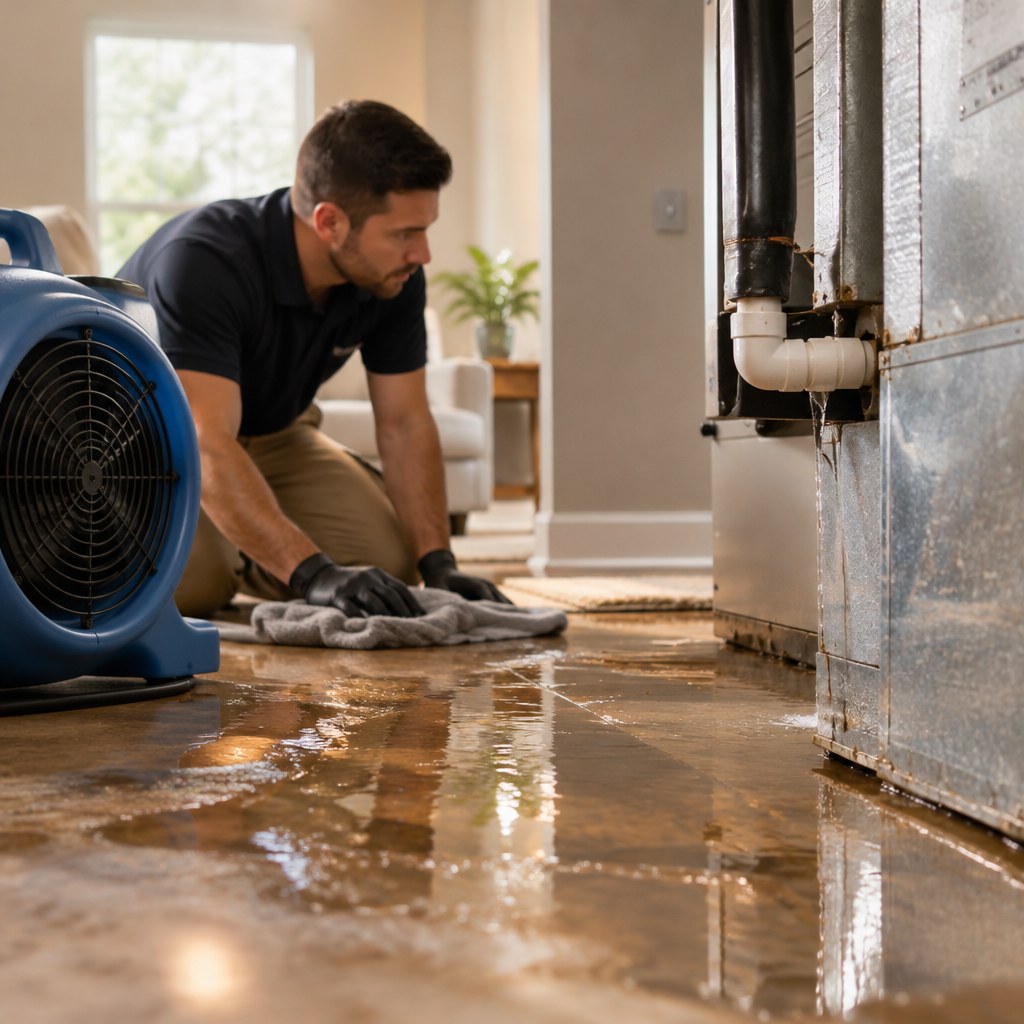
- Remove accessible water. Use towels or a wet vacuum only when the surface is stable and no electrical hazard is present. Do not use an ordinary household vacuum.
- Call an HVAC technician. The blockage, damaged pan, disconnected pipe, or malfunctioning condensate pump must be corrected before the system runs again.
- Start drying. Air movement and dehumidification are important in New Port Richey’s humid climate, where open windows may introduce more moisture instead of helping.
💡 Safety note: Leave cleanup to professionals if water has affected an electrical panel, sagging ceiling, sewage source, or structurally weakened material.
Check Beyond the Visible Puddle
An AC overflow may travel beneath vinyl planks, laminate, carpet padding, baseboards, or cabinets. Water from an upstairs air handler can also collect inside a ceiling cavity before staining appears below.
Touching the surface is not enough to confirm that materials are dry. Restoration professionals can use moisture meters and, when appropriate, thermal imaging to identify areas needing further investigation. Drying may require removing baseboards, lifting carpet, opening limited wall sections, or directing air into concealed spaces.
Condensate starts as relatively clean water, but its condition can worsen after contacting a dirty drain pan, microbial buildup, insulation, or contaminated flooring. Do not treat it as clean water if it has an odor, discoloration, prolonged contact with building materials, or possible sewage exposure.
Document Damage Before Cleanup
Take wide photographs of each affected room and close-ups of the drain pan, ceiling stains, wet flooring, damaged contents, and visible water path. Record when you discovered the overflow, when the AC was turned off, and which cleanup measures you performed.
Keep damaged items until your insurer provides disposal instructions, unless keeping them creates a safety or sanitation problem. Save HVAC, plumbing, drying, and repair invoices. Coverage and documentation requirements vary, so contact your insurer directly and ask what evidence or inspections it requires.
When Professional Restoration Is Appropriate
Call a water damage professional when the affected area extends beyond a small surface spill, water has entered porous materials, or you cannot verify complete drying. Professional help is also appropriate for persistent odors, visible microbial growth, swollen flooring, soft drywall, ceiling movement, or recurring moisture readings.
After drying, reduce the chance of another overflow by scheduling AC maintenance, replacing filters as directed, checking the drain pan, and keeping the condensate outlet clear. If your system has a float switch, ask an HVAC technician to test it rather than assuming it will stop every leak.
Common Questions
Can you run the AC after clearing the line?
Run it only after the drainage problem is repaired, electrical components are safe, and the pan empties correctly. Monitor the unit for renewed dripping.
Should you open windows to dry the room?
Not automatically. When outdoor air is humid, closed windows with controlled dehumidification may dry the space more effectively.
Get Help With AC Water Damage
Contact Big Wave Restoration for an assessment of affected materials and a practical drying plan for your New Port Richey property.