

What to Check First After a Supply Line Leak
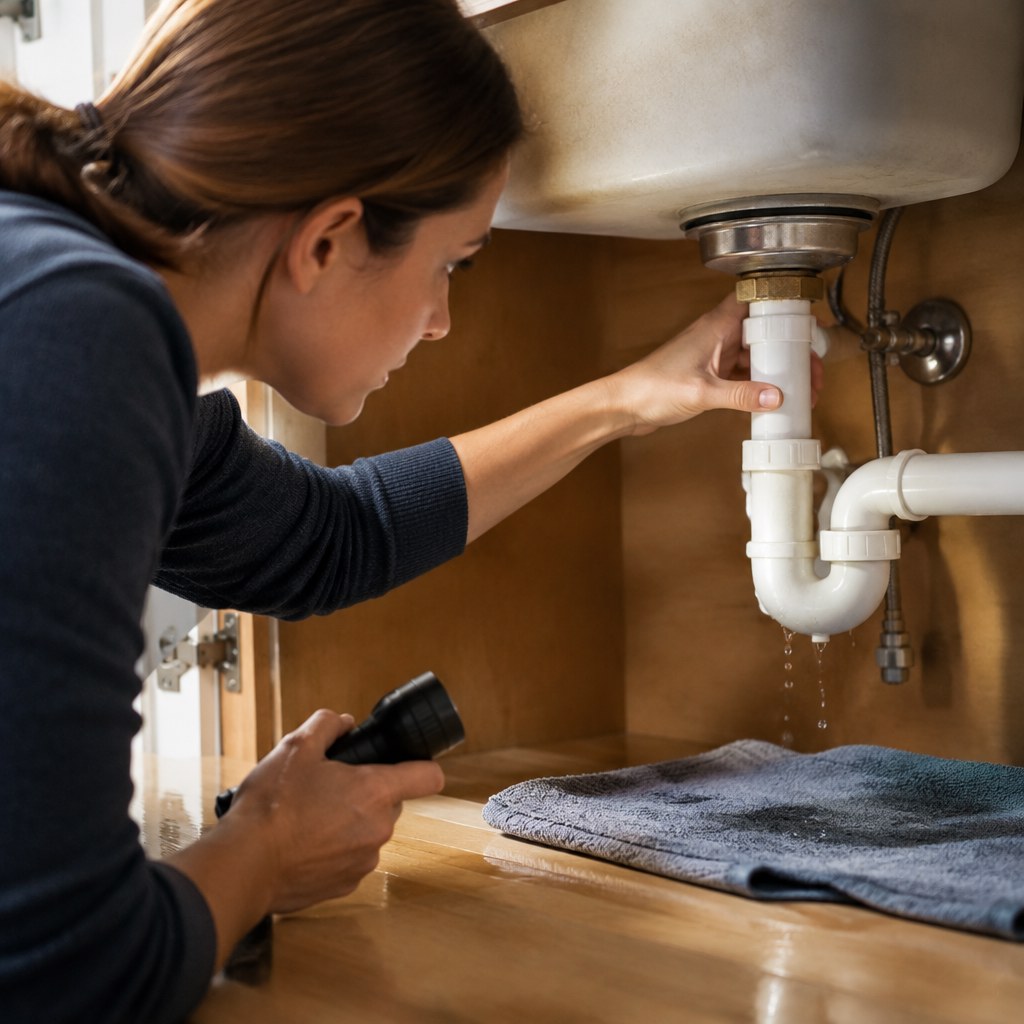
After stopping a supply line leak, check for electrical hazards, standing water, wet cabinets and flooring, damp drywall, and moisture in adjoining rooms. A supply line normally releases clean water, but professional water damage restoration may still be necessary when water spreads into concealed materials, affects electricity, or cannot be dried promptly.
- Close the nearest fixture shutoff valve. If that fails, shut off the home’s main water supply.
- Avoid wet outlets, appliances, wiring, or electrical panels. Have an electrician or qualified professional address electrical risks.
- Move people, pets, rugs, and movable belongings away from the affected area.
- Identify where the water traveled before beginning cleanup.
Inspect Beyond the Visible Puddle
Water follows seams, wall cavities, plumbing penetrations, and low points. In South Tampa’s warm, humid conditions, surfaces may dry more slowly than expected, especially when air conditioning is off or outdoor air is entering the building.
- Cabinets and vanities: Check toe kicks, cabinet backs, shelving, and the wall behind the fixture for swelling or softness.
- Floors: Look for lifted plank edges, loose tiles, dark grout, bubbling finishes, or water emerging when you apply light pressure.
- Walls and trim: Examine baseboards, drywall seams, peeling paint, and the opposite side of the affected wall.
- Adjacent spaces: Inspect nearby closets, hallways, rooms, and the ceiling below an upstairs leak.
- HVAC areas: Determine whether water reached duct openings, return vents, or equipment.
Do not assume tile means the assembly is dry. Water can pass through perimeter gaps and remain in underlayment, subflooring, or wall plates.
Document Damage Before Moving Materials
Take wide photos showing the source and affected room, followed by close-ups of damaged finishes and belongings. Record when you discovered the leak, when the water was shut off, and any steps taken to prevent additional damage.
Keep the failed connector or supply line if it can be removed safely. Save plumbing, cleanup, and temporary repair receipts. When speaking with your insurer, ask what documentation, mitigation duties, and inspection steps apply to your policy; coverage and procedures vary.
Drying Without Creating More Damage
You can remove small amounts of clean water with towels or a wet vacuum rated for water. Use air conditioning and dehumidification if electrical conditions are safe. Avoid directing household fans into contaminated water, and do not seal wet materials behind fresh paint, caulk, or new flooring.
When to Call a Water Damage Professional
Request professional evaluation when water has entered wall cavities, spread beneath flooring, affected multiple rooms, or leaked from an upper level. You should also seek help if materials remain damp, odors develop, wood begins warping, or you cannot verify that concealed areas are dry.
Immediate specialist support is appropriate for electrical exposure, sagging ceilings, structural movement, sewage, extensive saturation, or water mixed with fire residue. Do not enter an area beneath a bulging ceiling; wet drywall and trapped water can add substantial weight.
A restoration team can map moisture, remove water, select materials that can be dried, and identify finishes that require controlled removal. This is more reliable than judging dryness by touch alone.