
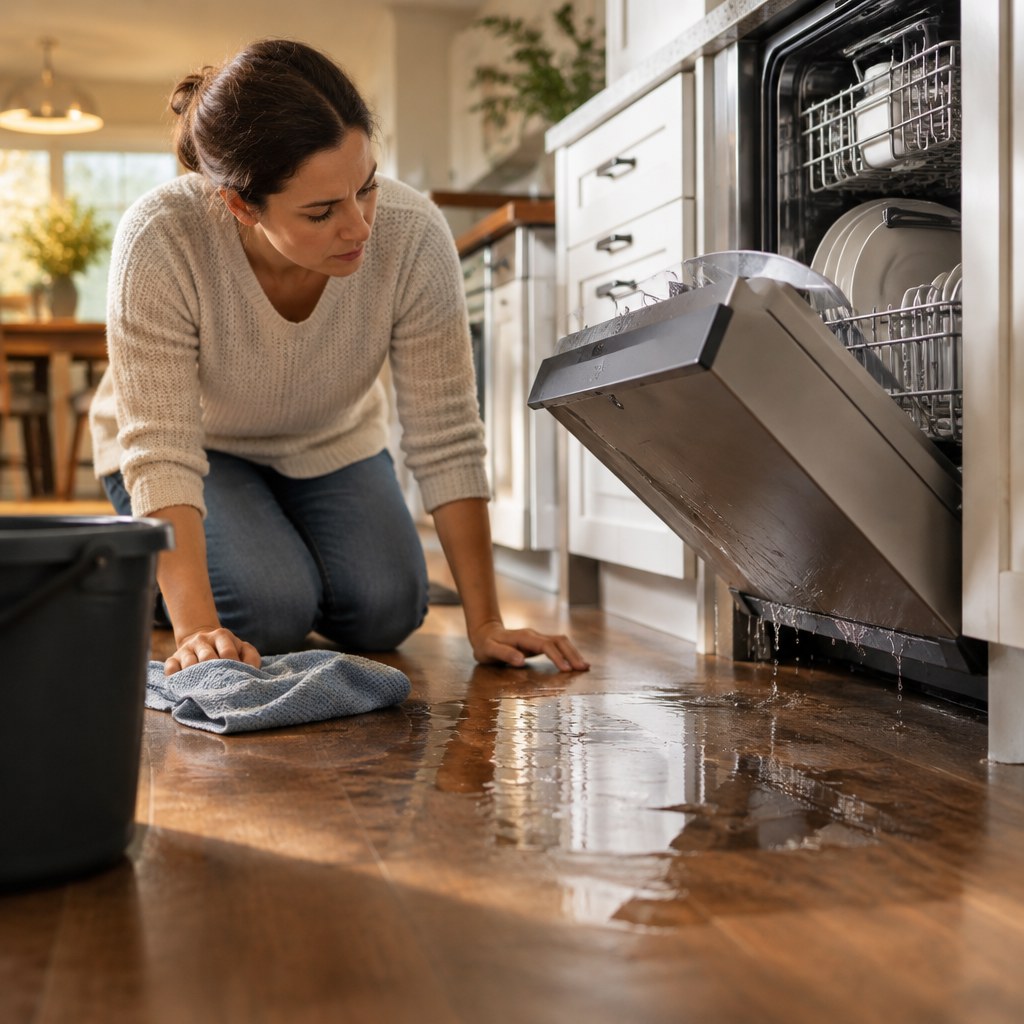
If your dishwasher leaks in Trinity, stop the appliance, shut off its water supply, and keep people away from wet flooring or nearby electrical sources. Remove standing water only when the area is safe, document the damage, and arrange professional water mitigation when moisture has reached cabinets, walls, or flooring.
What to Do in the First Few Minutes
A quick response can limit how far water travels beneath the dishwasher and adjoining materials. Take these steps in order:
- Stop the cycle. Turn off the dishwasher without stepping into water to reach the controls.
- Close the supply valve. It is commonly located beneath the kitchen sink. If you cannot find or operate it, close the home’s main water valve.
- Address electrical risk. Do not unplug the appliance or touch an outlet while standing on a wet surface. If water is near wiring, the electrical panel, or energized equipment, leave the area and call a qualified professional.
- Contain safe, shallow water. Use towels or a wet vacuum rated for water. Do not use an ordinary household vacuum.
- Move nearby belongings. Relocate rugs, food packages, and portable furniture without disturbing swollen cabinets or unstable materials.
Check How Far the Water Traveled
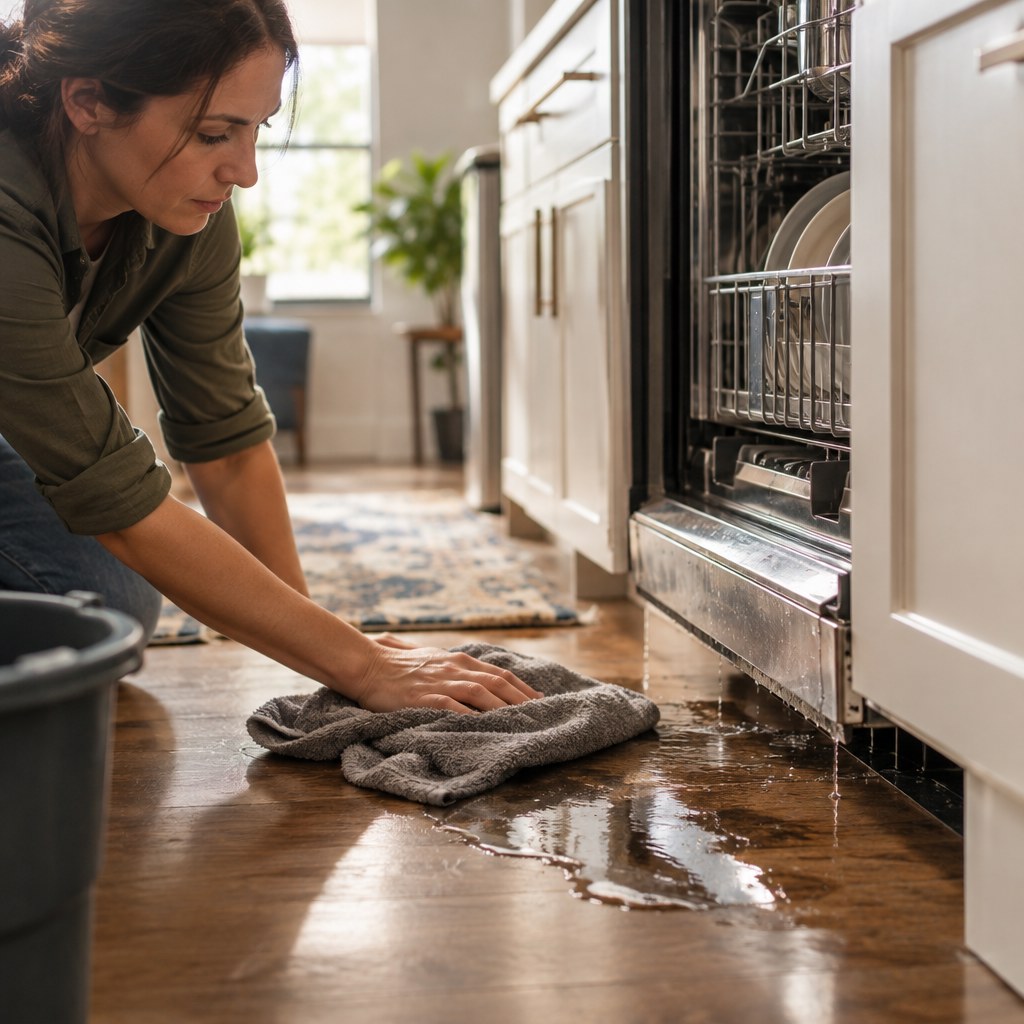
The visible puddle may represent only part of the problem. Water can move under a dishwasher’s toe kick, beneath fixed cabinets, through flooring seams, and into wall cavities. In a multistory home, inspect the ceiling and room directly below the kitchen.
Look for lifting floor edges, darkened grout, soft drywall, peeling finishes, swollen cabinet panels, or a persistent damp odor. Trinity’s warm, humid conditions can make passive drying less dependable, particularly inside enclosed spaces. Running the air conditioner may support normal indoor humidity control, but household fans cannot confirm that concealed materials are dry.
A restoration professional can use moisture-detection equipment to map the affected area, remove trapped water, and determine which materials can be dried. Do not forcefully remove cabinetry or flooring yourself; doing so may damage plumbing, wiring, or materials that could otherwise be preserved.
Document the Leak and Possible Cause
Before cleanup changes the scene, take wide and close photographs of the dishwasher, water path, damaged finishes, and affected belongings. Record when you discovered the leak, whether the machine was running, and which valves or breakers you turned off. Save damaged supply lines, clamps, or fittings after removal unless disposal is necessary for safety.
Common sources include a loose supply connection, cracked hose, failed door seal, blocked drain, or overflowing unit. Avoid restarting the dishwasher to test it. An appliance technician or plumber should identify and repair the source before the machine returns to service. Contact your insurer promptly to ask about documentation, coverage, and whether approval is required before discarding materials.
When Professional Water Mitigation Is Needed
Seek professional help when water extends beyond a small surface spill, remains beneath cabinets or flooring, affects drywall, reaches another level, or cannot be completely removed. You should also call immediately for electrical hazards, sewage or drain backup, structural movement, ceiling sagging, or water that sat unnoticed while you were away.
Professional mitigation generally includes inspecting the loss, locating moisture, extracting water, setting appropriate drying equipment, monitoring progress, and cleaning affected surfaces based on the water source. Fire or smoke damage requires a separate safety response; do not treat it as an ordinary appliance leak.
Get Help With Dishwasher Water Damage
Big Wave Restoration can assess water damage in Trinity, identify affected materials, and develop a practical mitigation plan.