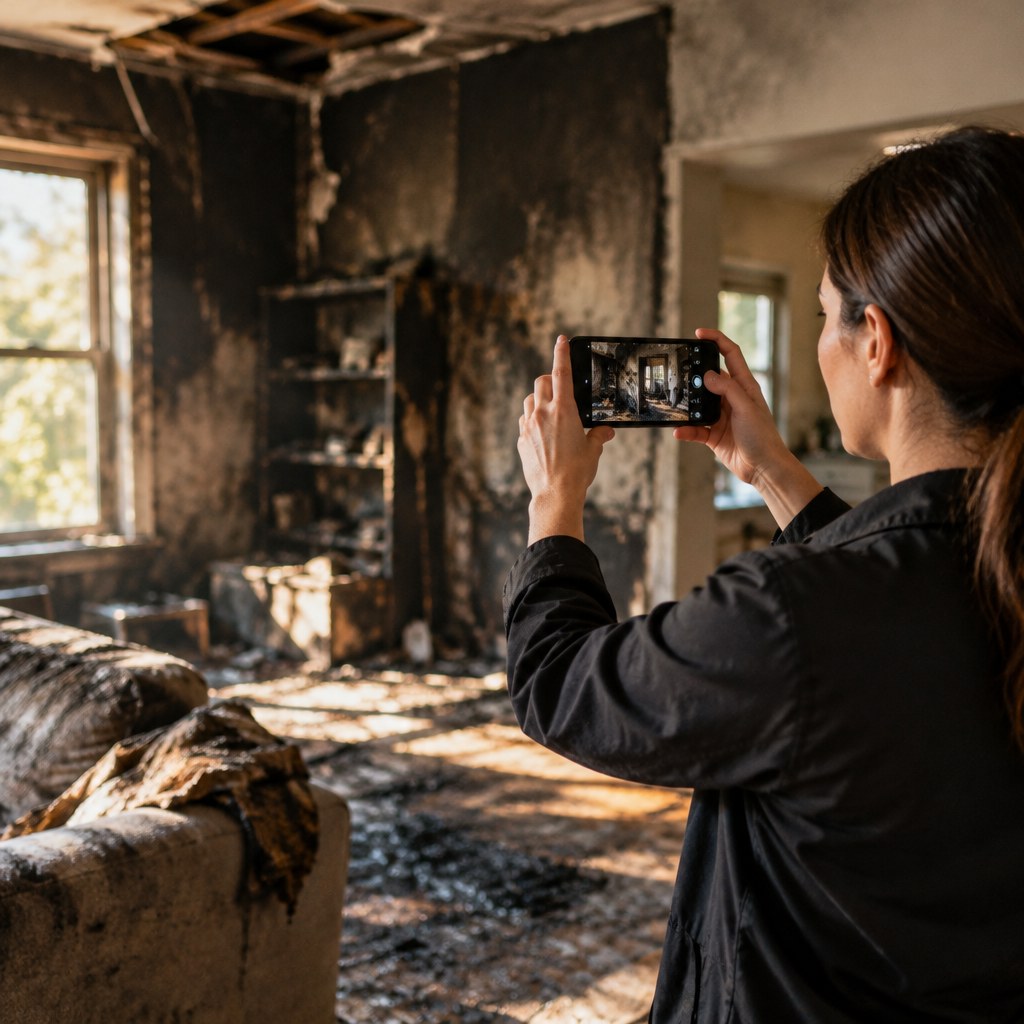
Before fire cleanup begins, document every affected room, damaged belonging, and visible path of smoke, soot, and water. Take wide photos, close-ups, and slow video, then create a written inventory. Do not enter until fire officials say the property is safe, and never disturb structural, electrical, or contaminated materials solely to obtain evidence.
💡 First priority: If you smell gas, see sparking wires, notice a sagging ceiling, or feel ill from smoke exposure, leave immediately and contact the appropriate emergency service.
Confirm Safety Before Entering
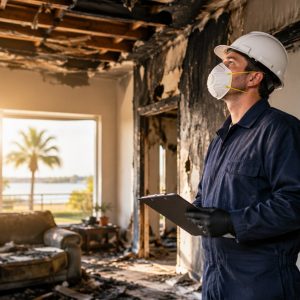
Permission to enter does not mean every area is safe. Fire can weaken flooring, roof supports, stairs, and drywall. Water used during suppression may conceal electrical hazards or carry ash and combustion residue through the home.
Wear sturdy closed-toe shoes, long sleeves, gloves, and suitable respiratory protection. Keep children and pets away. Photograph unsafe areas from a doorway rather than walking beneath damaged ceilings or across wet floors.
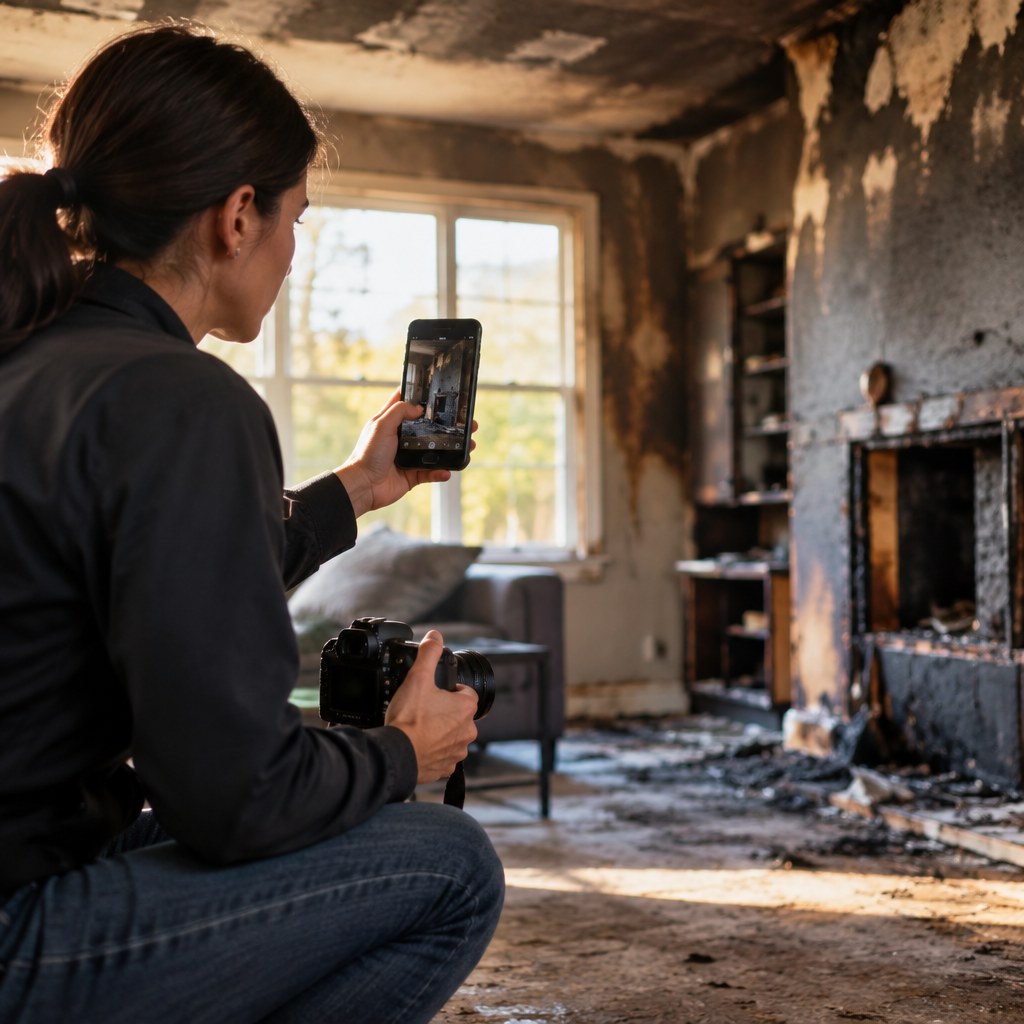
Photograph the Fire-Damage Scene
Start outside and move systematically through accessible areas. Capture each room from multiple corners before taking detail shots. Include identifying features so an adjuster can understand where the damage occurred.
- Exterior walls, roofing, windows, doors, vents, and entry points
- The apparent fire origin without touching or moving nearby items
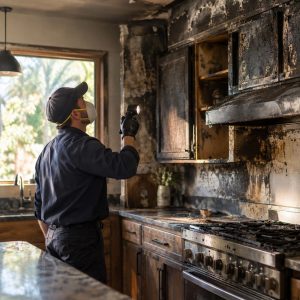
- Soot patterns on walls, ceilings, cabinets, furniture, and HVAC registers
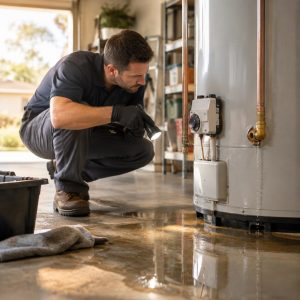
- Standing water, wet flooring, swollen trim, and stained drywall
- Damaged wiring, appliances, plumbing, and building materials
Record a continuous video walkthrough while naming rooms and describing odors or conditions that photographs cannot show. For example, note that a bedroom has visible soot despite being separated from the fire by a closed door.
Create a Detailed Contents Inventory
Do not discard belongings until your insurer or restoration professional provides direction, unless an item creates an immediate safety hazard. List damaged furniture, electronics, clothing, food, tools, décor, and personal property room by room.
For each item, record its description, brand or model when visible, approximate purchase period, condition, and type of damage. Photograph serial numbers, labels, receipts, manuals, and online order records when available. If several similar objects are affected, show the entire group and then document valuable items individually.
Separate visible categories such as burned, smoke-damaged, wet, and apparently unaffected. “Unaffected” items may still require evaluation because fine soot and odor can travel beyond the burned area.
Preserve Records and Evidence
Save original files rather than edited copies. Back them up to cloud storage or another device, and label folders by room and date. Keep a written log of calls, inspections, temporary lodging, emergency purchases, and work authorized at the property.
Avoid washing walls, testing appliances, operating the HVAC system, or applying household deodorizer before assessment. Cleaning can smear soot, circulate residue, alter evidence, and make the full extent of damage harder to establish. Follow your insurer’s instructions about claim documentation and emergency mitigation.
When to Call a Fire Restoration Professional
Professional help is appropriate when fire damage involves structural materials, electrical systems, widespread soot, persistent odor, contaminated suppression water, or multiple rooms. A restoration team can document affected materials, stabilize unsafe conditions, extract water, and plan soot and odor removal without causing avoidable secondary damage.
If part of your Wesley Chapel property is inaccessible, do not treat the missing photographs as a reason to enter. Record the access restriction and let qualified professionals document the area safely.
Document First, Then Begin Recovery
After securing the scene and your records, contact Big Wave Restoration for guidance on professional fire-damage cleanup in Wesley Chapel.