
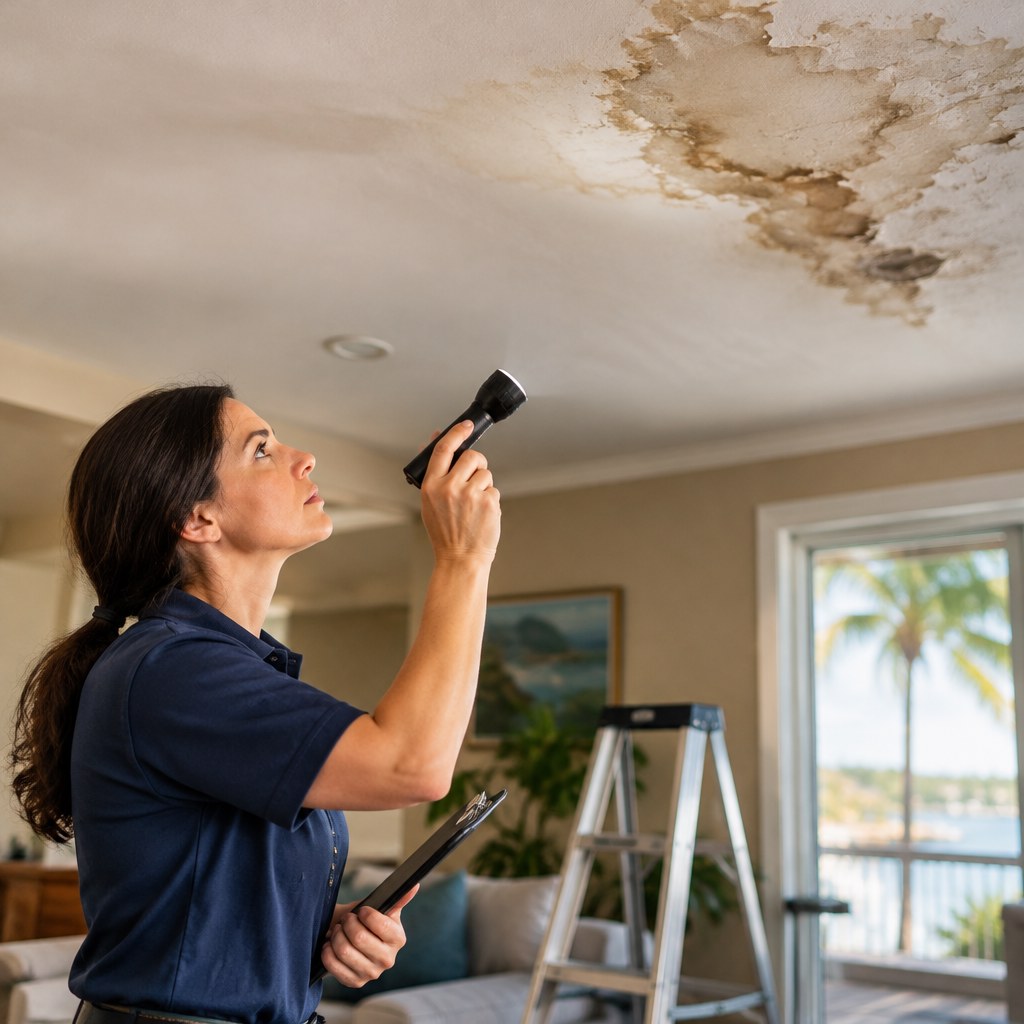
A ceiling stain usually means water has traveled from an upstairs plumbing fixture, appliance, supply line, drain, or exterior opening. Its color, shape, texture, and timing can help narrow the cause, but the visible mark may be several feet from the actual leak. In Oldsmar’s humid climate, prompt inspection and drying are important even when the stain appears dry.
What the Ceiling Stain May Reveal
Before touching the ceiling, look at the stain from a safe distance. Record when it appeared, whether it changes after someone uses water upstairs, and whether recent rain affects it. These details can distinguish a plumbing problem from water entering through the building exterior.
- Yellow or brown rings: Water may have repeatedly soaked and dried in drywall, carrying tannins, rust, dust, or building-material residue to the surface.
- A spreading, soft-edged patch: The leak may still be active. A stain that enlarges during a shower or toilet flush points toward nearby plumbing.
- Peeling paint or a sagging bubble: Water may be collecting above the ceiling. Do not puncture it or stand beneath it.
- Dark spotting or a musty odor: Materials may have remained damp long enough to support microbial growth. Painting over the area will not correct trapped moisture.
A small mark does not always indicate minor damage. Insulation, framing, and the back of the drywall can hold more water than the finished surface shows.

Common Upstairs Sources to Check
Start directly above the stain, then expand your search because water can follow pipes, joists, and sloped surfaces. In a townhouse or condominium, notify the property manager or association when the source could involve a shared pipe or neighboring unit.
- Toilet supply connections, wax seals, tanks, and overflowing bowls
- Bathtub or shower drains, failed caulk, and damaged waterproofing
- Washing-machine hoses, drain lines, and appliance connections
- Air-conditioning condensate lines or drain pans
- Roof, flashing, window, or exterior-wall leaks that appear after rain
For example, a stain that darkens only after showers suggests a drain or enclosure issue. One that changes during rainfall may originate outside rather than in the bathroom directly overhead.
What to Do Immediately
- Protect yourself. Keep people and pets away from sagging drywall. If water is near a light, fan, outlet, or electrical panel, avoid the area and contact qualified electrical help.
- Stop the source if safe. Turn off the fixture or local water valve. Use the main shutoff if you cannot isolate an active clean-water supply leak.
- Document the damage. Photograph the ceiling, upstairs room, affected belongings, and suspected source. Note dates, odors, changes in size, and actions taken.
- Limit secondary damage. Move furnishings from the area and catch dripping water without climbing beneath a bulging ceiling. Do not rely on household fans when contamination is possible.
When Professional Water-Damage Help Is Appropriate
Call a restoration professional when the ceiling is sagging, the source is hidden, multiple rooms are affected, materials remain damp, or you notice persistent odor or visible growth. Professional moisture assessment can identify wet drywall, insulation, and framing that surface inspection misses. Structural instability, sewage, electrical exposure, or fire damage should not be handled as a do-it-yourself cleanup.
After the source is repaired, affected materials must be dried or removed as appropriate before stain blocking and repainting. Otherwise, discoloration, odors, or deterioration can return.
Address an Oldsmar Ceiling Leak Promptly
Big Wave Restoration can evaluate water damage, locate affected materials, and explain appropriate drying and restoration steps.