A refrigerator water-line leak can soak drywall, insulation, cabinets, and flooring before you notice it. Shut off the refrigerator’s supply valve, address electrical hazards, remove standing water, and begin controlled drying promptly; walls that remain cool, swollen, stained, or damp inside the cavity may require professional inspection and selective removal.
What to Do Immediately
First, stop the water at the appliance valve or the home’s main shutoff if the local valve will not close. Unplug the refrigerator only when you can reach the plug without standing in water. If water has reached an outlet, wiring, or electrical panel, avoid the area and contact a qualified electrician.
- Move dry food, rugs, and movable belongings away from the wet area.
- Extract visible water with a wet vacuum or towels; never use a standard household vacuum.
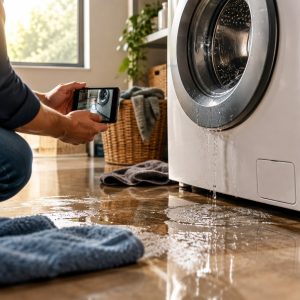
- Photograph the supply line, affected wall, flooring, cabinets, and damaged contents.
- Record when you discovered the leak and any steps taken to stop it.
- Keep the failed line and repair receipts if an insurance representative requests them.
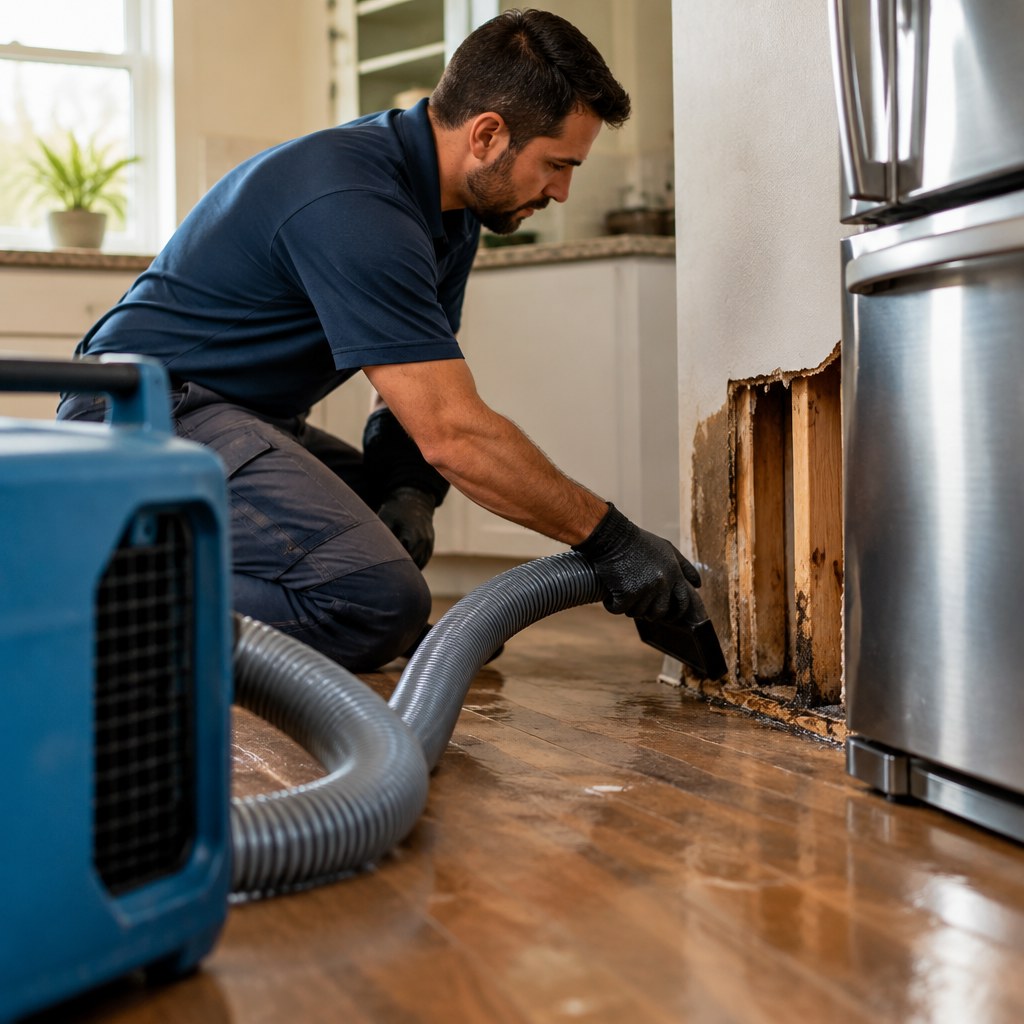
How Wet Walls Are Dried Correctly
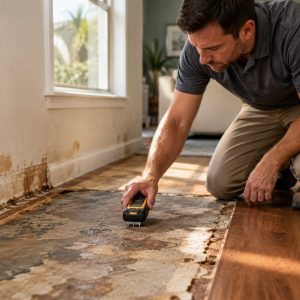
Drying only the painted surface is not enough. Water can move under baseboards, through drywall paper, and into insulation or adjacent cabinets. A moisture meter helps compare the affected materials with dry areas, while inspection openings may be needed to evaluate the wall cavity.
Expose Trapped Moisture
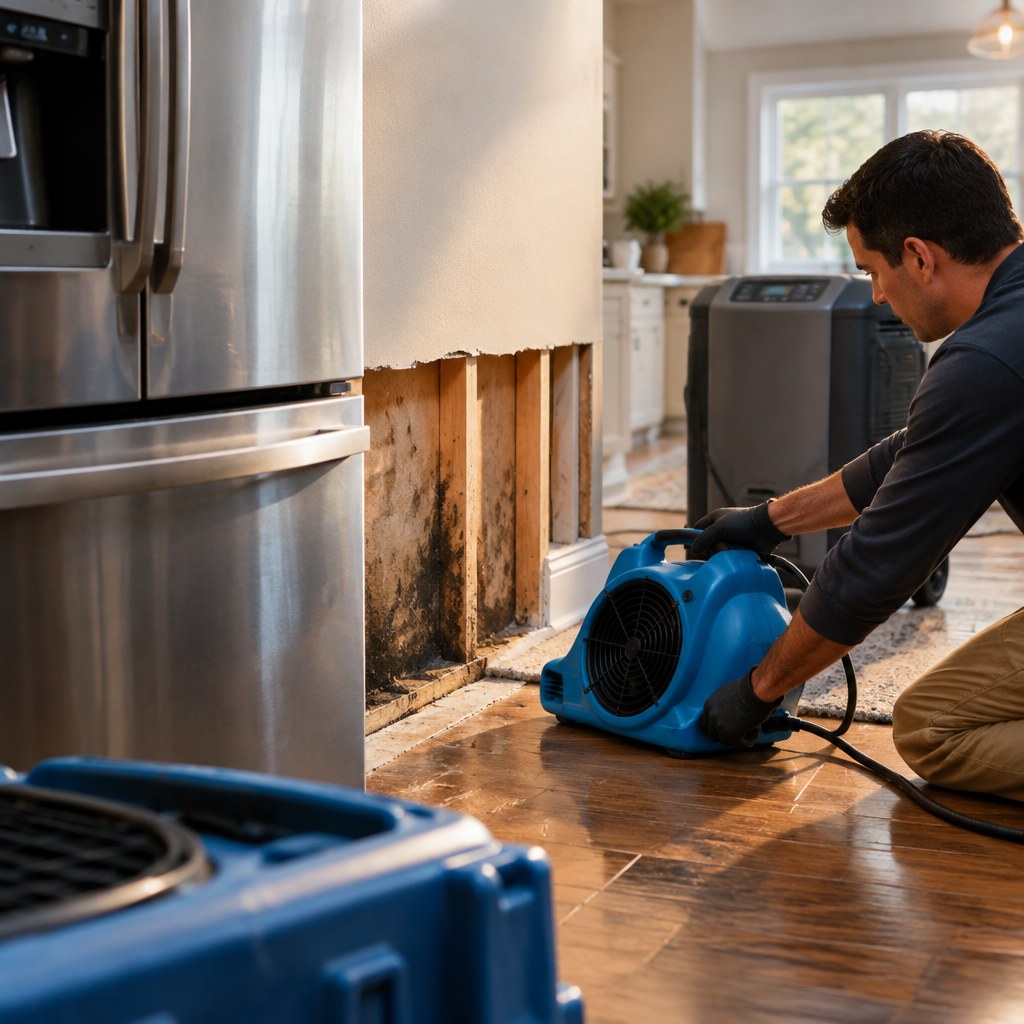
Remove the refrigerator’s lower panels only as its manufacturer permits. Wet baseboards may need careful removal, and saturated insulation or crumbling drywall often cannot be dried reliably in place. Do not cut into a wall if wiring, plumbing, or other concealed hazards may be present.
Control Airflow and Humidity
Use air movers and dehumidification together rather than pointing a household fan at a closed wall. In Wesley Chapel’s humid climate, opening windows can introduce more moisture. Keep air conditioning operating when safe, separate the affected area as appropriate, and monitor progress instead of relying on touch alone.
Confirm Dryness Before Repairs
Do not reinstall baseboards, patch drywall, or repaint until the cavity and surrounding materials have reached an appropriate dry condition. Drying time varies with the amount of water, wall construction, insulation, airflow, and how long the leak continued.
When Professional Water-Damage Help Is Appropriate
Call a restoration professional when water extends behind cabinets, reaches multiple rooms, affects wood flooring, or remains trapped inside an insulated wall. You should also seek help if drywall is soft, fasteners are rusting, odors develop, or the leak may have continued unnoticed.
Professional assistance is especially important when the loss involves electrical components, structural movement, sewage, contaminated water, or extensive material removal. Restoration technicians can map moisture, establish targeted drying, document readings, and identify materials that should be removed rather than covered.
Insurance coverage depends on your policy and the cause of the loss. Notify your insurer promptly, ask what documentation is required, and avoid discarding damaged materials before receiving guidance unless removal is necessary for safety.
Preventing Another Refrigerator-Line Leak
After drying and repairs, replace the failed connector with a compatible line and fittings recommended for the appliance. Check that the refrigerator is not pinching the line when moved back, leave enough slack for service access, and inspect the connection periodically for droplets, corrosion, or discoloration.
A water alarm placed near the refrigerator can provide an early warning. You should also know where the appliance valve and main shutoff are located before another leak occurs.
Get Help Drying Your Wesley Chapel Property
If moisture has entered walls, cabinets, or flooring, contact Big Wave Restoration for an assessment and practical next steps.