
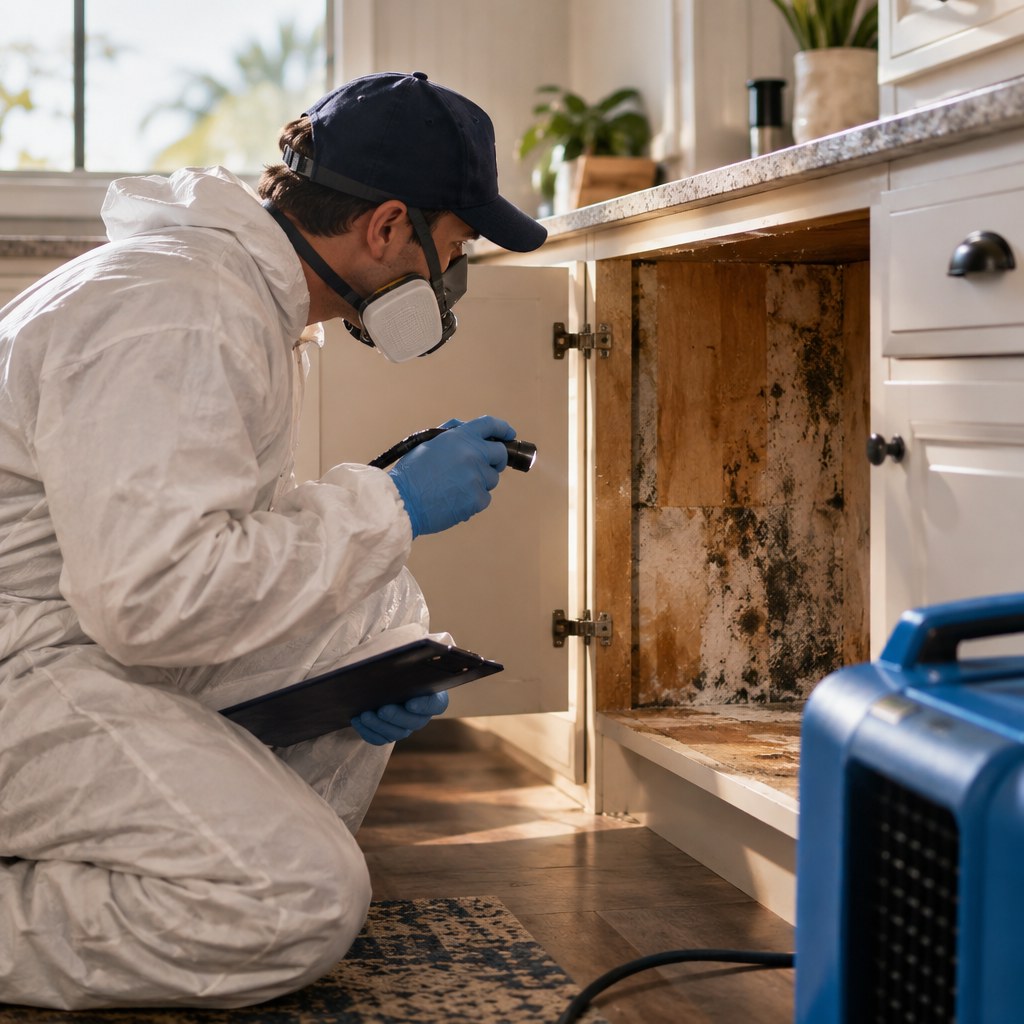
A slow cabinet leak requires more than wiping up water if moisture has reached particleboard, drywall, flooring, or enclosed wall cavities. Stop the leak, limit access to the affected area, document visible damage, and arrange professional mold remediation when growth is extensive, materials remain wet, or hidden contamination is likely.
Why Cabinet Leaks Can Cause Hidden Mold
Under-sink supply lines, drain connections, refrigerator lines, and dishwasher hoses can release small amounts of water without creating an obvious puddle. Cabinet contents may conceal the leak while wood composites absorb moisture. In Palm Harbor’s humid climate, damp enclosed spaces may dry slowly, especially when air conditioning does not circulate inside the cabinet.
Warning signs extend beyond visible spotting. Check for:
- A musty odor that returns after cleaning
- Swollen cabinet panels, peeling finishes, or soft drywall
- Discoloration along baseboards or adjoining walls
- Loose flooring, damaged toe kicks, or moisture beneath stored items

What to Do Before Cleanup Begins
- Stop the source. Close the fixture shutoff valve or main water supply when appropriate. Have a plumber repair the connection before restoration proceeds.
- Avoid spreading spores. Do not sand, scrape, vacuum, or place a fan directly on suspected mold. Air movement can distribute particles into adjoining rooms.
- Remove unaffected belongings carefully. Place dry items in a clean area. Bag visibly contaminated disposable contents rather than carrying them uncovered through your home.
- Record conditions. Photograph the leak source, cabinet interior, damaged materials, and surrounding floor before moving items. Keep plumbing invoices and note when you discovered the problem.
Deciding Between Simple Drying and Mold Remediation
A recent clean-water supply leak may require extraction and controlled drying if materials are still sound and no growth is present. However, water that has remained unnoticed can migrate beneath cabinets or behind drywall. Moisture readings and careful inspection help define the affected area without relying only on what is visible.
When professional help is appropriate
Contact a restoration professional if mold covers a broad area, repeatedly returns, produces a strong odor, or may be inside a wall or under flooring. You should also seek help when occupants have health concerns or when removal would involve substantial demolition.
Sewage, drain backups, and water containing unknown contaminants require different controls than a clean supply-line leak. Fire residues, electrical hazards, and structural movement also call for specialized assessment rather than routine mold cleaning.
How a Planned Remediation Project Works
The exact plan depends on the leak path and affected materials, but a professional project may include:
- Inspecting the cabinet, wall, floor, and adjacent rooms
- Using moisture measurements to outline damp materials
- Isolating the work area to reduce cross-contamination
- Removing materials that cannot be cleaned or restored
- Cleaning remaining surfaces and using controlled drying equipment
- Checking moisture conditions before repairs or cabinet replacement
For example, replacing a swollen cabinet base without addressing damp drywall behind it can conceal the original problem. Cleanup and drying should be completed before finishes close the area again.
Prepare Useful Information for the Inspection
Tell the restoration team when you first noticed the leak, whether the plumbing has been repaired, and where odors or staining appear. Share photographs and identify any previous leaks in the same location. If you plan to contact your insurer, ask directly about documentation requirements, deductibles, and coverage; remediation and repair coverage varies by policy and cause of loss.
Plan Your Palm Harbor Mold Cleanup
Big Wave Restoration can evaluate cabinet-leak damage and explain the appropriate next steps. Call to discuss visible mold, hidden moisture, and remediation planning.