A roof leak in Tarpon Springs requires more than patching shingles. Stop the water source, avoid unsafe areas, document visible damage, and dry affected materials promptly; if you see mold, smell persistent mustiness, or cannot reach the wet area, professional mold remediation can help prevent hidden damage from spreading.
What to Do Immediately After a Roof Leak
Wind-driven rain and humid Tampa Bay conditions can leave insulation, drywall, roof decking, and wall cavities damp even after visible dripping stops. Take these steps without disturbing suspected mold:
- Move people and pets away from sagging ceilings, wet electrical fixtures, and weakened building materials.
- Place a container beneath an active drip only when the area is structurally and electrically safe.
- Arrange for a qualified roofer to stop the leak. A tarp may limit additional rain intrusion, but climbing onto a wet or storm-damaged roof is dangerous.
- Run air conditioning or a dehumidifier if electricity is safe. Do not aim fans at visible mold, because airflow may disperse spores.
- Photograph the leak, stains, damaged belongings, and affected rooms before cleanup. Record when you noticed the water and any temporary measures taken.
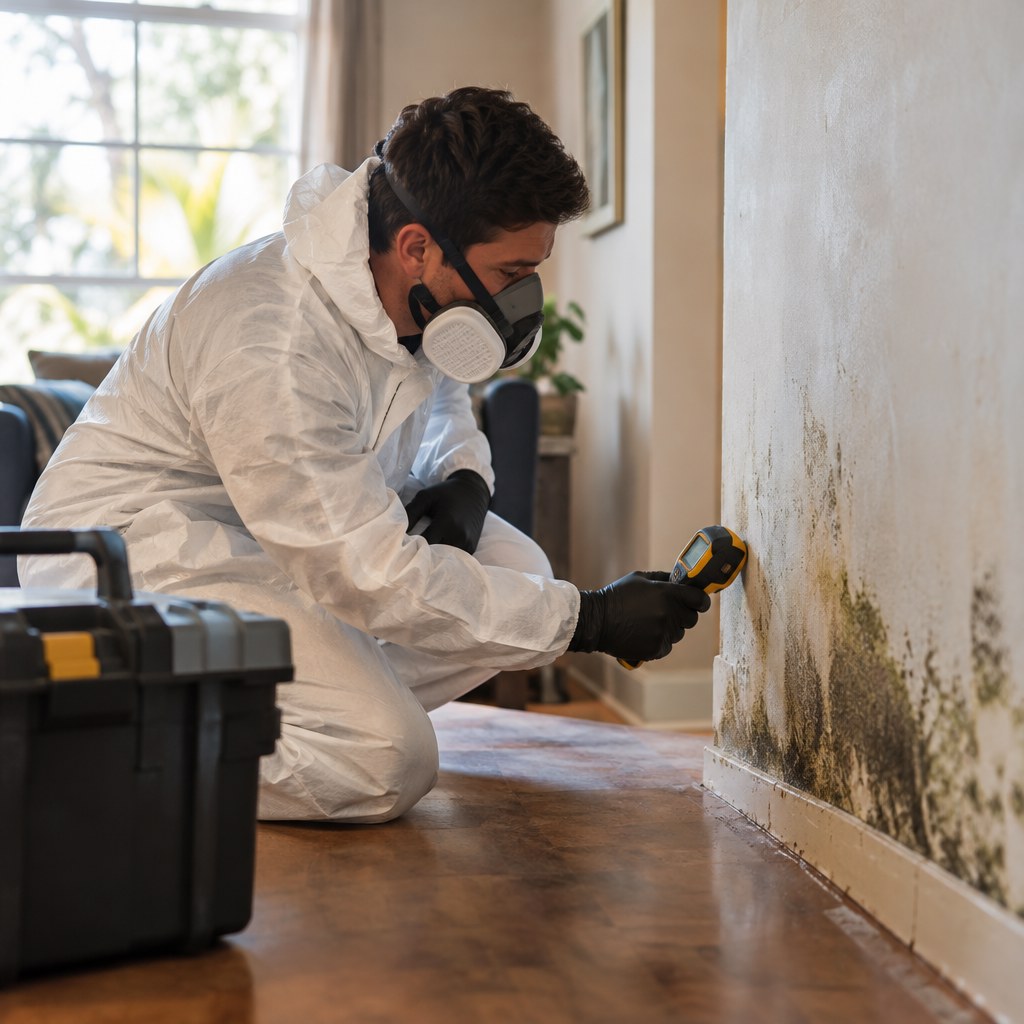
Why a Small Leak Can Create Hidden Mold
Water rarely travels straight down from the roof opening. It may follow rafters, fasteners, wiring, or pipes before appearing on a ceiling. Consequently, the visible stain may not identify the full wet area. Repeated leaks are especially concerning because materials can remain damp between storms.
Signs Worth Investigating
- A musty odor that returns when the air conditioning is off
- Discolored, bubbling, soft, or crumbling drywall
- Dark spotting on rafters, sheathing, insulation, or stored belongings
- Warped trim or staining that continues beyond the original ceiling mark
Painting over a stain or spraying household cleaner does not correct moisture inside an assembly. Testing is not always necessary when visible growth and a known water source are present; an inspection and moisture assessment may provide more actionable information.
When Professional Mold Remediation Is Appropriate
Call a restoration professional when mold covers more than a small, accessible surface; affected material is porous; the odor persists; or moisture extends into the attic, HVAC system, ceiling, or walls. Professional help is also appropriate when occupants have health concerns or cleanup would require opening building materials.
A roof leak caused by rain generally starts as clean-water intrusion, but cleanliness can change as water contacts dirty insulation, animal waste, roofing debris, or standing contamination. Sewage, floodwater, fire suppression water, and fire-damaged materials require different controls. Do not treat those conditions as a routine roof-leak cleanup.
What the Remediation Process Should Address
Effective remediation deals with both mold and the moisture supporting it. Depending on the findings, the work may include:
- Inspection and moisture mapping: identifying affected surfaces and checking beyond the visible stain.
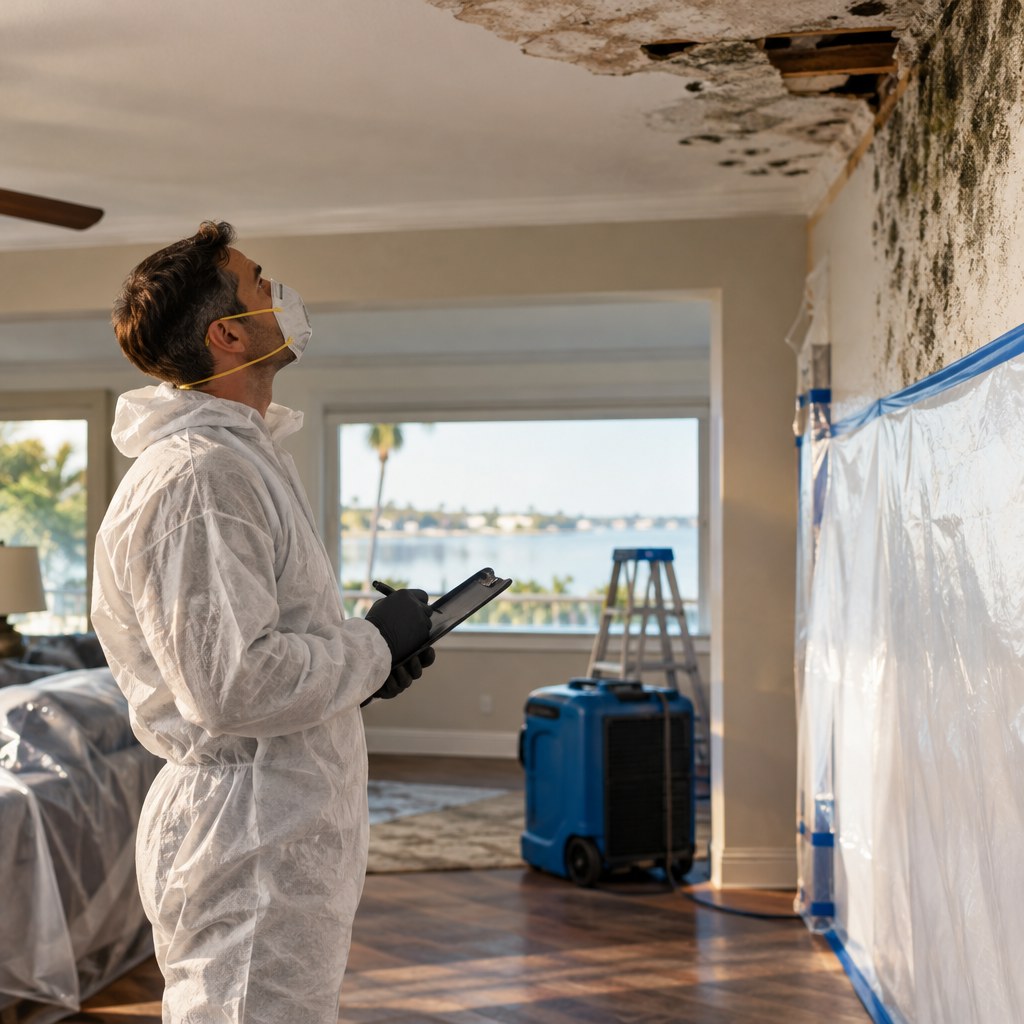
- Containment: separating the work area to limit dust and spore movement.
- Material removal and cleaning: removing unsalvageable porous materials and cleaning suitable structural surfaces.
- Controlled drying: using appropriate drying and dehumidification equipment while monitoring moisture.
- Verification: confirming that moisture has been corrected before insulation, drywall, or paint conceals the area.
Keep photographs, inspection notes, invoices, and a list of damaged contents. If you plan to file an insurance claim, ask your insurer what documentation and emergency mitigation steps are required; coverage depends on your policy and the cause of loss.
Get Help With Roof-Leak Mold
Big Wave Restoration can assess water and mold damage in Tarpon Springs and explain practical next steps for safe cleanup and drying.